

About the Show
Set in a Catholic boy’s school in the Bronx in the ’60s, Doubt uses two of the most incendiary themes in modern American life – racial politics and sexual abuse- to raise profound questions about the consequences of certainty and the nature of truth. In it, Sister Aloysius, the dogmatic and determined nun who runs the school, suspects the young and engaging Father Flynn of having inappropriate contact with a new student. The catch? She has no proof and the student is the school’s first African-American pupil. To further complicate her position, the patriarchal structure of the Church means that the young priest’s authority trumps her own. She will have little formal recourse, even if her suspicions are true.
But Sister Aloysius is certain, and she enrolls the help of a young naïve nun (Sister James) to dig for potential incriminating evidence. Their discovery: the boy was returned to class one day by Father Flynn, his breath smelling of alcohol. Father Flynn’s explanation: He was trying to be a supportive mentor to the boy, knowing how difficult it must be to be a friendless new (black) face in a sea of Irish and Italian immigrant students. Flynn claims he discovered the boy sipping from the altar wine, and covered for him to prevent a scandal, allowing the boy to preserve his reputation. Unconvinced, Sister Aloysius calls in the boy’s mother, Mrs. Muller, and attempts to secure her support in taking the matter to the bishop. Mrs. Muller has a completely different take on the situation, throwing into sharp relief the social and racial divides, changing cultural norms and shifting moral calculations that inform a mother’s choice about what’s best for her son.
You Might Also Like

Latest Videos
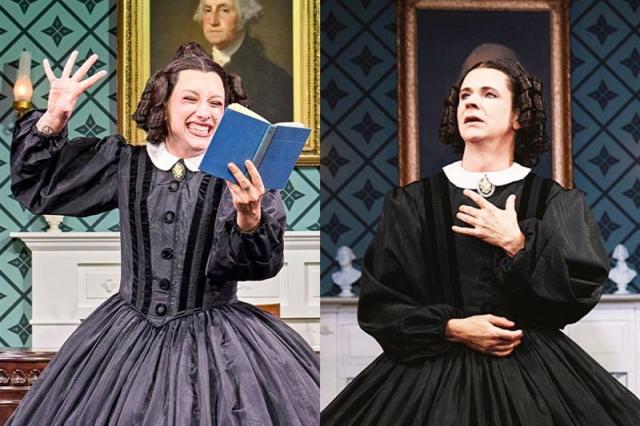
West End vs Broadway: Oh, Mary!—From an Angry Inch to an Angry First Lady, With John Cameron Mitchell and Mason Alexander Park
Mitchell and Park celebrate a decade-long friendship in our latest installment.