
“It’s really interesting because adult me was working through a lot of anxiety about what is happening in the world, and then I remembered this very specific time in my childhood,” she says. “So to write a character who is so vulnerable and so optimistic about what could happen, and her ability to sort of impact the world is a strange feeling. I feel like I’m working through things through that character.”
Reddick explains how the idea of surveillance and being watched, and the real threat of nuclear war, are all childhood anxieties that continue to exist today: “I don’t want to say that I feel total powerlessness, but more that I can feel my own smallness in the world when facing these large forces that have a lot of control over what is going to happen to me.”
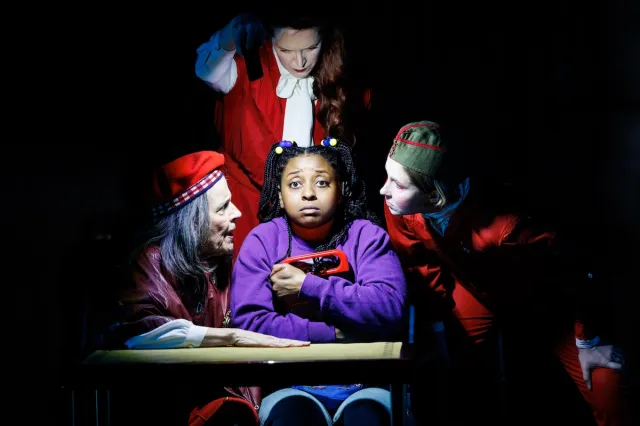
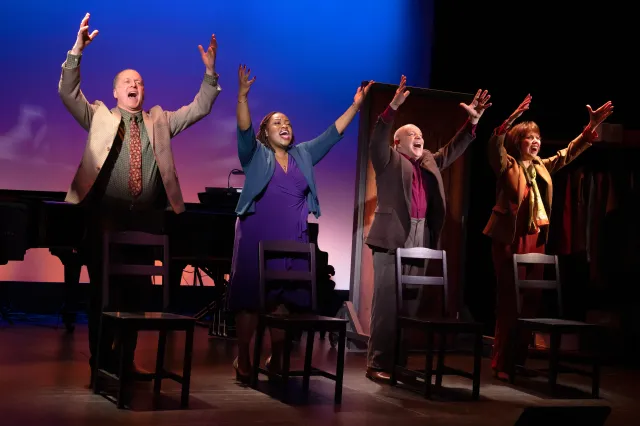
Music has continued to be an enjoyable practice for the playwright, who used to work as an actor, as a way to process things. She remembers children pleading through song not to let nuclear war happen and added a homage to that in Cold War Choir Practice: “There’s a song called ‘Lay Down Your Arms,’ and the choir is singing to the president, President Reagan and Gorbachev. That song is a tribute to my childhood choir, and the rest are satire.”
“It was beautiful to just return to that place and to create my own version of the songs that have stuck in my head over these many decades.”
Reddick’s website states that she “writes off-kilter comedies; the theme songs to your late capitalist nightmares.” I was thrilled that during our half-hour video call, Reddick laughed heartily with me and was overjoyed with news of the Blackburn Prize win (and that Audra McDonald has read her play). For her sense of humor, she credits her family. “They have been through some really intense experiences, but they’re some of the funniest people that I know. The world we live in is strange. I look around, and it’s like, How do we process the absurdity that is everyday life?” For her, it’s by writing plays that match the strangeness of the world.
In Cold War Choir Practice, the characters are finding their way into groups or bumping up against them: “They’re trying to find some balance between their own autonomy and group membership and what that group membership can offer.” The way the characters interact from the very start promises a rupture of some sort, and there end up being a few.
“There’s this emotional explosion between the brothers,” she says, “and then a literal explosion, followed by a poetic moment where Meek remembers the explosion.”
She teases her current project—it’s set in a very analog yet modern world, where everyone is queer, and “there’s a powerful notebook magnate who makes luxury notebooks that you write your goals and your hopes and dreams, and there’s a young woman who has a special psychic ability that is particularly useful in this field,” she explains. “Chaos ensues.”
More of that creative choral chaos from the great mind of Ro Reddick and her roller rinks is all we could ever hope for in this strange world.