
Review: The Body of Mary: A Play in Three Acts (of God)
Katie Cappiello’s time-bending new play opens at the Gym at Judson.
 |
Off-Broadway
|
September 15, 2026
(© Alley Babcock)
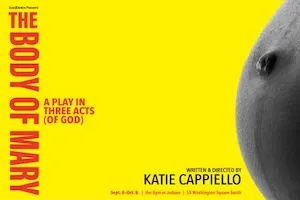
When I was assigned Katie Cappiello’s The Body of Mary: A Play in Three Acts (of God), which she wrote and directed, I checked with TheaterMania. Did they really want a practicing Catholic on this one? I shuddered at the thought of seeing the woman I call my heavenly mother satirized. But they confirmed I was the man for the job, so I decided to suspend my disbelief and give Cappiello a chance to pleasantly surprise me.
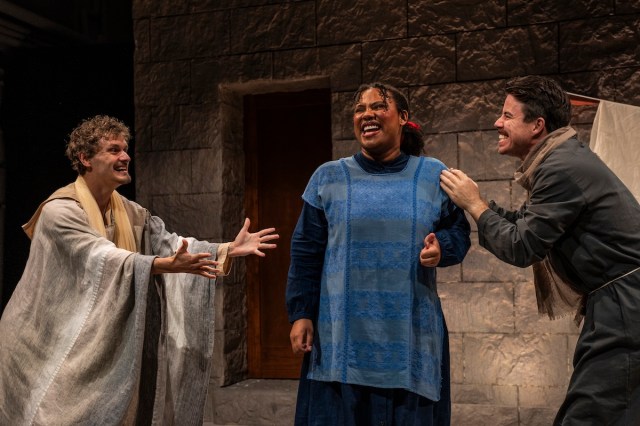
And initially, she did. In the first act, the angel Gabriel (Ben Cook, doing his best cult-leader impression) appears with a proposal for Mary (played with manic energy by Annalisa D’Aguilar) to be the mother of God’s child, to which she immediately says, “No, thank you.” Consent for the win! The irreverence got me laughing, but then things took a puzzling turn. Without giving too much away, let’s just say the play’s punny subtitle, A Play in Three Acts (of God), doesn’t really apply as this Mary’s pregnancy is a purely human affair. She is not withholding consent from God, but from her parents (David Hull and Mary Jo Mecca), who seem to have come up with this Santa-like fable to prevent her from getting an abortion. But why? Mosaic Law, as far as I’m aware, makes no comment on abortion. As the scene transition began, I was left with the bitter aftertaste of having seen someone sacred to me brought down to worldly muck for no clear reason.
(© Alley Babcock)
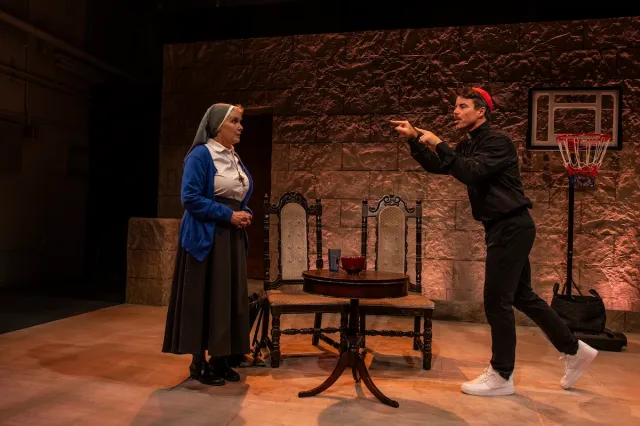
The second act flashes forward (and westward) to New York City, where Hull is Cardinal O’Malley, a mini-basketball-playing, Chick-fil-A-eating, porn-watching prelate. Hull really hits his stride here, as does Mecca, who plays the Cardinal’s humble but sneakily sassy servant, Sister Genoveva. Their funny repartee, however, comes to an end with the arrival of Mother Mary Joseph (played with dignity by Tracy Sallows). She is saddled with a plot point so ludicrous that it brings down the entire act with it. I’ll avoid spoilers, but it suffices to say that it is both (bio)logically implausible and theologically unsound. I could not for the life of me figure out what led Cappiello to invent a bewildering new sin for the Church when there are so many real ones to call out.
Cappiello’s unintelligible script choices ripple through the entire production. The direction swings erratically between jokes and Very Serious Moments. The role doubling feels haphazard, as does the appearance of (the very talented) Lu Yi Peng to deliver a few stanzas of “Ave Maria,”never to be seen again.
The set, by Forest Entsminger, remains stuck in Nazareth, while the props (Jon Schatzberg) and costumes (Jennifer Baumgardner) adapt to time and place—that is, when they are not replaced by miming and sound effects (by Florian Staab). Every part of me—Catholic, theatermaker, critic—was ready to leave…then along came act three.
(© Alley Babcock)
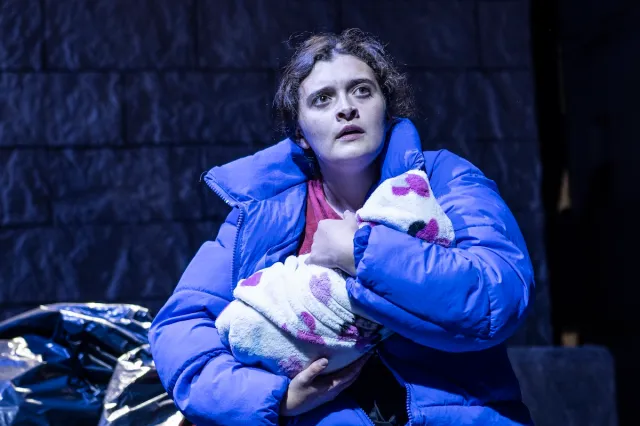
Set in Nazareth, Texas, it features Gracie Conn playing another Mary. Taking out the garbage at the end of a shift at Dairy Queen while on the phone with her friend Nevaeh (D’Aguilar), Mary hears crying and finds a newborn baby in the dumpster. The setup effortlessly elucidates the limits of consent as a framework for thinking about motherhood: Dairy Queen Mary did not consent to finding a baby in the trash; the baby did not consent to being dumped, let alone born; the baby’s mother likely had little or no ability to consent to what happened to her. But it all happened anyway, and there’s nothing but imperfect choices ahead.
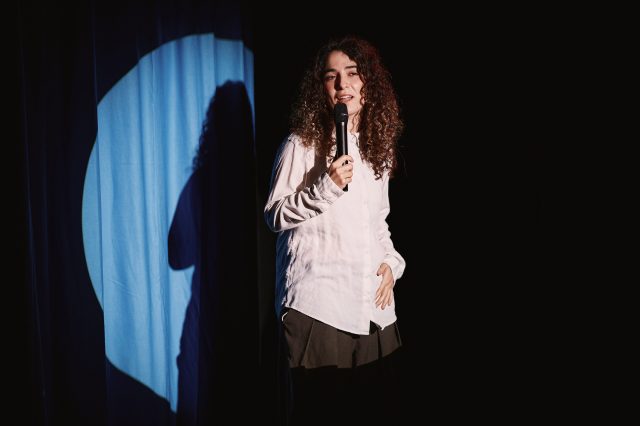
The scene showcases a hitherto unseen ability on Cappiello’s part to let messy situations speak for themselves, as well as her incredible ear for how young people talk. Conn and D’Aguilar more than match the nuance of the text, landing every joke and every gut punch with a bravura that reminded me of Hulu’s PEN15.
As the play came to a close, I was left in a conundrum of my own: I consented to this assignment—but as a Catholic, I cannot endorse any amount of blasphemy, and as a critic, I cannot recommend spending money on a whole play only to enjoy one-third of it. Much like Dairy Queen Mary, all I have at my disposal are imperfect choices. So I choose to remember the parts I liked, in the hope that they portend a future play by Cappiello that I can enjoy in its entirety…but accepting that they might not. In that, like in so many other things, I don’t get a say.




source on Google
Featured In This Story
Latest Reviews
See all


Latest Videos
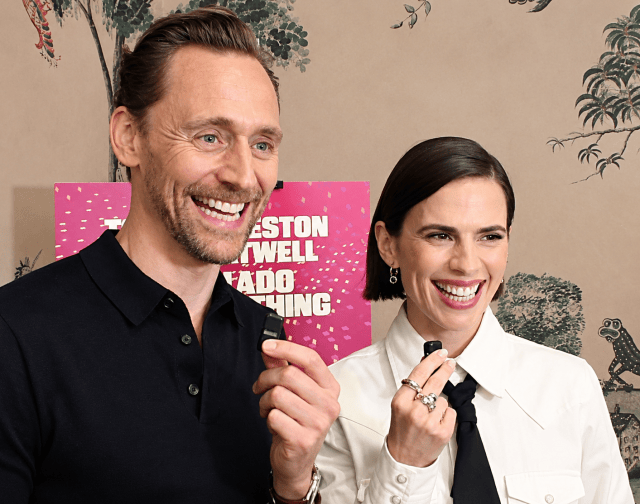
Watch: Tom Hiddleston and Hayley Atwell Are Ready to Spar in Much Ado About Nothing
The longtime friends take on Shakespeare’s beloved Benedick and Beatrice in Jamie Lloyd’s confetti-filled production on Broadway.