
Review: Rachel Kaly Is Mentally Ill, and She’s Here to Make You Laugh About It in Hospital Hour
Kaly performs her disarmingly funny solo show at the Culture Club.
 |
Off-Broadway
|
October 26, 2026
(© Emilio Madrid)
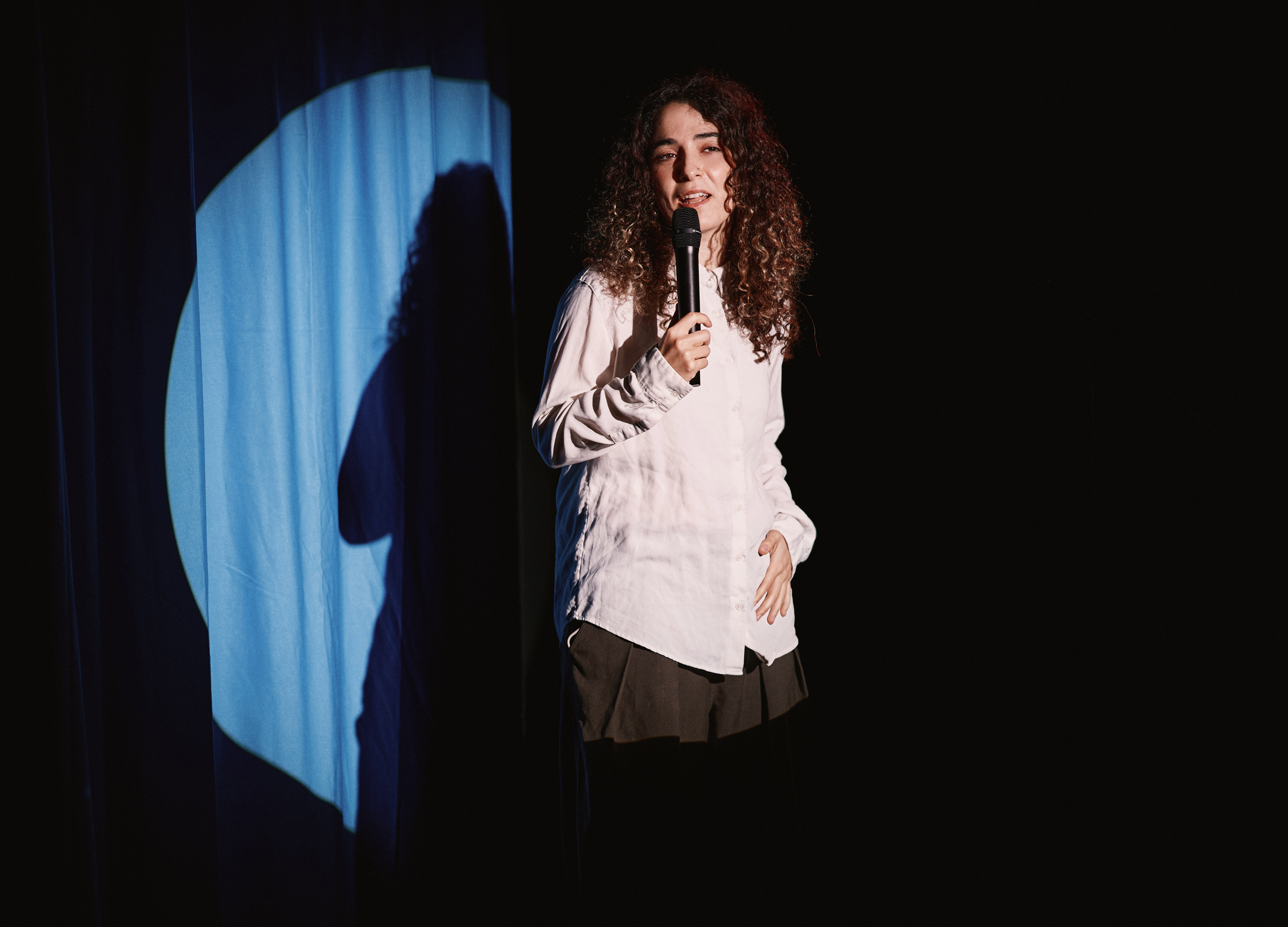
When Rachel Kaly walks onstage wearing a blousy, blue-striped shirt and jeans, her hair tied back in a frizzy bun, looking otherwise engaged, it doesn’t come as a big surprise when she tells us, in her blunt, deadpan way, that she is mentally ill. What might surprise you though is how inclined you might be to laugh at that.
It’s a seat-shifting uneasiness you’ll feel more than once during her solo show, Hospital Hour, now making its New York premiere at the Culture Club. Kaly has had audiences chuckling about her panic attacks and 300-plus trips to hospital ever since the show debuted at Edinburgh Fringe in 2024. But strap yourself in, it gets better—or worse, depending on how you look at it.
“A lot of horrible things have happened to me in my life,” she says, before asking if there’s a literal doctor (or doctor-adjacent person) in the house to take notes on the show to make sure she’s OK to be discharged when it’s over. The ask smells like gimmicky crowd work, but by the end you’ll really be wondering what the doctor had to say.
There’s a lot for her to unpack after the chorus of Rachel Platten’s “Fight Song” fades (sound design by Germán Martinez). Born in New York in 1995 to a Moroccan taxi-driving father and Jewish mother, Kaly developed OCD after 9/11, and had her first period the same day that Saddam Hussein was executed (that’s an important note, she says). Her parents got divorced, and her mother found child porn on her dad’s computer. She became estranged from him, understandably enough. “And that’s where my suicidality got really bad,” she intones, “or really good if you think I should kill myself.”
(© Emilio Madrid)
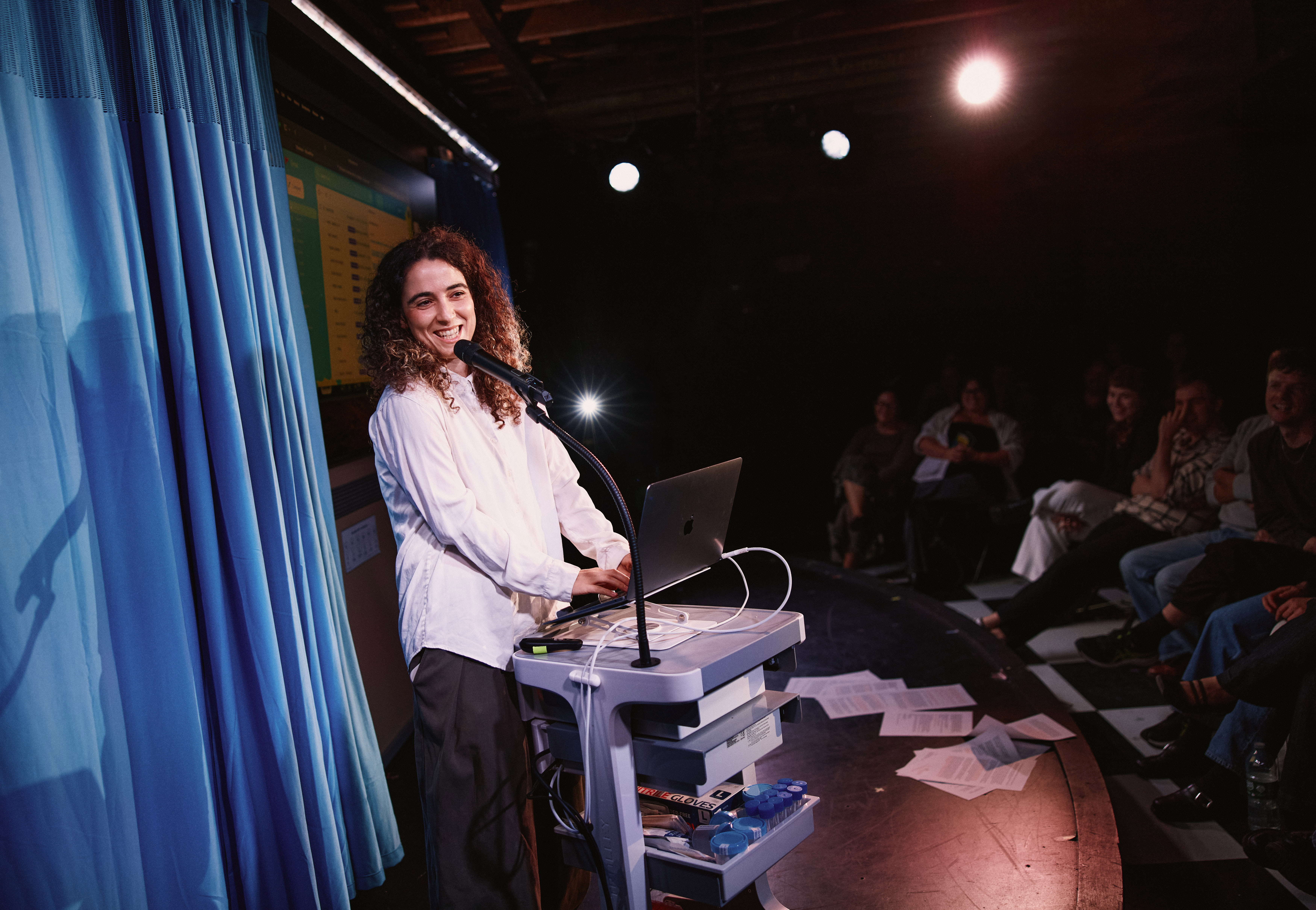
And that’s where the show really takes off. Kaly tells us about hospital stays, treatments and meds administered to her over the years, her obsession with blowjobs (she later came out as a lesbian), and eating a pureed burrito after she forgot how to swallow. Sometimes she talks into the curtain behind her (set design by Sully Ross), or she pulls it aside to reveal a television screen where we read weird emails from her father, like the one he sent to 8-year-old Rachel asking her to send some CDs back to him (she never did). Lighting designer Devin Cameron occasionally shines a Seinfeldian spotlight on her as she drones a few pedophile jokes.
The material is pitch-dark, so consider that your trigger warning. Kaly joins a coterie of comics including Chris Gethard and Hannah Gatsby who have also worked their past trauma, depression, and self-destructive tendencies into their routines—and she does it with the skill and insight of a lifelong comic (she first performed at the Gotham Comedy Club at the age of 9).
Bob Odenkirk recognized Kaly’s distinctive voice and signed on as a co-producer. With director Chris Fleming, Kaly has made her comedy into a kind of therapy for herself (hopefully) and for us (maybe). Either way, it’s worth celebrating a comedian who dares to speak what some might say should remain unspoken (the doctor in the audience did discharge her, in case you were wondering). Mental illness is often kept in shadowy silence. Kaly chooses to talk—and laugh—about it. That’s good medicine.




source on Google
Featured In This Story

Latest Reviews
See all







Latest Videos

Watch Rent Original Cast Members Wilson Jermaine Heredia and Marcus Paul James Perform "I'll Cover You"
The Rent 30th anniversary benefit concert is tonight.