
Review: Jesa, a Family Reunion Ghost Story by Jeena Yi
Mei Ann Teo directs this new collab from the Public and Ma-Yi Theater Company.
 |
Off-Broadway
|
|
Off-Broadway
|
March 20, 2026
(© Joan Marcus)
Sisters with turbulent relationships, forced bonding over family traditions, and ghosts: Jeena Yi’s Jesa, a Public Theater and Ma-Yi Theater Company collaboration at the Public, has all the elements of a potentially engaging drama. But without high enough stakes to pull it all together, the family ties unwind quickly.
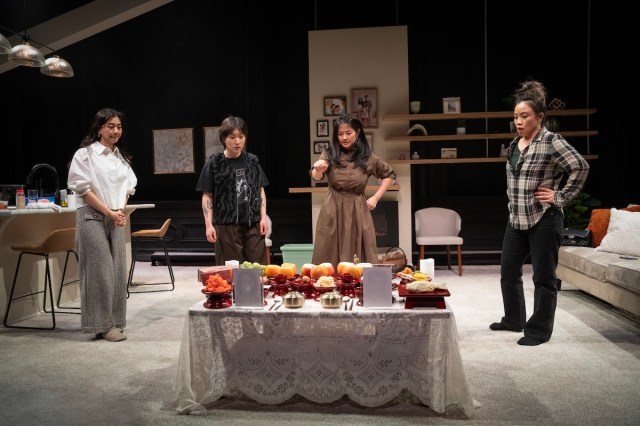
Four sisters meet at Grace’s (Shannon Tyo) house to perform Jesa—a Korean ceremony honoring late ancestors—for their deceased parents. Since the siblings are largely estranged, they decide to double up the ceremony and get it out of the way for both parents at the same time.
As they arrive, they quickly fall back into what we assume are the battle lines they drew as children. Though perfectionist Grace is giving big-sister energy, Tina (Tina Chilip), a motorcycle-riding wild child, is the oldest. Her natural ally is Brenda (Christine Heesun Hwang), a struggling theater director who sees her family as little as possible after escaping to New York. Grace’s second-in-command is Elizabeth (Laura Sohn), who works in finance and uses money to make problems go away. Over the course of a very late night, they recreate the traditional Jesa with rituals they barely remember.
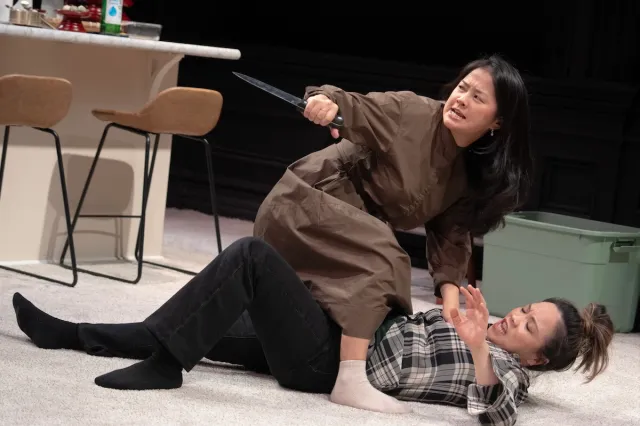
The central characters are interesting enough, but the conflict doesn’t ever become compelling, even when they chase each other around with knives. This is mostly because their feuds stem from their absent parents (Grace sees their mother as perfect, while Brenda was their dad’s favorite). They spend a lot of time adjudicating what happened in the past, but there’s nothing in the present that creates stakes. The parents are gone, so getting in their good graces doesn’t matter.
(© Joan Marcus)
Or does it? Midway through the play, Yi introduces the supernatural. An old CD player turns on by itself, emitting eerie sounds of the girls interacting playfully while the parents scream at each other in the background. An apparition coasts through the room (with sound design by Hao Bai and lighting by Jeanette Oi-Suk Yew, we can practically see the ghost ourselves). The play introduces scares that are so effective I jumped out of my seat (and made me wish the ghosts showed up earlier). The horror of becoming Mom and Dad, repeating their mistakes because they parented them into you, is relatable across all cultures. That idea would have been fun to dive into more deeply, even if Yi doesn’t want to go full-on nightmare.
Tyo makes Grace so restrained it’s often hard to read her, sacrificing nuance for realism. Chilip does a marvelous job snapping at the other women as viciously as Yi requires, but it makes it a little hard to relate to her when it’s asked of us. Sohn manages to sell a sudden reveal late in the play that isn’t in tune with the way her role is set up. And Hwang gives an understated performance in the most effective emotional scene, where Brenda reveals her insecurities.
This is an emotional beat that shows unrealized potential in Yi’s script. Mei Ann Teo’s uneven staging doesn’t really help; major moments play out too fast to land, while transitions seem stilted and slow.
A traditional family drama tinged with cultural conflict is an enticing idea, and with another round of development, Jesa could really work. But without a big injection of tension, it just feels like watching sisters bicker. You probably can experience that for yourself at your next family reunion.




Featured In This Story

Latest Reviews
See all

Latest Videos
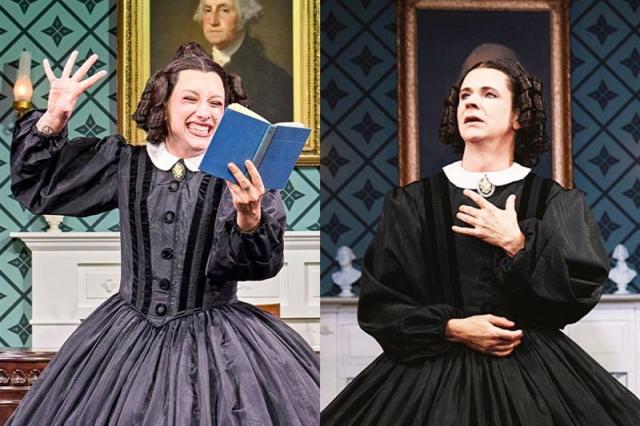
West End vs Broadway: Oh, Mary!—From an Angry Inch to an Angry First Lady, With John Cameron Mitchell and Mason Alexander Park
Mitchell and Park celebrate a decade-long friendship in our latest installment.