
On Treadmills and Cinnamon Toast Crunch: Meet Pony Cam, the Creators of Burnout Paradise
The international hit comes to the Astor Place Theatre for a sitdown off-Broadway engagement.
 |
Off-Broadway
|
|
Off-Broadway
|
February 17, 2026
The members of the Australian theater company Pony Cam met, as so many artists do, in school. As a collective, they’re responsible for off-the-wall, yet surprisingly contemplative pieces with titles like Boobs in Space, about the roles that breasts play in society, and Grand Theft Theatre, where they recreated 12 moments from performances lost to time.
For the last two years, they’ve been touring across the world with Burnout Paradise, in which four of the group’s five members dissect societal burnout while performing a series of escalating tasks (ranging from cooking a three-course dinner for two to filling out a grant application) while running on treadmills. If they don’t complete all the tasks and collectively outdo their previous highest distance, the audience is offered its money back.
All this to say, the stakes are high. And they’re even higher now that Pony Cam is gearing up for a full (and long) off-Broadway run of the show, February 18-June 28 at the Astor Place Theatre. They’re eating their Wheaties, literally: before very show, they start off with a giant bowl of cereal…that then is rated on a six-tiered point system that gets them ready to run their hearts out.
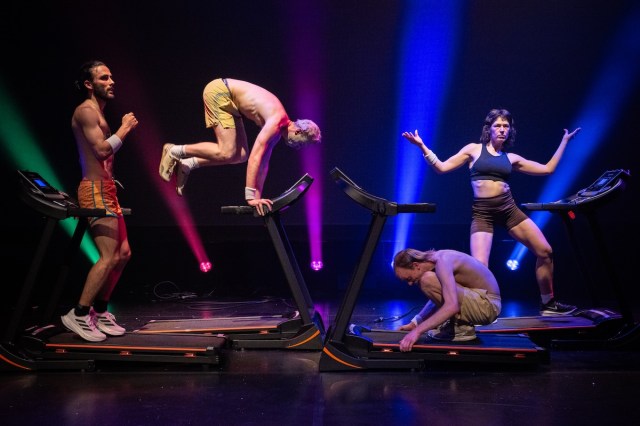
(© Teddy Wolff)
This conversation has been condensed and edited for clarity.
Can you tell me about PonyCam—namely, how the company began and where Burnout Paradise lives within your process?
Ava Campbell: We all met at university, and we decided to start a theater company. Since we graduated, we’ve been just generally going about the world and trying to make art. A lot of our work responds to site and responds to relationship. We’ll often work with older adults or youth and try and see where the meeting point is between us and them.
Hugo Williams: Burnout Paradise is, in the way that Ava talked about, an exploration between us and an audience, and our relationship around a shared lived experience of doing too much in a system that wants you to do more to be able to prove that you’re productive. Instead of challenging that assumption, we try and live it, and then ask the audience to say, “How can we look after each other better if we’re all forced to do this?”
This show was made at the end of a very long year when we wanted to get fit. We didn’t have any bold ambitions beyond that. So we bought four treadmills and we thought that it would make us healthier. People really liked it, and we’ve been forced to run on those treadmills for two years. There’s a gentle poetry of art mocking artists in all that.
Each treadmill is labeled with a different task: Survival, Admin, Performance, Leisure. How did you decide who would take the lead for each section?
Dominic Weintraub: I don’t know how we all started on the ones we started on, but we knew from the outset that we will all get the chance to play a game or do a particular task. All our shows have this kind of rotating structure in them, and it’s probably less important where start. The shows are always about us collectively trying to keep the game alive by each of us playing all of the roles together.
In the way we work, we don’t have a director. We work without a hierarchy and all the decisions we make are democratic. Or, at least we try our best to be. In that way, the process is a real negotiation of our different interests, aesthetics, desires, schedules, lifestyles. That process requires so much care and attention that all our shows become, in some way, a reflection on working together.

(© Teddy Wolff)
With the show running long-term, how do you protect yourselves and each other from mistakes, especially if an audience member doesn’t do exactly what’s expected?
William Strom: The show does us a favor in that respect, because it allows for variation and failure. If an audience member comes up on stage and does something that we weren’t expecting, there’s no preciousness around that moment. The space is open to us having a frank conversation with that audience member, being like “What do you want to do with this? What can we do with this? How might we modify it together to make it something we can share in?”
Allowing room for those differences helps keep the show alive for us as performers, knowing that, every night, we are required to be attentive to that specific show because it could be different than any other show we’ve done before. There are also aspects of the show that we do have to think about. We get someone to wax one of us at some point, and then we have to ask [ourselves], “If we’re doing 150 shows, do we even have that much body hair?” There are some interesting questions that come up.
Why did you decide to give audience members get a refund if you don’t complete all the tasks and out-do the highest previous distance?
Claire Bird: We’re always looking for a level of capturing what we believe is the essence of theater, of being attentive to the space and time when we’re in it. Alongside that comes a need for real stakes in the game. When we were figuring it all out, it wasn’t enough for us to just be doing these things or to be completing them. In this world where nothing is ever enough, it almost wasn’t enough to be burning ourselves out on treadmills. The reality of giving the money back is a huge thing for independent artists. So many artists drain their pockets to even get a work on stage. It is a huge thing in the arts to be like “If we’re not going to do it, take everything we have.”
How do you keep yourselves from burning out and not going crazy, especially with a prolonged run coming up?
Ava: Following what William said, the show really meets the performers where they are. That allows for an element of self-care. Behind the scenes, self-care is really prioritized. We set the limits of what we can all do individually and then find a happy medium amongst the collective.
Hugo: In terms of recovery, we look after each other, but once we leave that group into our own lives, we all respond differently. Some of us overeat, some of us become manic and need to party it out, some are very sleepy all the time. But we all try and eat cereal every night together as a ritual that holds us in sugar and carbs. We come here, Claire puts her hand in a big bowl of cereal, she fists some cereal into bowls, we pour milk, we eat. And then we rate that cereal intensely, often arguing about who’s right and who’s wrong. These things are an an act of collective care.
What’s the best cereal so far?
Claire: I can tell you. These are the Cereal ratings: edibility, relatability to milk, enjoyability, art, and lingering are the categories. Our most recent winner was Cinnamon Toast Crunch, with 106 points out of 120. It’s a high score.
Hugo: It’s a remarkable cereal. In every way, it deserves to be much more horrendous than it is in imagery and name, and yet it does something that’s just unbelievable.
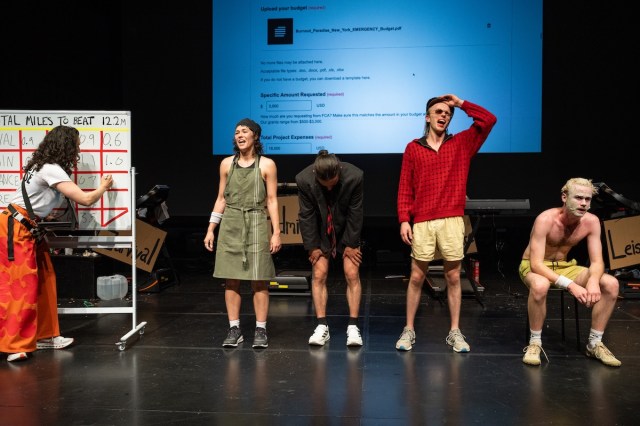
(© Teddy Wolff)




source on Google
Featured In This Story

Related Articles
See allLatest Reviews
See all
Latest Videos

Watch: Zachary Noah Piser Performs "Where You Belong" From Maybe Happy Ending
This record is going right next to Gil Brentley Jazz Orchestra 1957.