
Interviews
Interview: Snehal Desai Directs a New Version of Here Lies Love, With LA and Filipino Audiences in Mind
Here Lies Love has been extended at the Mark Taper Forum through April 5.
 |
Los Angeles
|
|
Los Angeles
|
March 13, 2026
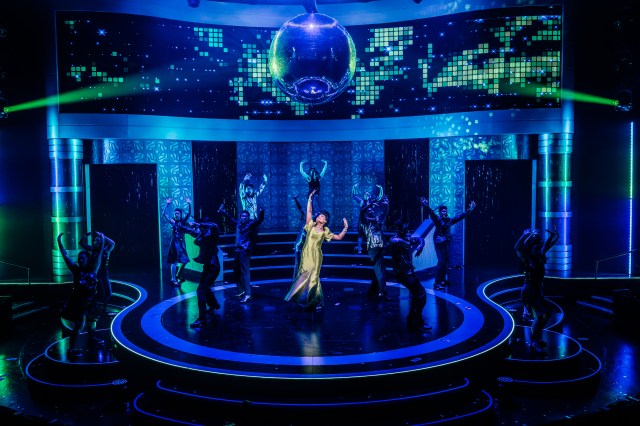
(© Jeff Lorch)
In 2024, as the new artistic director of Center Theatre Group, Snehal Desai directed American Idiot, in collaboration with Deaf West Theatre. For his next show at the helm, he chose another sung-through musical based on a concept album with a political message, Here Lies Love, a show that had stuck with him since he first saw the 2013 premiere at the Public Theater. “I’m in my investigation of American identity phase,” says Desai.
The off-Broadway and Broadway productions of the David Byrne and Fatboy Slim musical about Imelda Marcos, former first lady of the Philippines, were set in a disco club with many audience members standing up, but this production has traditional proscenium seating. Desai spoke to TheaterMania about what makes this new production, the first since the show’s Broadway run in 2023, specific to Los Angeles, home to the largest Filipino population outside of the Philippines.
This conversation has been condensed and edited for clarity.
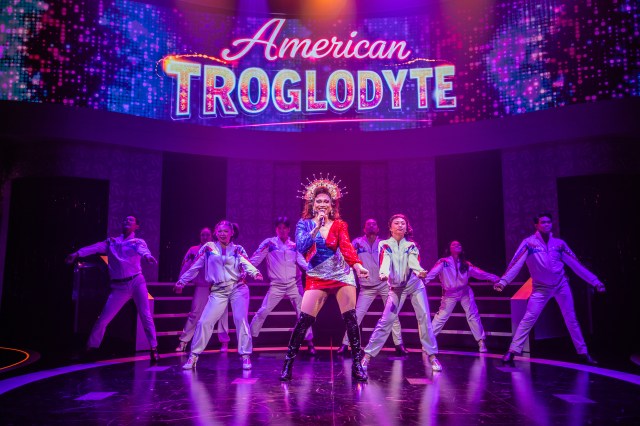
(© Jeff Lorch)
How did you come up with the variety show concept?
I knew I wasn’t going to be able to tear out all the seats in the Taper, nor did I want to re-create what the original creative team did so brilliantly. Our scenic designer said the structure of the show reminds me of these noontime shows in the Philippines where you have a variety of different acts and a host and there’s drama in between and sometimes politicians come on. I was like, “Oh that’s so interesting because that is our show.” And also, that’s what LA is known for, so the audience becomes the TV studio and the interactivity components can still be there, but just in a different way. So, it was tied to Filipino culture and to Los Angeles.
And then adding the new character Imeldific [played by Aura Mayari], did that come naturally from the concept?
The Broadway and off-Broadway production had a DJ character to welcome you at the top and be your host through the journey. The three leads—Imelda, Aquino, and Marcos—don’t really have a redemptive arc. You’re not going to give that to Imelda and Marcos and Aquino gets assassinated. So [Imeldific] is the character that can have a larger arc. They initially start the show pulled into the world of glitz and glamour, Imelda’s world, and they’re ignoring some of the other things, but then gradually they are confronted with it by other members of the company as the story goes along and they have to wrestle with it. And we decided to take the “American Troglodyte” song and make that the reprise throughout. It’s such an interesting song because a troglodyte is a primitive cave-dwelling human being, but it’s an upbeat big song at the top of the show and we take that song and revisit it through the lens of this character, so that by the end it almost feels like a rebuke to all of us to wake up.
What is it like doing this show in LA, where there is such a large Filipino community?
It’s been so moving and so empowering and also hard. What I hope is that this piece is creating a doorway for conversation and healing. Every night when I stand in the lobby, folks come up to me and say we left because of martial law or my parents were part of the revolution or I was and the show gives them an opportunity to share memories. And also, folks say I didn’t know the role that the US played in Philippine politics for so long and so they learn that history, particularly because there’s also some very direct LA connections. In 1981, Ninoy Aquino delivered this stunning speech at the Wilshire Ebell that we end the show with, and to know that it was delivered here in LA, it brings this full circle moment.
What does it mean to you to be a part of a mostly AAPI creative team?
It’s a piece that was conceived by David Byrne who was in the Philippines and has a connection, but it’s now an AAPI company putting the show on. It reflects all the complexity and experience between these countries. The best artists are ones who are often on the periphery able to look in and give us a layer of remove to it, and I think he was able to do that. But it was a reclamation project in some ways. I wanted it to be an all AAPI team, or as much as possible, particularly an all Filipino company, so that we could have ownership of the story in a different way through our own lens and experience and that was really important at all stages, with the costumes, with some of the more traditional Filipino dances we integrated into the movement, even the idea of being a noontime TV set. And also with the language, we put in a lot of Tagalog.
You end with the actors singing, “Rise up,” at the curtain call and the quote from Aquino about saying no to tyranny. Do you hope this will be an inspiration to audiences?
I hope it’s inspiring and empowering. I hope it will get folks to go out on the streets and protest and to speak up and to rise up and know that there’s a path of nonviolent resistance when you’re faced with power and there are models for that. It’s not like this revolution happened and everything was good. So many things are cyclical and we need to remember this history so we can break out of it.

(© Jeff Lorch)




Latest Reviews
See all

Latest Videos
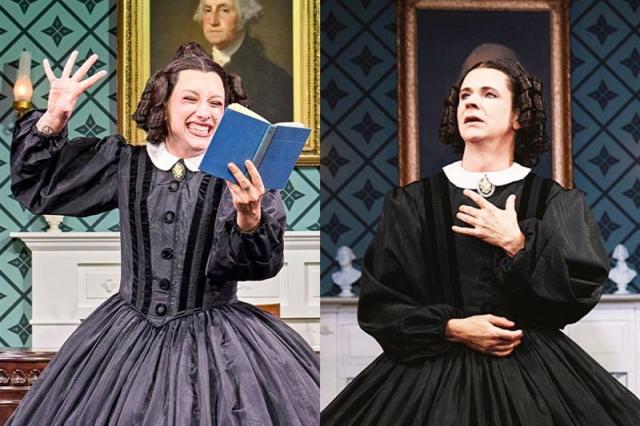
West End vs Broadway: Oh, Mary!—From an Angry Inch to an Angry First Lady, With John Cameron Mitchell and Mason Alexander Park
Mitchell and Park celebrate a decade-long friendship in our latest installment.