
Interview: S. Asher Gelman on The Zionists After October 7, and the Value of Uncomfortable Conversations
The playwright discusses how October 7 reshaped his worldview, the family divisions that inspired his play, and why it is meant to start conversations, not end them.
 |
Berkshires
|
|
Berkshires
|
June 30, 2026
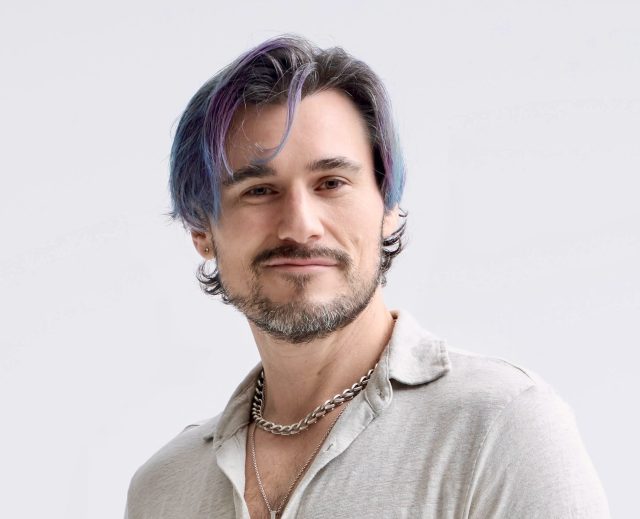
(handout image)
On October 7, 2023, playwright S. Asher Gelman was on a family vacation when he learned of the Hamas-led attacks on Israel through social media. As horrifying as the violence was, what unsettled him just as deeply was watching people he considered friends and allies respond in ways he didn’t expect.
“These were people with whom I had marched through all of 2020,” Gelman recalls. “I was part of this progressive coalition where there was no little guy because all of us were standing up for each other. And then, suddenly, it was like, ‘But not when it comes to Jews.'”
In the days that followed, he watched people justify the attacks, argue over the definition of antisemitism, and quietly distance themselves from Jewish friends and colleagues. “I just felt so lost,” he remembers. “There was nowhere to have a conversation about any of these issues without it getting shut down.”
Naturally, he turned his feelings into a play. The Zionists: A Family Storm, which premiered earlier this year at Miami New Drama and is running through July 3 at Barrington Stage Company in the Berkshires, traps a wealthy Jewish family not unlike Gelman’s own inside a luxury resort in the Caribbean as a hurricane bears down. The literal storm forces them into an existential one that exposes their profoundly differing thoughts about Jewish identity, Israel, and each other.
The title is intentionally provocative. “I’m under no illusion,” Gelman says with a laugh. “It’s a hot fucking word.”
That’s precisely why he chose it. Depending on who’s saying it, “Zionist” can contain an extreme sense of pride, mild derision, or complete and abject hatred. Rather than impose his own definition on the audience, Gelman wanted to explore how people understand it. In his play, he puts eight intelligent people with conflicting beliefs in the same room and lets them talk. The subtitle, “A Family Storm,” was added later to make it clear to audiences that they weren’t walking into a piece of pro- or anti-Israel propaganda.
“This isn’t trying to push a specific political agenda as much as it is ultimately about having a nuanced conversation.”
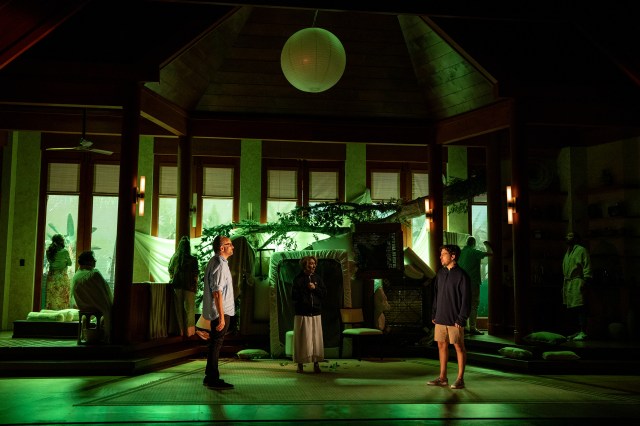
(© Daniel Rader)
These debates are hardly abstract in Gelman’s real life. His parents are prominent Jewish philanthropists Susie and Michael Gelman; his sister, Rachel, is one, too. Susie Gelman was reportedly on President Biden’s shortlist to be named ambassador to Israel before her appointment to the US Commission on International Religious Freedom. Rachel Gelman leads the Bafrayung (a Yiddish word meaning “liberate”) Fund, which supports organizations advocating for Palestinian rights.
In the play, matriarch Ruth was up for a similar ambassadorship before being chosen for an “interfaith coalition.” Ruth’s son Aaron uses his inheritance to set up the “Abraham’s Sons” foundation to support Palestinian causes. This fictional nonprofit is written up in an article where it’s called “the single greatest funder of pro-Palestinian causes on college campuses.” Rachel Gelman’s real one was called “the single largest sponsor of pro-Palestinian activist groups involved in campus demonstrations and adjacent actions.”
You can’t accuse Gelman, who lived in Tel Aviv for a decade and knows that there are “a lot of valid criticisms” about the way the Israeli government has handled the war in Gaza, of not writing what he knows. But he wasn’t interested in a black-and-white piece where one side is right, and one isn’t. He’s more focused on how and why people from the same family can arrive at such vastly different viewpoints.
“There’s a version of this play where one side has all the great arguments and the other side has no knowledge,” he says. “The challenge was, what if these are smart people who have actually done their research?” None of his characters are villains—”even the worst humans in history didn’t see themselves as being bad people,” he says—and he worked hard to ensure each argument was as balanced as possible.
Because the play specifically examines the various fractures within the Jewish community itself, Gelman chose not to include a Palestinian character, despite early suggestions that he should. “That would have fundamentally changed the play,” he explains, noting that the piece is strictly focused on “the exploration of what it means to be Jewish now.”
It’s a question that has only become more urgent as antisemitism has risen and debates over Israel have grown increasingly polarized. “There are things that aren’t necessarily antisemitism that are being called antisemitism,” he says. “And there are things that are very obviously antisemitism that are being cleansed to be considered less antisemitic. The thing that is so sad to me right now is seeing the real splintering of the Jewish community over what’s going on.”
Gelman knows the play could never include every single line of thought, and if audiences leave the theater either satisfied or with their blood boiling, he considers that a success.
“This play was never intended to be the end of a conversation,” he says. “This was always supposed to be the beginning of a conversation. Everyone’s going to hear something they totally hate; everyone’s going to hear something that they love.”
In the end, The Zionists isn’t asking audiences to agree with one another. It’s asking them to resist the temptation to stop listening.
“We’ve become rather allergic to all forms of discomfort. This translates to our collective inability to have uncomfortable conversations, and to demonize and ostracize those with whom we disagree. This play begs us all to stay in the room, even when—especially when—it is uncomfortable,” Gelman says.
“No matter how many times we smash that block button, we have to find a way to live with each other. We have to get comfortable with discomfort.”
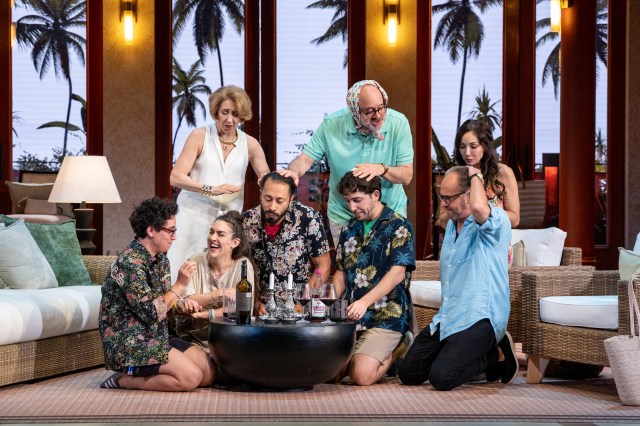
(© Daniel Rader)




source on Google
Featured In This Story
Related Articles
See all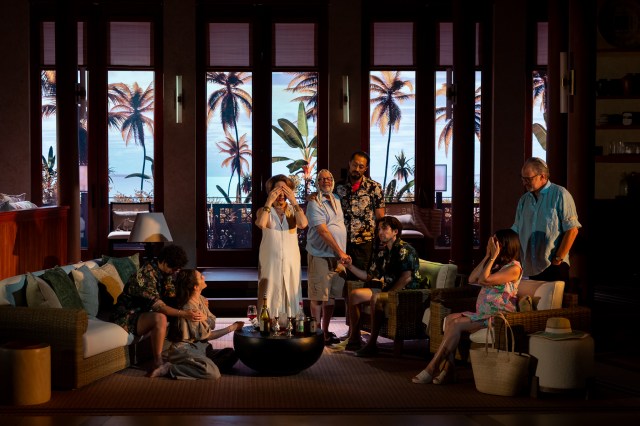
Latest Reviews
See all





Latest Videos
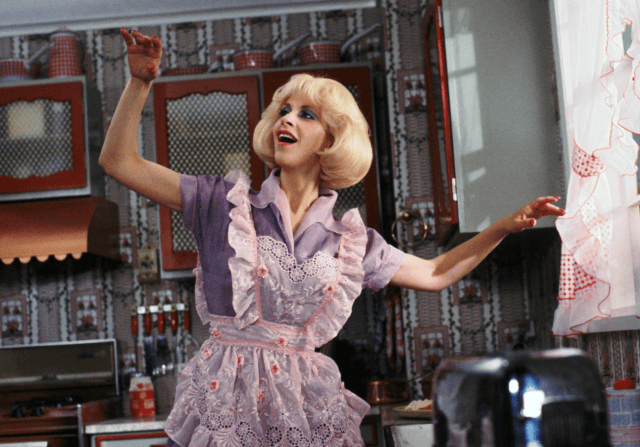
Watch: Ellen Greene Reflects on the Enduring Legacy of Little Shop of Horrors
Frank Oz’s cult classic movie-musical has gotten a new 4K restoration in celebration of its 40th anniversary.