

Special Reports
Mother Knows Best: Leslie Rodriguez Kritzer and Ruthie Ann Miles on Finding New Meaning in The Fantasticks
This new revival of the classic musical queers its central lovers and turns their dads into moms.
 |
Broadway
|
October 22, 2026
Leslie Rodriguez Kritzer and Ruthie Ann Miles knew The Fantasticks before they even knew The Fantasticks.
Kritzer learned to sing “Much More” from a copy of the vocal selections she discovered in her childhood piano bench, while Miles studied the Tom Jones-Harvey Schmidt musical so thoroughly in school that she still has an encyclopedic knowledge of its score, story, and original production. Yet neither had ever seen the show performed.
Now, starring in Second Stage’s new reimagining that recasts its two fathers as mothers and its young lovers as two men, the Broadway favorites are discovering fresh emotional depths in a classic they thought they already knew, and finding that its timeless message transcends all change.
This conversation has been condensed and edited for clarity.
Do you remember your first time discovering The Fantasticks?
Leslie Rodriguez Kritzer: When I moved into my childhood home, there was a piano already in the house. And in the piano bench was the vocal selections for The Fantasticks. So that was my history with The Fantasticks: I grew up and learned piano and learned to sing “Much More.” And then, of course, as I got into musical theater and I got older, I learned more about the score. But I’ve never seen the show. This is my first time having hands on experience with it.
Ruthie Ann Miles: I remember studying it in school, in musical-theater history, with the black and white photos [of the original production]. It was one of the maybe five shows that was heavily tested upon, so we had to know the score inside out, and we had to know the story inside out, and every single name associated with the musical up to that point. I Feel like I had this insider knowledge about it. I have way too many facts about The Fantasticks in my head. But I also hadn’t seen it.
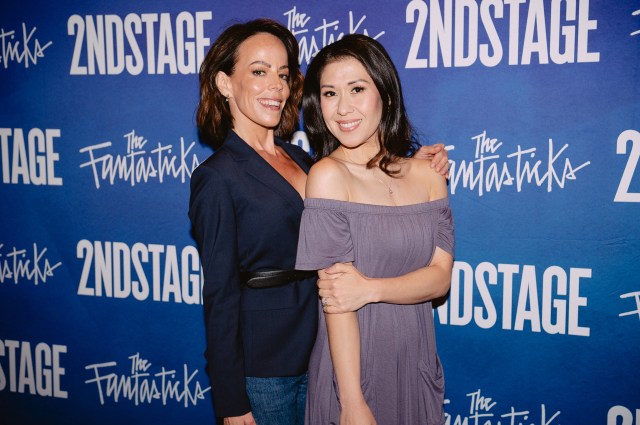
(© Michaelah Reynolds)
I feel like it’s one of those shows that people think of as quaint, but then you actually listen to something like “Try to Remember” and you realize—
Ruthie: How real and deep it is.
Leslie: Ruthie and I were in front of the theater and a guy with his daughter was walking by—
Ruthie: And he was like “Oh, The Fantasticks. I have to see this.” And then he started singing “Try to remember that kind of September.” And Leslie goes—
Leslie: “You’ve got to come back and see it.”
Ruthie: “We’re in it!”
Leslie: “Those are our faces!”
Ruthie: And he’s like “Oh, my God! We live in North Carolina.” But he’s like “I used this song as my audition song for years.” Everybody has a Fantasticks story.
Leslie: And they love it.
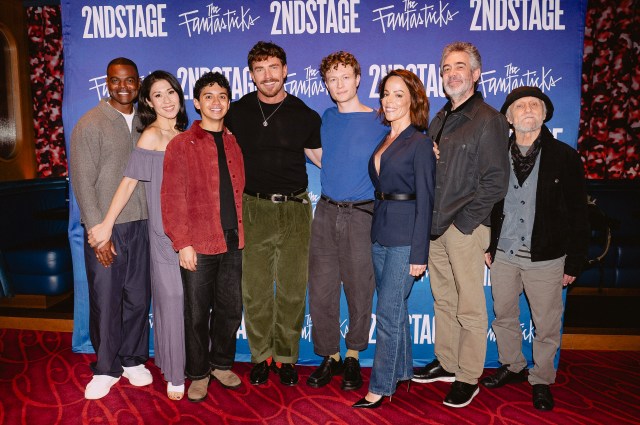
(© Micaelah Reynolds)
How does The Fantasticks change when you turn the lovers into two men, and the fathers into mothers?
Ruthie: I think The Fantasticks is a really simple story about how parents relate to their children and how children make decisions. It’s a story about how parents love their children and want the best for them, and how children need to grow up so that they can have their own best life. It’s this cycle of I love you and you love me and I let you go and you come back. It’s a story that every single human on planet Earth can relate to in some form. It’s different now.
Leslie: It’s very different.
Ruthie: Because we have moms who love their children differently than dads would love their children. And having these two boys who love each other, somehow the music and the story, everything feels purer, cleaner, more defined, very, very understandable and relatable. And it’s not that it wasn’t before, but I see it differently. And I feel like audiences that come in will know exactly what’s happening in this moment without anything getting muddy. We talk about it being a—
Leslie: It’s a queer love story.
Ruthie: But it’s also just a love story.
Leslie: As far as the mom element, you know, Ruthie is a mom. I’m not. I get to have this amazing maternal vibe that I take from her. I’m going to shout out “Plant a Radish,” which is normally sung by two dads. Now it’s sung by two moms that brought life into the world. You can put a seed in the ground, and you know what vegetable is doing to come out. But with children, you can’t plan that and you can’t protect that. We all have to go in the world and learn. I think, as parents, you want to protect your children, right? You want to protect the people we love. And that is part of the story, too: letting go of control and letting people have the experience they’re supposed to have
Ruthie: As the ultimate form of love.
Leslie: That’s right. Letting go. If you love someone, set them free. And that is truly a theme I couldn’t have seen coming in this, for me, personally. But working with Ruthie, and us kind of breathing new life into this, it’s really special. And you’re gonna cry. We cry.
Ruthie: We cry. Every day.
Leslie: And I feel so lucky. I’ve always loved Ruthie from afar and have been such a fan.
Ruthie: Oh! I love you!
Leslie: And now we get to share a dressing room, we get to work together. I couldn’t feel more blessed and lucky.




source on Google
Featured In This Story
Latest Reviews
See all

Latest Videos
Watch: Ellen Greene Reflects on the Enduring Legacy of Little Shop of Horrors
Frank Oz’s cult classic movie-musical has gotten a new 4K restoration in celebration of its 40th anniversary.