
Interviews
Interview: Paul Shaffer and Nick Davis Prepare Ye for the New Toronto Godspell Documentary
Shaffer was the musical director for the 1972 production, which starred Martin Short, Victor Garber, Eugene Levy, Gilda Radner, and others.
 |
New York City
|
September 16, 2026
The thing about theater is that it disappears. Before the days of proshots and slime tutorials, all we really had were photographs and passed-down memories (and the occasional audio recording). That’s how the legend of the 1972 Toronto production of Godspell survived: through people talking about its astonishing cast, an insane pack of rising stars that included Martin Short, Gilda Radner, Eugene Levy, Andrea Martin, and Victor Garber. No one in the audience could have known that they were watching the future of comedy take shape right before their very eyes.
Well, one person knew: Paul Shaffer. Plucked from relative obscurity by composer Stephen Schwartz to be the show’s musical director, Shaffer had a front-row seat at the Royal Alexandra Theatre, long before he had a front row seat at the Ed Sullivan with David Letterman. And Shaffer was well aware that this gang was almost too good to be true.
What a lot of people didn’t know was that Short, who had spent his youth recording just about everything in his life, set up two microphones and a tape recorder on stage during one performance and essentially bootlegged the show himself.
It is through that audio that director Nick Davis was able to create the new documentary You Had to Be There, giving us an unexpected chance to hear the past come back to life.
Davis and Shaffer sat down to discuss the wild ride that was Godspell, the once-in-a-lifetime cast, and the little cassette that somehow saved it all.
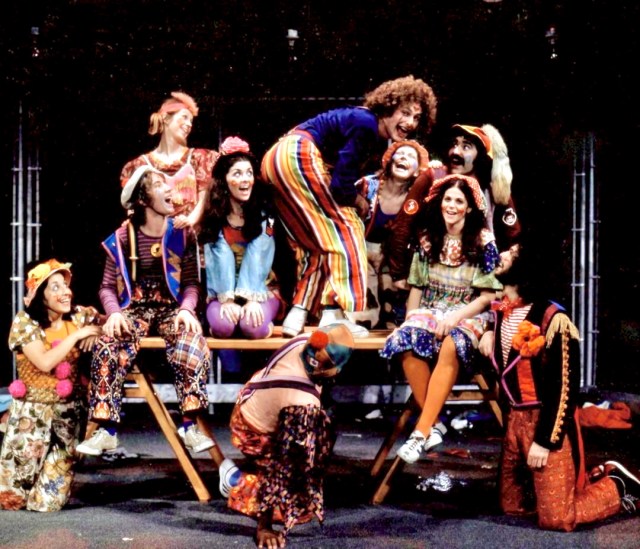
(© Greenwich Entertainment)
This conversation has been condensed and edited for clarity.
The Toronto Godspell is one of those storied productions. Nick, do you remember how you heard about it?
Nick Davis: I had always known about this production, but not coming from theater, I didn’t really know what Godspell was. I just thought it was this goofy, sappy musical. It made no sense to me that these brilliant comedians had all been in it. One day, many years ago now, I was reading Marty [Short]’s memoir next to my wife Jane, who is now my creative partner in our production company, and she hadn’t heard of it, so she was amazed. And then, when I came upon the fact that Gilda [Radner] and Marty had dated, that really got us going, like, “These were just kids. What was that like?” That was what sparked us, and I thought, “Why has there never been a documentary about this?” The sort of obvious answer is, because there’s no footage. But that didn’t deter us.
How did you come to realize that Martin Short had essentially bootlegged the whole show himself, and how willingly did he give you his archive?
Nick: Completely willing. I had lunch with Marty and went in thinking “I gotta pitch this,” and he said, “I’ve already talked to everybody and we’re all in.” He then said, “I took a tape recorder, and I recorded it on November 17, 1972, and we’ll give it to you. And also, I took my tape recorder to cast parties of us just drinking and smoking and having a great time trying to make each other laugh and I’ll send you that, too.” At the end of that lunch, I was like, “We got this.”
Paul Shaffer: Marty had put up two little microphones on a tiny little cassette player and recorded the audio in the Royal Alex Theatre. We spent two long days restoring it with an engineer taking the pops out and that stuff. But we just did it for our own edification. It came in handy when Nick wanted to do a documentary.
Paul, from the audio in the film, it seems like you guys were having a grand old time. Is that as true as it appears?
Paul: Absolutely. That was the main thing: it was so much fun. All of a sudden, we’re in a show with like-minded people that are funny and talented and musical, and the show was constructed such that they got to put in their own shtick. Everybody got to show off within this structure of, what if Jesus was a clown? In retrospect, it sounds a little peace and love; after all, it was 1972. All I ever wanted was to be with Sinatra and Dean and Sammy, but we had our own Rat Pack. You couldn’t get any more swinging than we were, up in Toronto doing this show.
You came in to accompany your friends at their audition and ended up getting hired by Stephen Schwartz.
Paul: That’s right. I was coming with two gal friends of mine, and both had done enough auditions to know that you’re usually relying on the house piano player. I rehearsed their numbers with them. One girl, Avril Chown, sang a song from the show, and that’s when Steve Schwartz said, “I want to talk to that piano player.” Steve could tell that I could rock a little bit, you know? I said, “Aren’t there a million piano players?” and he said, “Yeah, but they don’t hit the piano like a percussion instrument like you do.” Next thing I knew, I was in show business.
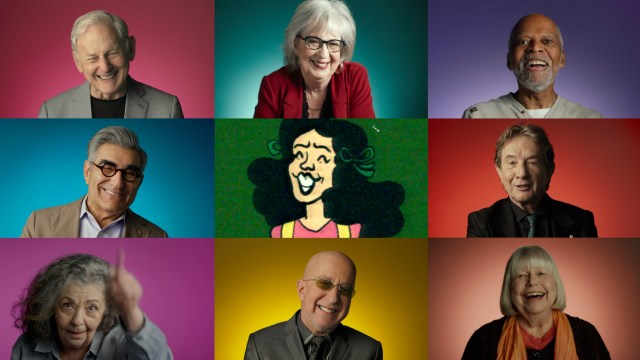
(© Greenwich Entertainment)
It’s crazy how this one production basically gave a start to all the figures that would go on to define the last 50 years of entertainment.
Nick: A lot of things were coming together at that moment. Toronto had so much comedic talent, and Godspell was almost like a magnet. Second City opens a branch in Toronto, and they just basically raided the whole cast of Godspell. And Lorne Michaels is around and he had seen Godspell, and he got his own show going and the first person he cast was the woman he saw in Godspell, Gilda. All of a sudden, the wall between Canada and the U.S. came tumbling down.
Looking at you and all your cast mates, Paul, did you get the sense that they were going to get famous?
Paul: No question about it. Gilda was not only adorable, but just the funniest person. She was very, very free to admit that sometimes she would pee her pants a little bit because she would laugh so hard. Gilda loved to laugh. Andrea Martin was from Maine, but came to Toronto with You’re a Good Man, Charlie Brown and decided to stay. She was so original. I’d never seen anything like it. And then you had Victor Garber, who sang like an angel. He claims he doesn’t sing anymore. He became more of an actor. But talk about a guy to lead the company, and he sure did lead us in fine style.
Nick: What’s amazing about the audio tapes, listening to them, you can recognize Eugene Levy. And then there’s this laugh off to the side that I’ve been hearing since 1982 and it’s Paul Shaffer. It’s mind-blowing and moving.
Paul: Godspell was the most important experience that ever happened to me, and that was true of all of us.
Paul, I was really impressed that, after all these years, you seem like you still can do the score from memory.
Paul: Absolutely. I had memorized it because a lot of it I had learned by ear from the record. That’s kind of how I work. Except this huge, long prologue that came in the mail that I really had to learn. I don’t forget music. I could do the show now.
What does it mean to you that this film now exists to sort of memorialize and celebrate the experience?
Paul: I think it’s great, and I think that some of us may not realize yet how great this is. Some of us focused on, “Gee, I wish there was more that we could have shown.” But that’s kind of the fun of it, too. And I predict that this is going to be a real, important artifact for all of us.
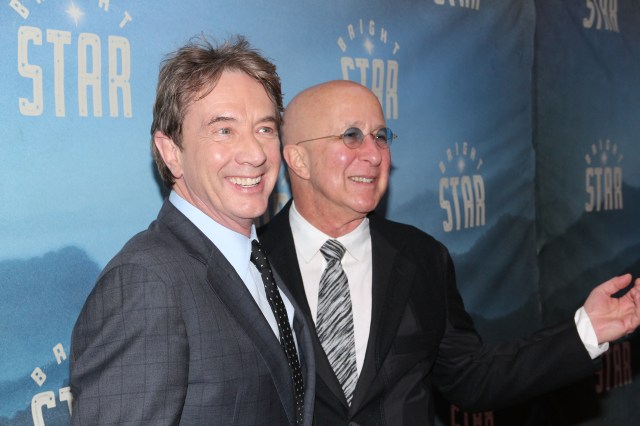
(© David Gordon)




source on Google
Latest Reviews
See all

Latest Videos
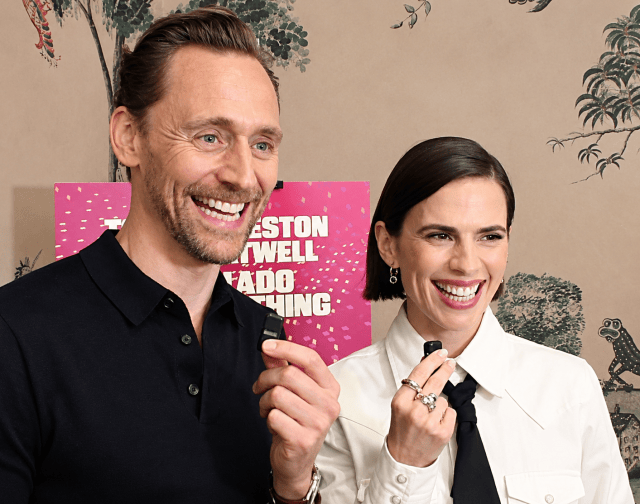
Watch: Tom Hiddleston and Hayley Atwell Are Ready to Spar in Much Ado About Nothing
The longtime friends take on Shakespeare’s beloved Benedick and Beatrice in Jamie Lloyd’s confetti-filled production on Broadway.