
Interview: Jesse Tyler Ferguson Talks Truman as He Takes on Tru
The Tony winner plays Truman Capote in a solo show at House of the Redeemer.
 |
Off-Broadway
|
|
Off-Broadway
|
March 26, 2026

(© Marc J. Franklin)
It’s mere moments into Tru when the line between performer and persona all but disappears—and that’s exactly where Jesse Tyler Ferguson wants audiences when they visit the intimate theatre space at House of the Redeemer.
What began as a one-night benefit reading of Jay Presson Allen’s play in Morocco has evolved into a deeply immersive turn as Truman Capote, a role Tony Award winner Ferguson (Modern Family, Take Me Out) admits he never expected to take on, let alone inhabit so completely.
In a recent interview with TheaterMania, Ferguson candidly reflected on the slow, inevitable slide into Capote’s singular voice and psyche, the thrill (and terror) of holding an audience rapt for 90 uninterrupted minutes, and the poignant parallels between Capote’s fame and our own modern obsession with celebrity.
(© Marc J. Franklin)
This conversation has been condensed and edited for clarity.
What initially drew you to the role of Truman Capote?
[Director] Rob Ashford asked me to do it a few summers ago as part of a benefit reading in Morocco. I never imagined tackling Capote. By the time I did it for the one-night-only performance, I was fully immersed in it. After that experience, I thought, “Now I kind of want to go further with it and really work on it.” I obtained the rights, and here we are today. I’m the age that he is in the play [50], so that’s also a happy circumstance. I’ve gotten to take some really fun, big swings onstage, but doing something like this where I’ve become someone so well-known has become a really fun challenge for me.
Were you previously a fan of his work?
I read In Cold Blood when I was in high school, and I became fascinated with him as a pop culture figure, partially because he’s a great storyteller, but also because he had this strange little voice. I remember seeing clips of him on late night talk shows kind of sloshed, and I was like, “Who is this guy?”
How did you master his voice and distinctive personality?
He’s so well documented. Finding samples of him at different stages of sobriety is easy. It was also very helpful to look at other famous portrayals of him to see how far you can take it. I’m not shy about ever saying that I go to other people’s work for inspiration, especially if someone else has done this character to great success: for example, Robert Morse and Philip Seymour Hoffman. I wanted to make sure whatever I looked at, I was able to take Capote’s information and filter it through myself. It’s really challenging because I have to fly with him for 90 minutes. That takes a different set of muscles than it would on camera when you can take breaks. I had to be kind to myself. I have to trust that what I bring to the part and how I layer it upon who I already am is enough.
(© Marc J. Franklin)
How do you maintain the incredible energy and emotional connection with the audience throughout the entire piece? They are riveted as you play off of them.
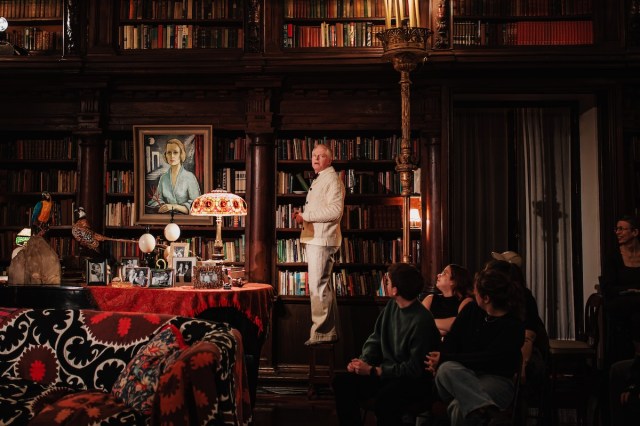
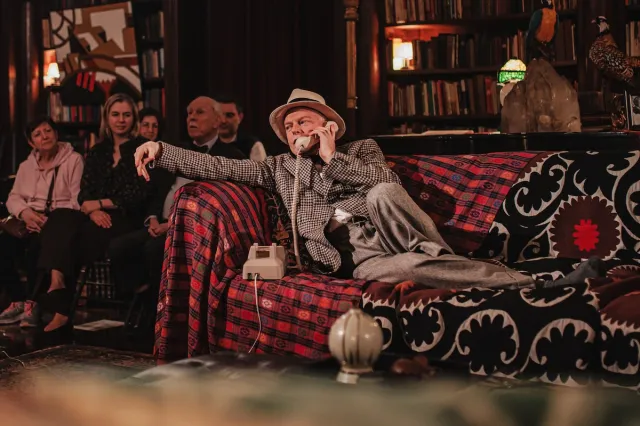
Every audience is very different, and it’s tricky because people are so close to me. There’s nothing separating me from them; we’re all sharing the same space—and occasionally, even the same couch! I see everything. It has been a real exercise in concentration because it would be very easy for me to get wrapped up in everyone’s enjoyment level. Oh my god, they glanced down at their watch for point-2 seconds! Are they bored? The benefit of being so focused is that there’s no space for me to slip.
There must be so many Easter eggs in the phenomenally detailed set of Capote’s apartment.
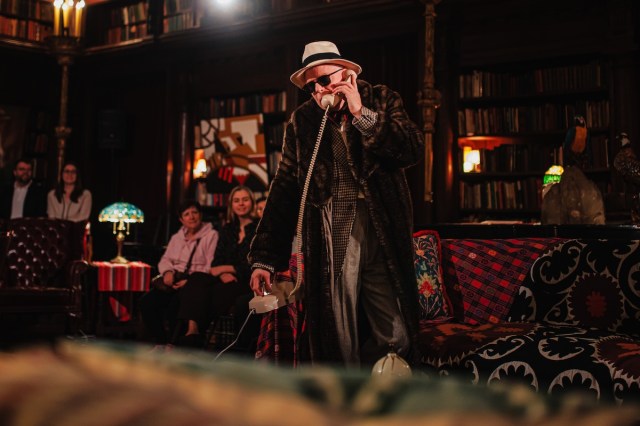
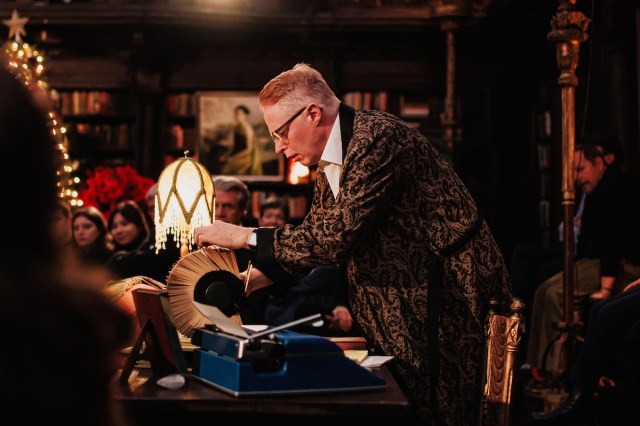
I’m obsessed with the set. Obviously, we’re in a space where it’s already such a grand, wonderful, gorgeous New York institution. [The theatre is part of an Upper East Side mansion previously owned by the Vanderbilts]. People are free to walk around the set and glance at things. I know Truman Capote handwrote in yellow legal pads before typing them up, so I wrote out some of Answered Prayers, because that was the book he was writing at the moment, and left it on the desk. There’s a list of people that he’s inviting to the black and white ball. There are many photographs of the actual Truman Capote with his celebrity friends, books that he’s written, beautiful swans in different places. By the telephone there’s a number for Western Union, because that’s a number I call in the play. I want all of the things I access in the play to actually exist in it.
What were you surprised to learn about either Truman or yourself throughout the creation of this production?
I was struck by how he forecasted a great fascination with celebrity. That’s sort of what he was providing back then—and it’s also what he got in trouble for—his access to people. I find it fascinating that this was what got him canceled. I think he was one of the first people who had to go through that publicly. Those parallels of who he was and what he provided for pop culture were things I didn’t pick up on when I first started working on this.
I also learned about the price of fame. I was lucky enough to be on a sitcom for 11 years, and people know me to be a certain way. Most opinions of me are very lovely and people have good will toward me. The price of fame was harder on Truman because he was such a truth teller and had a sharp tongue. I think about people in pop culture now who get in trouble on social media, and I have sympathy toward that. Truman paid a price for being good at what he did. I need to find the good in him because I am playing him, but I am also aware of how he hurt a lot of people. Finding the struggle within that has been interesting.
(© Marc J. Franklin)
What do you imagine Truman would have thought about Modern Family, a show that was applauded for its groundbreaking depiction of many different types of couples and families?
He was fascinated by celebrity, and if it was something that was popular, he would have been on board with it. Truman lived such an interesting life as a gay man—as someone who was unabashedly out there and never hid his sexuality—but that meant something different back then. I wonder how he would feel about a gay character on television being so mainstream. It would have been interesting to see. Unfortunately, he left this world before things got better for someone in his position. I wonder how he would have operated with more acceptance.
You recently visited the revival of The 25th Annual Putnam County Spelling Bee, in which you originated a role. Are there any productions you’d like to see revived on Broadway with you in the cast?
I would love to be in discussion for a production of A Funny Thing Happened on the Way to the Forum. That would be an incredible show to be back on Broadway. City of Angels too, but I don’t know if I’d be right for that. Things just come up. Tru was never on my radar. Now I’m thrilled that I get to do it!




Featured In This Story
Latest Reviews
See all

Latest Videos
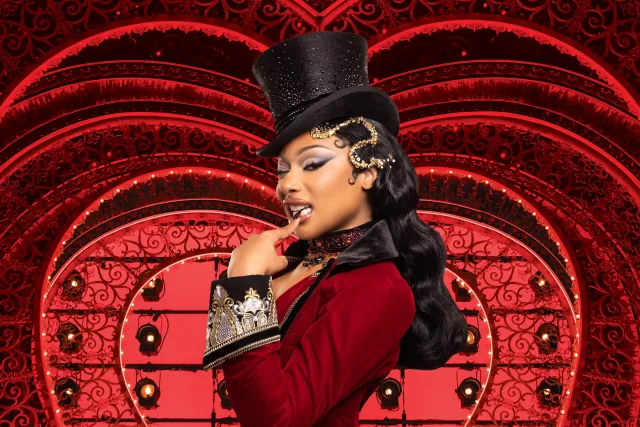
Get a First Look at Megan Thee Stallion as Zidler in Moulin Rouge! on Broadway
Megan Thee Stallion starts performances on Tuesday, March 24.