
Interview: Jennifer Tilly Sums Up Her Rich Experience in The Adding Machine
The play is performing at the New Group’s new home at Theatre at St. Clements.
 |
Off-Broadway
|
|
Off-Broadway
|
April 14, 2026
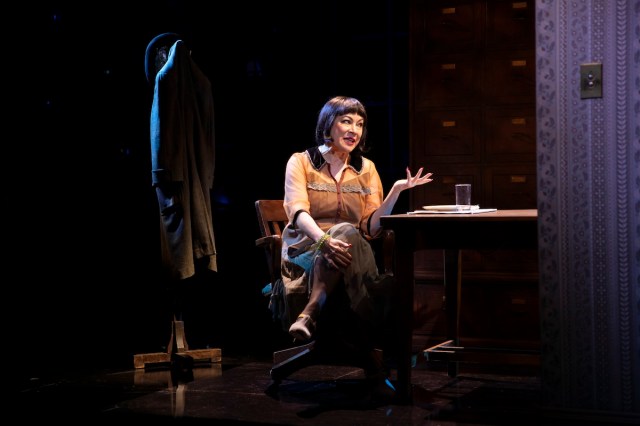
(© Monique Carboni)
With a career that spans cult horror, sharp comedy, and Oscar-nominated films, Jennifer Tilly has long been known for her distinctive voice, magnetic screen presence, and fearless approach to performance.
But onstage in The Adding Machine, Tilly is trading glamour for grit, immersing herself in one of the most intellectually and emotionally demanding roles of her career. Ten years after starring in Grasses of a Thousand Colors, she returns to the New York stage at the New Group’s new home, Theatre at St. Clements, to reunite with director Scott Elliott (The Women) in a play she calls “creatively invigorating.”
In The Adding Machine she embraces the challenge of portraying Mrs. Zero, a woman yearning for even the smallest fragment of happiness. Tilly spoke with TheaterMania about Elmer L. Rice’s 1923 satire and why it’s striking a chord more than a century after its debut. While theater profoundly “feeds her soul,” Tilly reveals that her playful side finds comfort in Betty & Veronica comics and that she continues to dream of one day stepping into a Broadway musical.
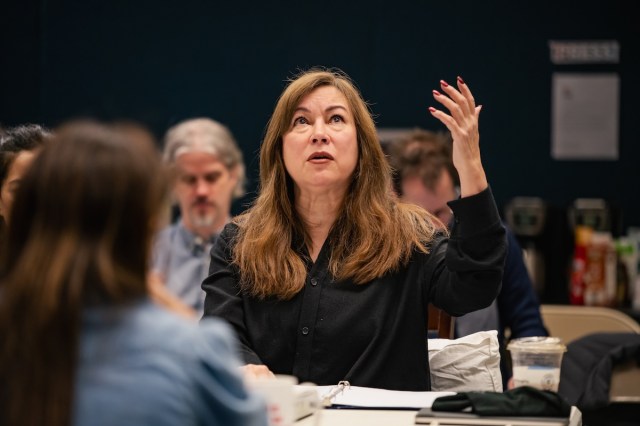
(© Natalie Powers)
This conversation has been condensed and edited for clarity.
We have missed having you on the New York stage. What was it about The Adding Machine that compelled you to return?
The play is one of the most challenging, artistic plays I’ve ever done. With a lot of film and television, you barely scratch the surface. With theater, I love doing a deep dive into the character and the themes. The characters in The Adding Machine are living lives of quiet desperation. They have big dreams, but their dreams are not really that big. Mr. Zero has been at his office for 25 years adding numbers. His big dreams are that one day he will get promoted. I play his wife, Mrs. Zero, who also has a very bleak existence being married to this shadow of a man. Her big dream is to go downtown on a date to see a movie when it first comes out instead of waiting until it gets to the cheap theater near them. There’s a lot about really deep loneliness and how people don’t know how to connect or move forward.
What has been the most exciting or challenging part of working on this version so far?
Scott said to me, “[Mr. Zero] is so misogynistic. I think it would help soften the character and you would see his humanity if he is played by a woman.” I love how Scott thinks outside the box. He cast Daphne Rubin-Vega as my husband. I am really feeling the loneliness of Mrs. Zero inside her marriage. Another exciting part is working with Sarita Choudhury and Michael Cyril Creighton. Michael plays a number of other characters in the show. It’s a tour de force of acting.
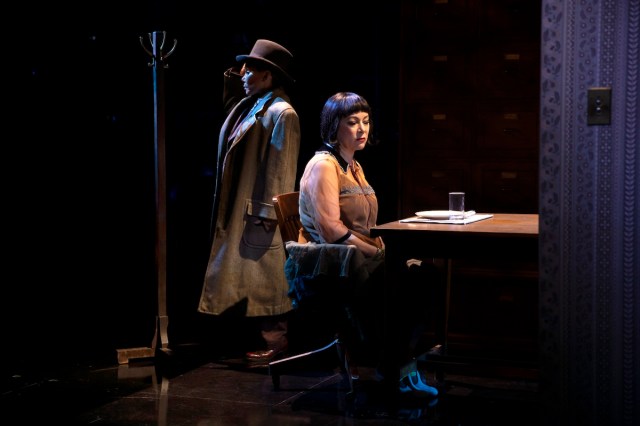
(© Monique Carboni)
How is it especially poignant that The Adding Machine will be the first play to run in the New Group’s new home?
It’s such a beautiful space in a church. This church still operates, and with its stained-glass windows it has the most amazing energy. I think it’s very apropos that the play is in a church because of its theme. It’s about very small people creeping along thinking God has forgotten them. It’s the perfect, intimate environment.
The Adding Machine explores themes of technology, work, and identity. Why do you think this story resonates with audiences today?
I’ve noticed in the last five or 10 years that everywhere I go, the people have seemed to disappear. You go to the airport and there’s nobody to check you in; you have to go to the kiosk. Even the stores at the airport where you buy your candy and bottle of water—now you have to check yourself out. I think, “Where did all of these people go?” In the play, Mr. Zero gets replaced by an adding machine. There’s also commentary about agoraphobia, fear of immigrants, and really unhappy racist characters. Even though it was written almost 100 years ago, it is relevant in today’s climate.
You open the show with a behemoth of a monologue. How did you tackle that?
It takes more than an hour for me to walk to work every day. I work on my lines, as I walk, and it feels like I’m back in acting school. The monologue is 10 double-spaced pages. I enjoy it. It’s not good motivation if you’re approaching it like, “Oh my god, now I’m going to be talking for the next 15 minutes. I hope the audience doesn’t leave!” It’s Mrs. Zero working through her feelings. She’s fascinating, but that opening monologue is a challenger for sure. The more I dig, the more I find.
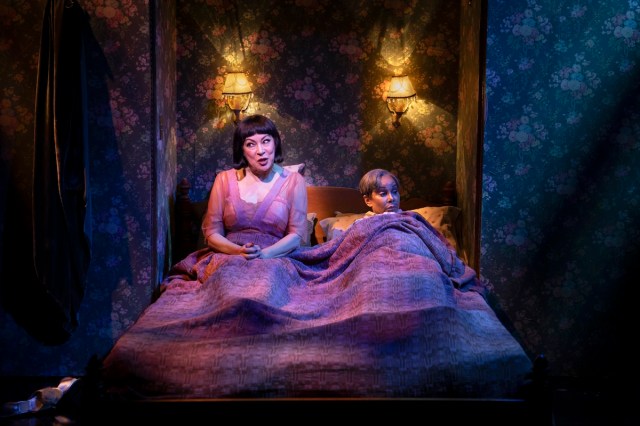
(© Monique Carboni)
Many people know you from film and television, especially with your most recent stint on The Real Housewives of Beverly Hills. What will they discover about you as a performer when they see you on stage?
I call this play a “panacea of Real Housewives of Beverly Hills.” The show is so much fun, but it’s frivolity or cotton candy. I think people will be surprised when they see me doing these monologues and I’m not a glamorous lady with a feather hat and lots of cleavage. They’ll definitely see a different dimension of me.
Do you see a musical in your future?
I have been asked if I want to play Roxie. Chicago is one of my favorite musicals. I can’t dance! They have even asked me to go on Dancing With the Stars, but I have two left feet. I actually think I’m a very good singer. I do have a big dream of doing a musical on Broadway one day.
How do you wind down after performing in The Adding Machine?
I like to read Betty and Veronica comic books because they remind me of when I was growing up, and I really wanted to be Betty or Veronica. I would try to fashion my outfits like them. I felt like they had the perfect lives. Maybe that could be my musical! I will put that out in the universe. I could be Veronica, or by the time it gets to the stage, I could [realistically] play Miss Grundy.




source on Google
Featured In This Story

Latest Reviews
See all



Latest Videos
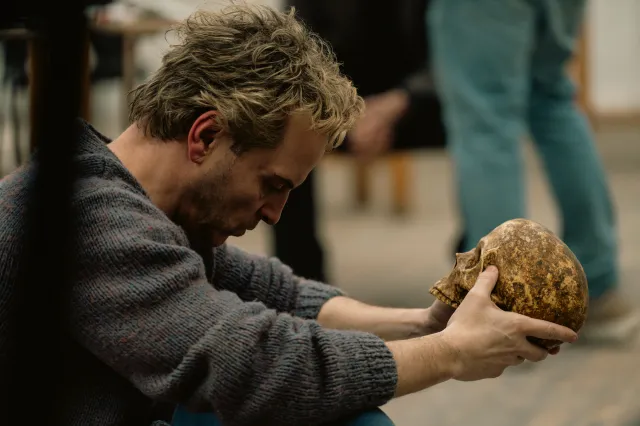
Watch the Trailer for Elsinore Starring Andrew Scott
The film is based on the true story of Ian Charleson, who played Hamlet at London’s National Theatre after being diagnosed with AIDS.