
Review: The House of the Negro Insane Is Harrowing, Memorable Theater
Terence Anthony’s powerful play brings forgotten racist history to chilling life.
 |
Off-Broadway
|
|
Off-Broadway
|
August 24, 2026
(© Steven Anderson)
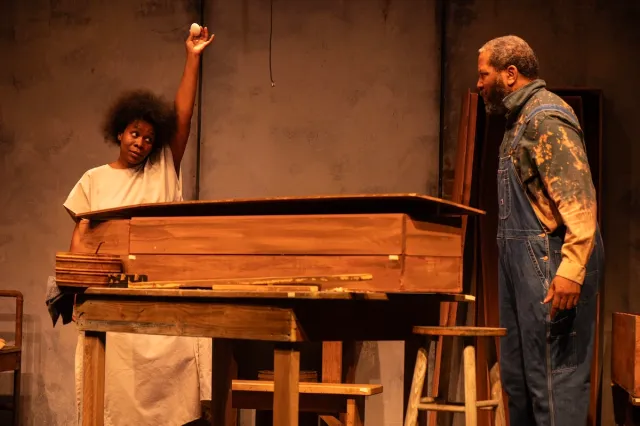
Terence Anthony challenges his actors with The House of the Negro Insane, now running at 59E59 Theaters. Not only does the play tackle the dark, racist history of 1930s mental institutions, but it places much of the drama on the shoulders of a child actor. Though flawed, The House of the Negro Insane still largely meets the mark. It is evocative, satisfying, and memorable theater.
Attius (Benjamin Rowe) has spent years at Central State Hospital, a psychiatric institution built specifically to house Black patients. Since no one is rehabilitated and no one leaves, the patients are essentially incarcerated. Attius says the only way out is in a coffin, of which he builds many alongside a white employee, Henry (Rob Penty). Henry belittles Attius, and Attius deals with him in the same way he survives in the hospital: by making himself useful and disguising his intelligence by sticking to the phrase “Yes, sir.”
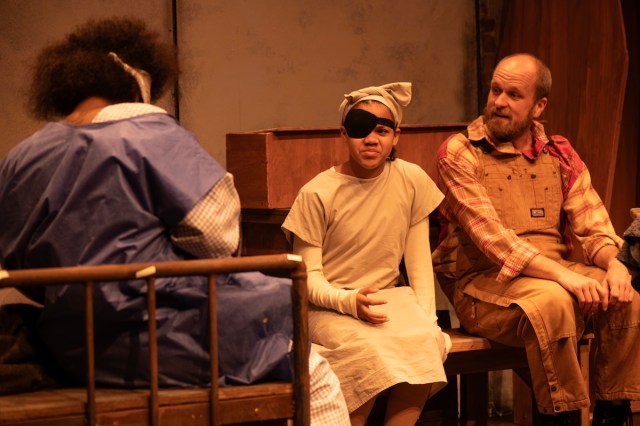
But when Henry is loaned out to work on a local farm and Attius temporarily takes over coffin production, he is thrown into danger. First, Effie (Wadiah Waliah), a vibrant, street-smart young woman, stalks the shack where Attius works. Her ex-boyfriend duped a doctor into getting her committed, so she schemes to get herself out. Later, she brings 11-year-old Madeleine (Sidney Hatcher) to the workshop too. She was dumped at the hospital by her aunt because of her nervous tics and panic attacks, and she already intuits she’s not there to get better. Effie has a plan to help her escape, but she’ll need Attius’s help, which he slowly grows more inclined to give.
The broad strokes of the plot are predictable, but this story feels new with its sky-high stakes. Rowe commits to his performance, conveying palpable terror when Effie first appears in his workshop, and Chris Cumberbatch’s stark set perfectly nails a rundown institution exuding hopelessness. Linwood Booker’s sound design was not always effective, but the cries people screaming in agony against the hum of the electroshock therapy machine (described by Madeleine as “the bee”) was downright chilling. All these elements combine to form a strong undercurrent of violence that often erupts unexpectedly, and the sparks of art, beauty, and human connection resonate more because of that brutality.
(© Steven Anderson)
Anthony’s sharp script also adds immediacy. Refusing to give the audience a mere history lesson, he keeps the story close to the characters and lets the context reveal itself organically. Because of this, when one of the characters briefly talks about the big picture of racism in America, it’s an incredibly effective moment.
The actors joining Rowe range from serviceable to excellent. Waliah is the most interesting, leaning into Effie’s bravado as a means of survival. She hits every emotional beat, making us laugh with her antics but giving us a lump in our throats when she breaks down. Hatcher holds her own in a very challenging role, with the threat of physical and sexual violence made scarier and more devastating to contemplate with an actual 11-year-old. That casting choice may have affected Penty’s mildperformance, which might have been less subdued if Madeleine had been played by an adult.
Director Daniel Carlton makes some questionable choices along the way. Transitions often lag, and I questioned why Attius’s monologues describing his torturous “mental health treatments” were staged in a cramped corner. The production elements are mixed as well. Some projections (also by Booker) felt a little off given the stage’s dimensions, while others were stunning, such as images of Black urban socialites depicting Effie’s notions of Harlem. At the same time, Carlton’s vision for the play is apparent, and with a bigger stage and more resources, it could look as good as the script is.
Despite some shortcomings, this production of The House of the Negro Insane tells a harrowing story with depth and emotion, and exposes yet another horrifying period in America’s racist history. It deserves a bigger audience.




source on Google
Featured In This Story

Latest Reviews
See all








Latest Videos
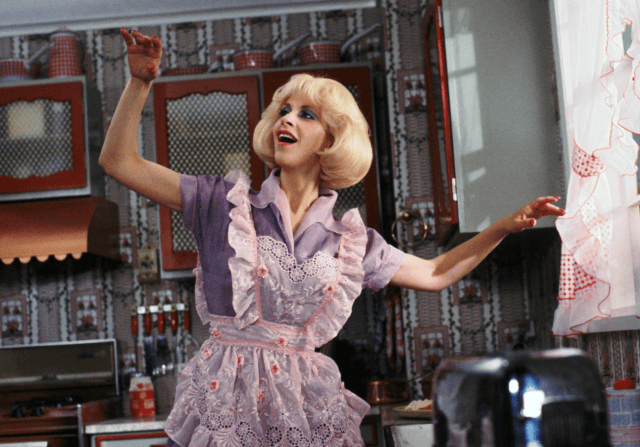
Watch: Ellen Greene Reflects on the Enduring Legacy of Little Shop of Horrors
Frank Oz’s cult classic movie-musical has gotten a new 4K restoration in celebration of its 40th anniversary.