
Review: Nathan Lane and Laurie Metcalf Star in a Death of a Salesman for the Ages
Joe Mantello directs a superb production of Arthur Miller’s classic at the Winter Garden.
 |
Broadway
|
|
Broadway
|
April 9, 2026
(© Emilio Madrid)
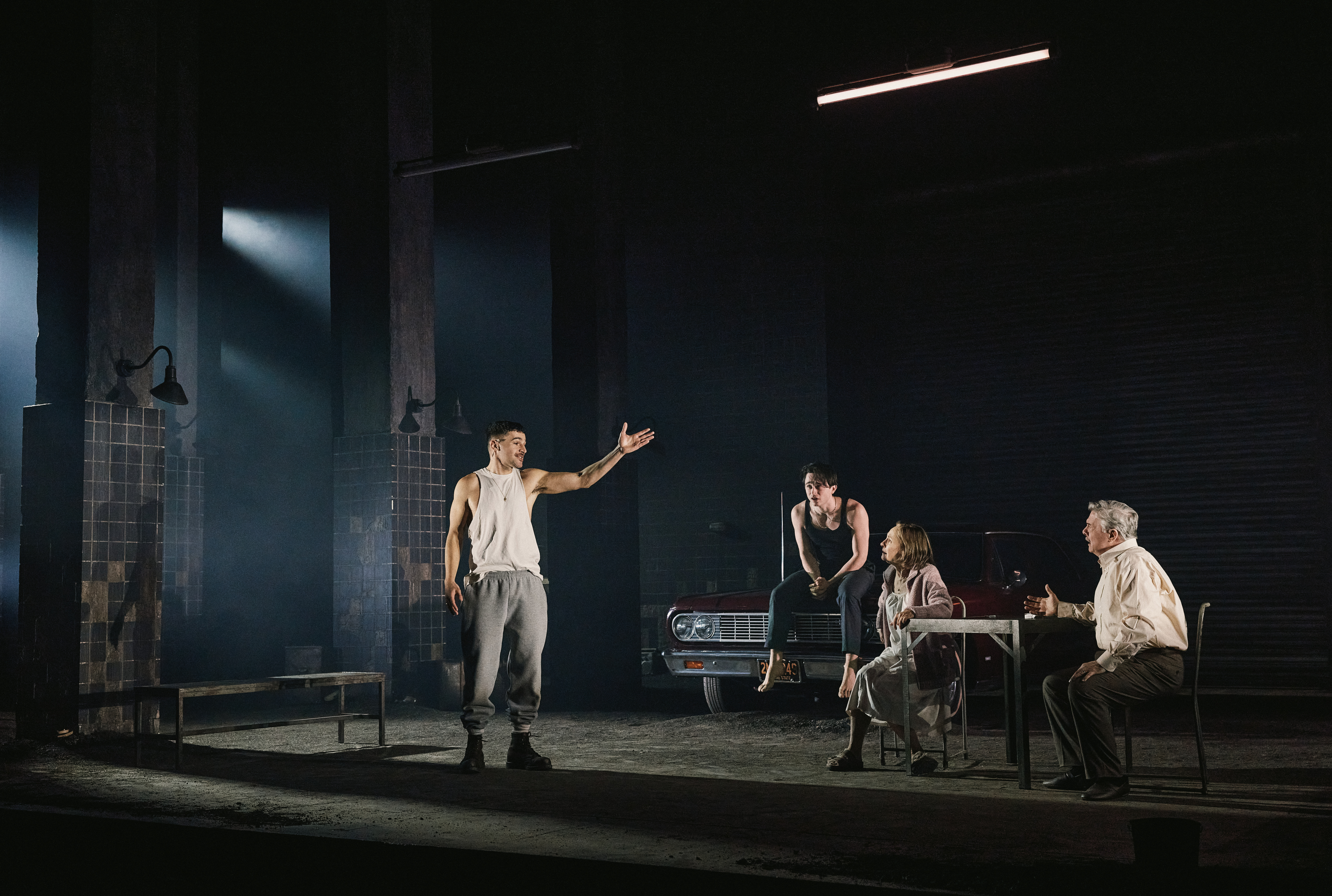
There’s a scene in the new revival of Death of a Salesman where young Biff (Joaquin Consuelos), dressed in a football uniform, stands on the roof of a car while a beam of light shines behind him as though he’s a heaven-sent messiah. It’s one of the most arresting tableaus I’ve ever seen onstage, and it’s an iconic image in a Salesman that is completely shattering in its emotional power and theatrical beauty.
That might seem like lavish praise for a play that gets produced so often. Arthur Miller’s Death of a Salesman has been on Broadway six times before, first in 1949, and it’s a classic regularly seen around the country and the world. But the last Broadway revival was only three and a half years ago. Going into this one, I wondered, why another so soon?
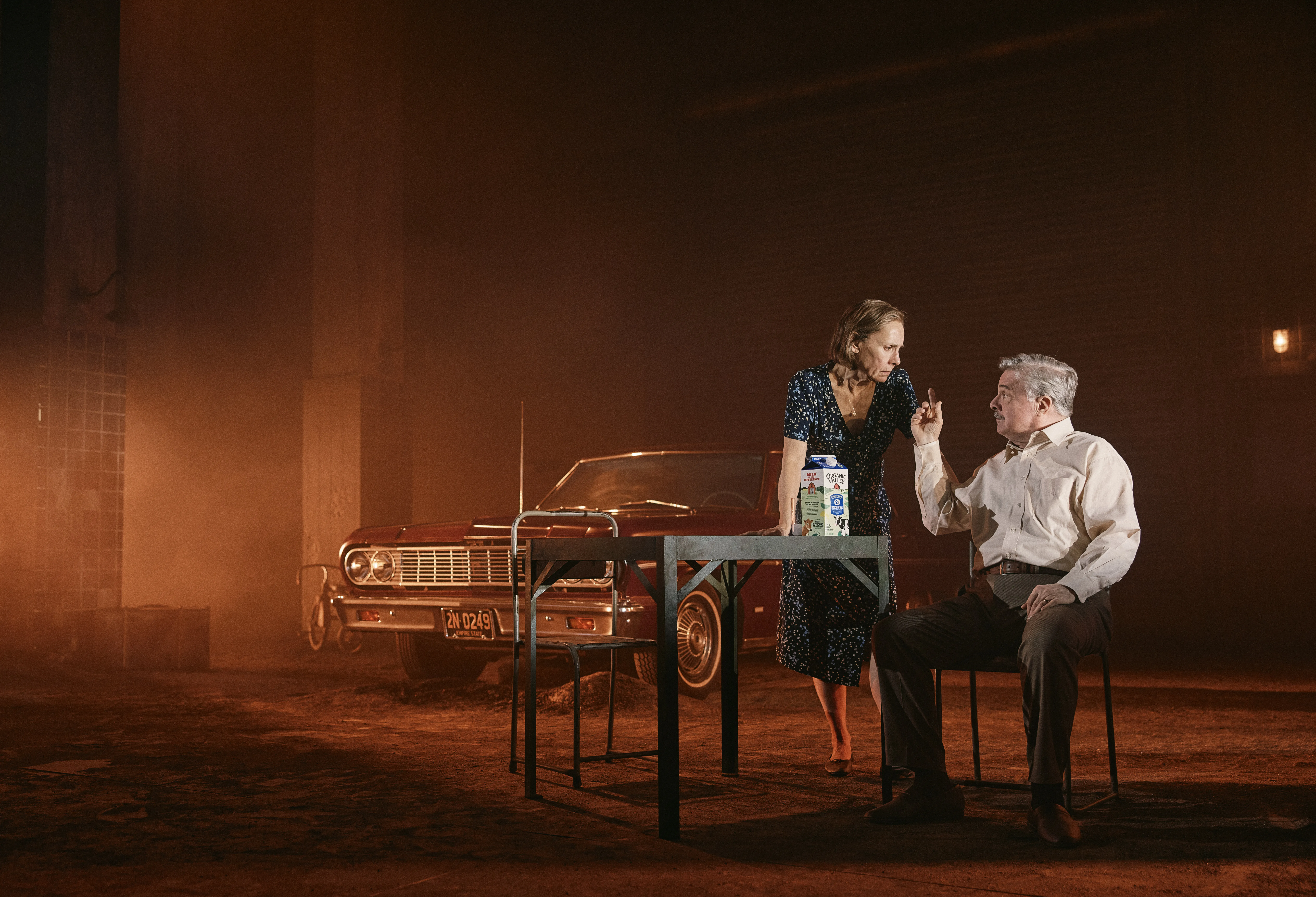
The question was moot by the time I walked out of the Winter Garden Theatre, my eyes damp with tears, something that had never happened in the half-dozen times I’d seen the play before. From the breathtaking opening scene when a car drives onstage, its bright headlights shining into the audience, to the moment it backs out of Chloe Lamford’s astonishing set, this Salesman dazzles. The cast, led by Nathan Lane and Laurie Metcalf, is exceptional, and Joe Mantello’s direction is nothing short of perfection.
(© Emilio Madrid)
It’s no wonder. Mantello’s ideas for staging Salesman (including casting Lane) had been gestating for three decades (Scott Rudin, with whom Mantello has worked before and who has a nose for winners, was interested in the project and signed on as a producer following a theater hiatus). Mantello also created a newish version of the play after digging through original manuscripts and discovering fascinating final edits made in Miller’s hand. The time and research paid off. Mantello’s fresh vision seems inspired by the theater gods.
Having said that, the play is still the one you know. It tells the story of Willy Loman (Lane), an American “low man” and exhausted middle-class husband and father, now 63 and losing his grip on his job, his family, and his mind. No longer working on salary, he drives hundreds of miles to earn paltry commissions to pay the mortgage on his Brooklyn home.
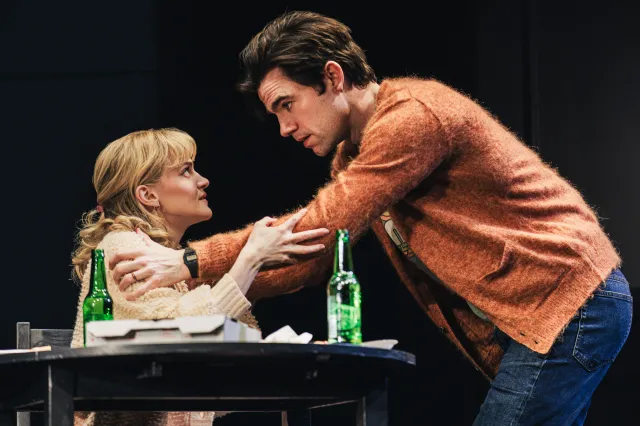
Like a walking Tammy Wynette song, his wife, Linda (Metcalf, in one of her finest performances ever), stands by her man no matter how tough the finances get or how disappointing their two sons are—aimless drifter Biff (Christopher Abbott in an intensely moving performance) and unambitious lover boy Happy (Ben Ahlers making an impressive Broadway debut). Things get worse when Willy’s punchable young boss, Howard (John Drea, plausibly playing an avatar for AI), fires the old salesman. When Howard “accidentally” drops a plastic coffee-cup lid (one of several anachronistic props that reference our present day along with Rudy Mance’s period-spanning costumes), Willy fetches it. That humbling act is the beginning of the end.
(© Emilio Madrid)
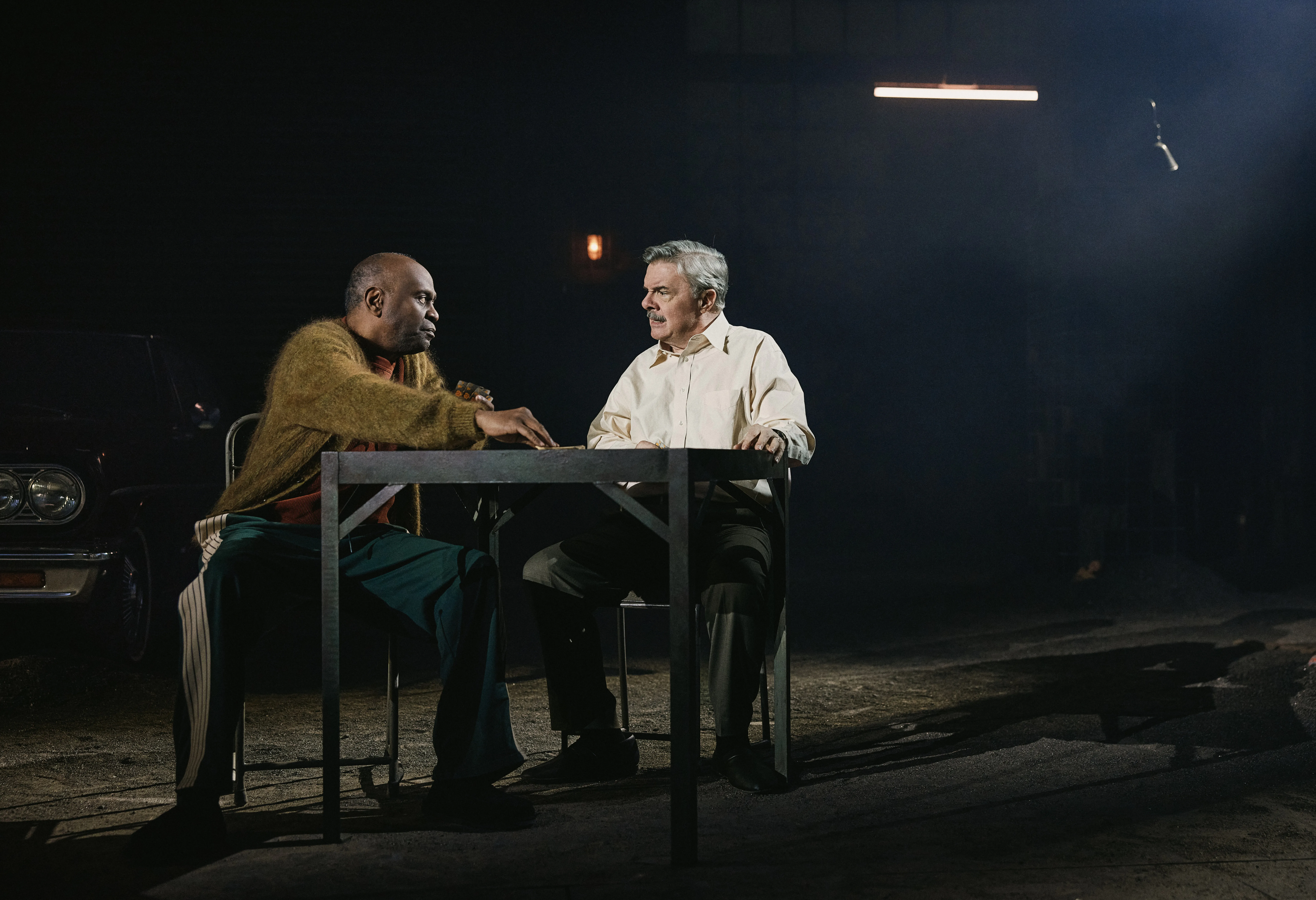
Even so, Willy is comfortable taking cash loans (but won’t accept a job) from his business-owning neighbor Charley (K. Todd Freeman, giving a sardonic stare as a desperate white man tells a Black man he just can’t work for him). Intensifying Willy’s sense of fatherly failure with his sons (Jake Termine plays young Happy like a puppy seeking but never finding dad’s approval) is Charley’s Supreme Court lawyer son, Bernard (Michael Benjamin Washington and, as a young man, Karl Green). What keeps Willy going (besides an occasional tryst with his mistress, played with cackling grit by Tasha Lawrence) is the hope that one day everything is going to turn out as well as it did for his successful brother, Ben (Jonathan Cake, literally a towering presence). Alas, things don’t get better.
Lane delivers a rich and nuanced performance that blends sympathy and humor into a profoundly sad and entirely relatable portrayal of Willy. Somewhat surprisingly, Metcalf says she hadn’t read or seen the play before this production. That seems to have worked in her favor, though, given her devastatingly unsentimental and original turn as Linda. Lane and Metcalf’s electrifying chemistry—watch as Linda brushes off Willy’s harsh comments with a smile—ripples with the sense of years spent in a marriage of quiet dysfunction.
But there’s magic in the show’s creative elements too, notably in lighting designer Jack Knowles’s virtuoso interplay of light and shadow. Willy’s recollections of the past are bathed in a warm orange glow that contrasts with the stark fluorescent glare of the present while Caroline Shaw’s gorgeously ethereal music fills the theater. Mikaal Sulaiman blends the music in so subtly and seamlessly that the sound and light seem like they’re made of the same dreamy stuff.
(© Emilio Madrid)
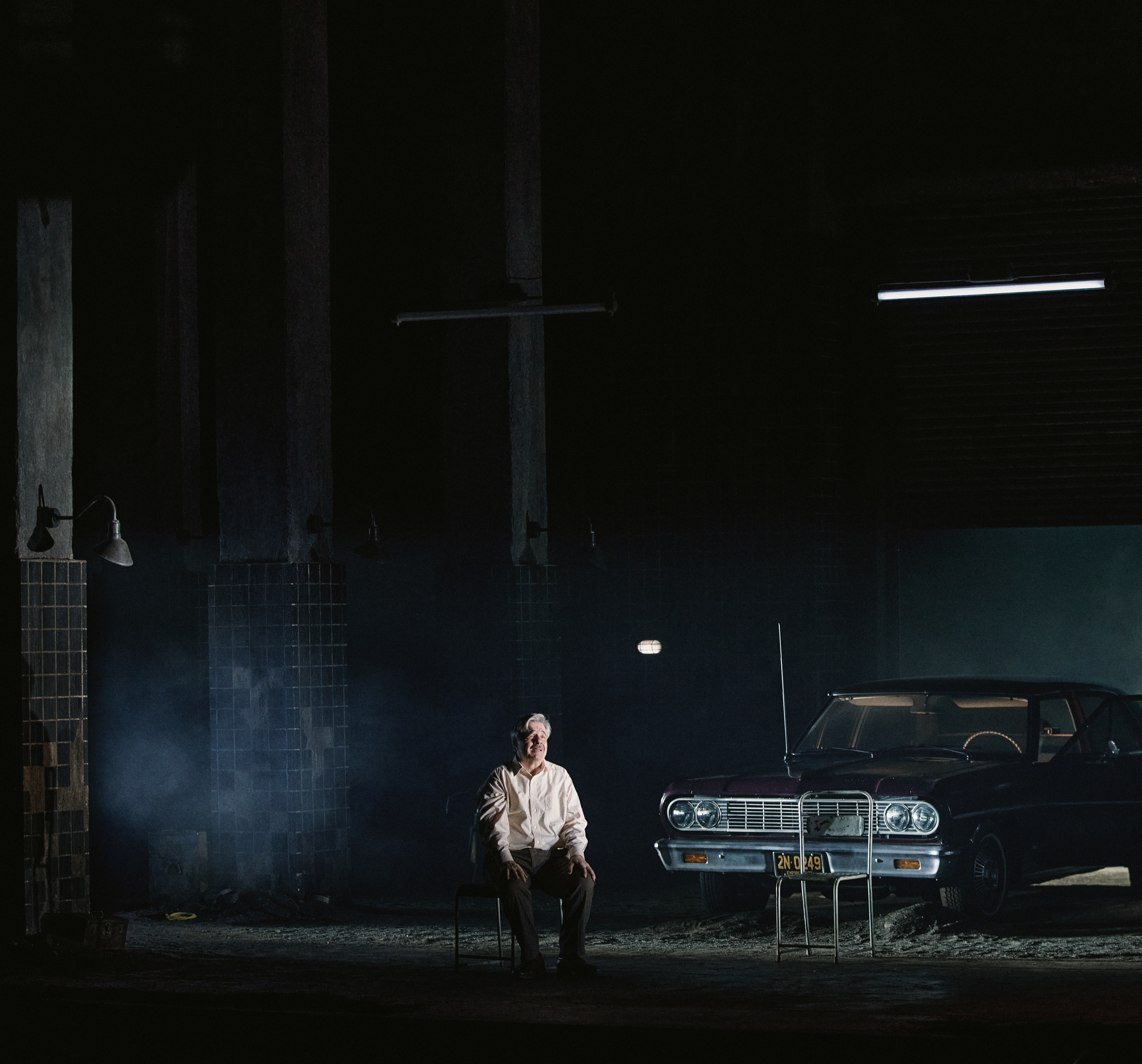
Unforgettable, though, is Lamford’s groundbreaking set. Instead of a traditional house, the play is set in an old, abandoned industrial warehouse with crumbling tile columns and spartan metal chairs where Mantello has placed the Loman family—forgotten remnants of capitalism and progress. A large garage door rises as Willy pulls in his cherished Studebaker (it’s really a 1964 Chevy Chevelle), and there it sits throughout the play’s fast-moving three hours as a stark reminder of Willy’s better days until he takes it out for one final drive. If there’s a better symbol for the antiquated delusion of the American dream, I haven’t seen it.
This Death of a Salesman got deep in my bones, and it’s been a while since a theatrical experience has given me that powerful emotional response that Aristotle called catharsis. Part of that is due to the enduring power of this play, part is due to the beauty of the production. This Death of a Salesman is one for the ages.




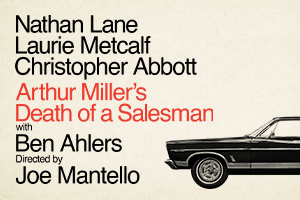
Featured In This Story
Latest Reviews
See all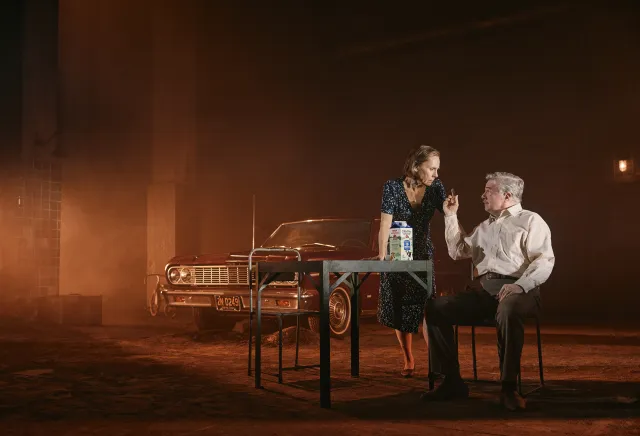




Latest Videos

Get a First Look at Megan Thee Stallion as Zidler in Moulin Rouge! on Broadway
Megan Thee Stallion starts performances on Tuesday, March 24.