
Special Reports
Regional Theater Spotlight: Hale Center Theatre in Sandy, Utah
How a small, family-run operation became a top theatrical destination.


 |
Salt Lake City
|
|
Salt Lake City
|
March 24, 2026
In a landscape where much of the conversation is dominated by Broadway and the challenges facing major nonprofit institutions, it’s easy to overlook the companies thriving far from New York. Our Regional Theater Spotlight series aims to shift that focus, highlighting organizations across the country that are not only surviving, but redefining what success can look like outside traditional industry centers.
Few companies embody that idea more fully than Hale Centre Theatre. Based in Sandy, Utah, the company has grown from a modest, family-founded theater in a former lingere wearhouse into a major cultural institution, now serving hundreds of thousands of patrons each year.
What makes Hale Center particularly notable is its ability to operate at a scale and consistency that rivals far larger markets, while remaining deeply tied to its local community. Its productions are largely cast with local artists, its audiences are overwhelmingly regional, and its growth has been fueled by sustained grassroots support rather than reliance on a the traditional pipeline.
In the following conversation, Chief Operations Officer Michael D. Fox discusses the theater’s model, its embrace of in-the-round staging and advanced production technology, and the cultural ecosystem in Utah that has allowed it to flourish. As regional theaters across the country face mounting pressures, Hale Center offers a case study in what’s possible when community, scale, and ambition align.
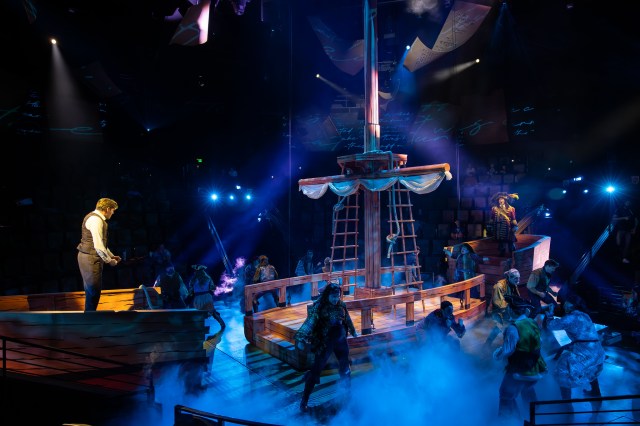
(image provided by Hale Center Theatre)
This conversation has been condensed and edited for clarity.
Tell us about the Hale Center.
What we do is family-friendly professional theater. Professional, to us, means everyone is paid and everyone is making a good wage for their expertise, a carpenter, a stitcher, a painter, an actor, anyone. Most of our people are local, and most of them are doing other work. They’re teachers, they’re mothers, they’re plumbers, they’re doctors.
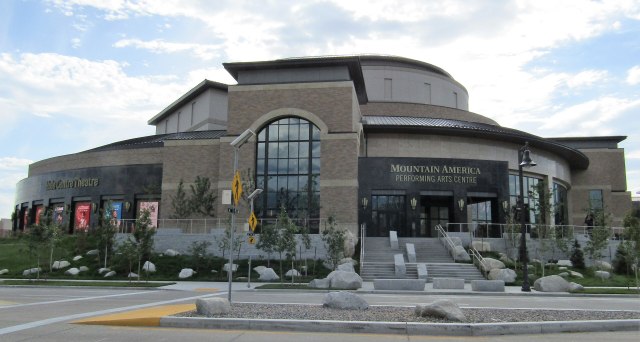
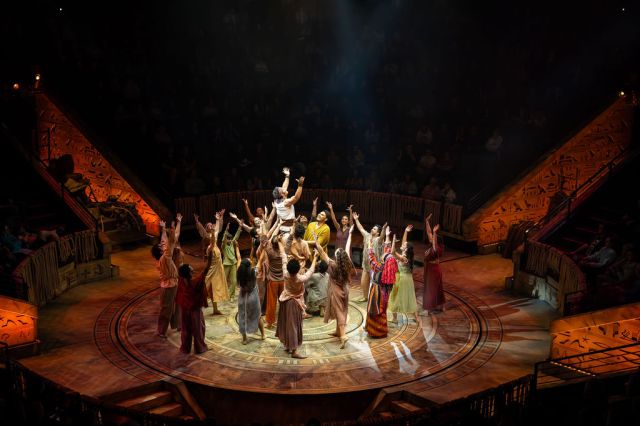
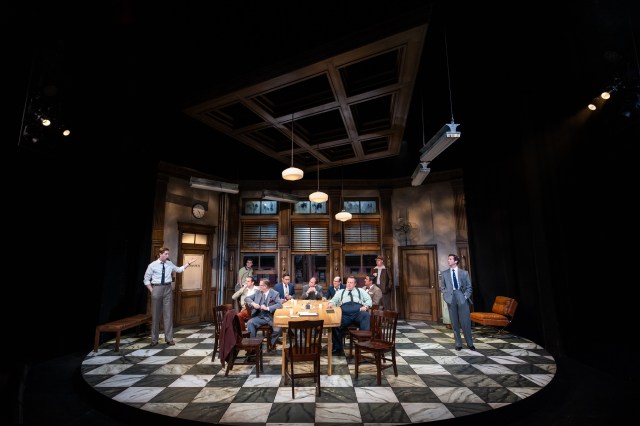
We have a 911-seat theater in the round, a 467-seat proscenium thrust, and, as of January this year, we opened our third space, a 322-seat true proscenium theater. We have nearly 30,000 subscribers. That’s more than 11,000 households, who fill about 240,000 of our 600,000 seats.
The facility cost $81 million to build. We raised $39 million of that in just under two years. The other $42.7 million was a municipal bond with the city. We opened in 2017, and by December 17, 2025, we bought the building from the city. They then used those funds to retire the bond. So, the city was never out a single dime, and we now own it.
How did you make that happen?
There are several things we think are part of our secret sauce, not the least of which is the support of the people of the state of Utah. It’s an area that really values art. It’s an area that has more pianos per population than anywhere else in the world.
So many people pick up an instrument. So many people sing and dance. Many of the kids who’ve won competitions like So You Think You Can Dance come from Utah. The culture is very much based on individuals learning a talent. It gives us great people to choose from, and it gives us people who love to go see the art.
(© Ben P/Wikimedia Commons)
How do you view technology as part of the experience?
Technology is very integral to what we do. Because we had the advantage of building a venue and designing it ourselves, we were able to put in what we knew we wanted and needed.
When we first opened in 1985 in downtown Salt Lake, our founders used an old lingerie factory because there were plugs every three feet in the ceiling that could work for lighting. We built a new facility in 1998 that had our first moving stage and a rotational piece as well. The stage could lift up and down so you could put scenery in the basement, and bring it up rather than pushing it on from the wings.
What we learned very early was to keep the show moving. So often in proscenium theater, you either close the curtain and change the set or do some kind of trick to keep things going. That’s why you had reprises in traditional theater. Performers would step forward in front of the curtain, the curtain would close, and the set would change while they sang.
We wanted to change things more seamlessly and keep people from becoming distracted. We quickly realized that audiences loved the technology. We consider the technology an additional performer. The movements are timed to the music so that when a set piece flies in or rises from below, it clicks into place right on the beat. It becomes a new form of choreography, a kind of dance where scenery moves into position on the music.
Do you have to hire specialists to work with this equipment?
When it comes to the heavier disciplines, we share and borrow a lot of talent with both Disney and Cirque. Many of our artisans move through those organizations, and we’re honored to be a player in that ecosystem. At any given time, there are usually five or six shows in pre-production while two or three are on stage. If you love the creation process, this is the place to be.
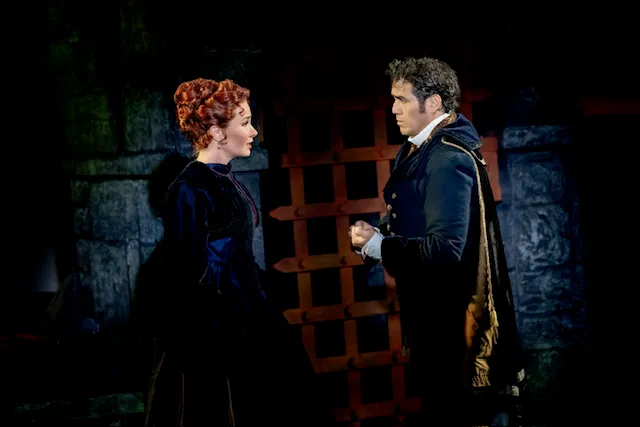
(© Hale Center Theatre)
From a technology standpoint, what is the next development that excites you and could transform the experience? Is AI beginning to creep into theater?
I think the biggest thing still very much in the rollout phase for most theaters is the effective use of graphic arts and LED screens. The challenge is seamlessly integrating a physical three-dimensional set piece with screen usage. It’s no different from scrim usage. Seventy years ago, you might paint a backdrop to show a forest scene in Camelot.
Beyond that, I think the biggest discussion is the same one happening in every other business, “What is the appropriate use of AI in our sector?” In the arts, I hope we continue to lean toward the idea that humans are still the only ones capable of giving you real feelings. The real innovation will be figuring out how to use new technologies while still satisfying people’s need to gather and experience something together.
What is Hale doing to make theater more accessible?
One of our initiatives is making sure the building itself is completely accessible. Anyone with mobility challenges can enter at ground level and reach concessions, restrooms, the box office, and their seating without needing to navigate stairs or use an elevator.
All of our ticket pricing is the same. You don’t pay more to sit closer or farther away as our furthest seat from the stage is less than 45 feet. We provide American Sign Language interpretation for every production. We also make scripts available for patrons who are hard of hearing but do notuse ASL.
For patrons who are blind or visually impaired, we offer audio description services. We also offer sensory-friendly performances a couple of times each year for people who have difficulty with overstimulation. During those performances, the house lights never go completely dark, and the decibel level of the music and sound is much softer.
Those nights are particularly meaningful. Instead of worrying that their child might disturb someone by making a little noise or moving around, everyone understands.
We also continually look for opportunities to distribute free tickets through agencies that work with immigrants and refugees. We focus on Title I schools through both in-theater and outreach programming.
Those are some of the ways we try to make sure theater is accessible to everyone.
(© Hale Center Theatre)




Latest Reviews
See all

Latest Videos

Get a First Look at Megan Thee Stallion as Zidler in Moulin Rouge! on Broadway
Megan Thee Stallion starts performances on Tuesday, March 24.