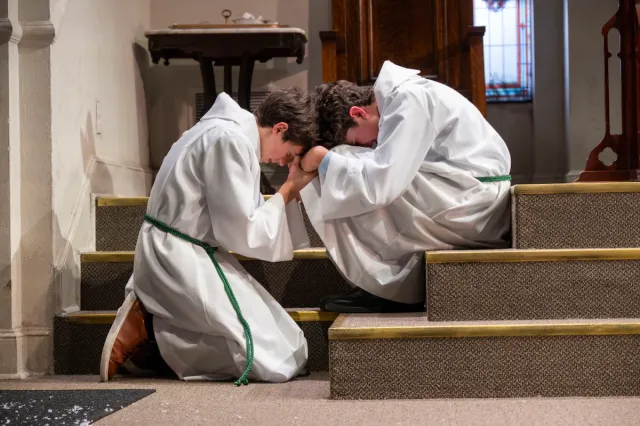
I have a confession: I was first introduced to folk music by the Catholic Church, which incorporated it into Mass in an effort to appeal to the young. I brought this prejudice with me as I sat through Reverie Productions’ new play, Lay Me Down, a passionate, musical essay about folk music, art, and commerce. Lay Me Down soothed my bias with catchy, tuneful songs, reminding me that folk music is the province of soulful troubadours like Bob Dylan and Joni Mitchell, in addition to the longhaired cherubs banging on tambourines and singing three hundred year old hymns.
The story of Lay Me Down sprawls over 23 years, following the careers of a group of British folk singers who pine for success, and are eventually devoured by the commercial success they achieve. The tumultuous political and cultural landscape of the late ’60s and early ’70s has provided a dramatic backdrop to many plays and musicals about rock musicians; this sub-genre can be exciting, but often succumbs to clichés.
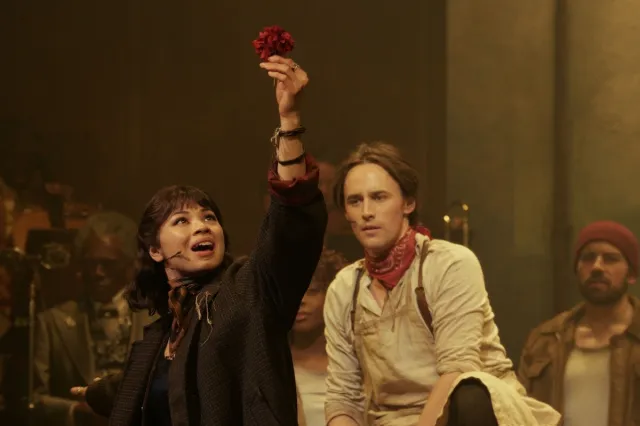
But the folk music course charted in Lay Me Down, though overly sentimental at times, tries to tread the path less taken by de-emphasizing conventional crash-and-burn plots. Instead, we are given David and Sarah Trumbell (played by Stephen Thriolle and Teresa Castracane), two lovers who are torn by their devotion to music, their lust for success, and the struggle with the sometime painful compromises needed to maintain both. This conflict is explored without the usual tabloid details.
Lay Me Down‘s tale of would-be stardom is almost reverent towards its subjects, especially David and Sarah, whose love affair with each other–and with performing–form the play’s dramatic backbone. Another plot line involves a cult whose members are burnt-out victims of the recording industry and are deprived of pop culture: this original segue allows for a unique perspective on those years where rock musicians were the closest thing our society had to demi-gods.
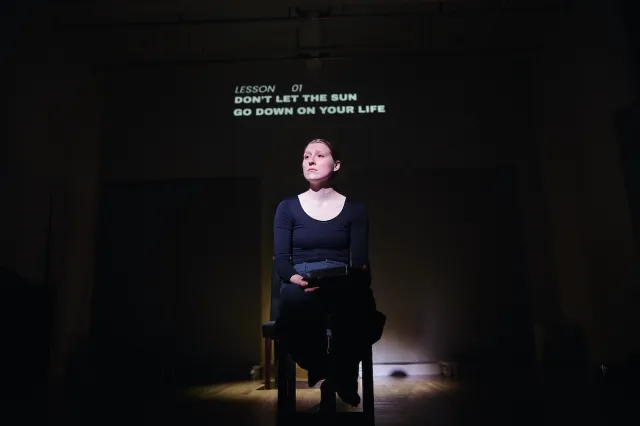
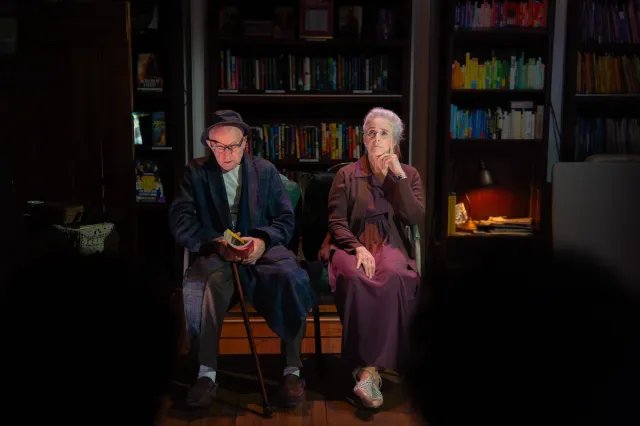
For a shoestring, hand-to-mouth, Fringe-type show, Lay Me Down shows off with above-average production values. With flawless light design, apt slide projections indicating locations and moves, sliding scrims, and microphones that never screeched, the production raises the bar in terms of downtown theater. Fluidly directed by Alison Eve Zell, Lay Me Down features beguiling performances shrouded in wildly inconsistent English accents.