
Interview: Shannon Purser Debates Free Speech With an Imperfect Ally in The Ask
Purser, best known as Barb Holland from Stranger Things, co-stars with Marilu Henner at Theater 555.
 |
Off-Broadway
|
October 20, 2026
(© Joan Marcus)
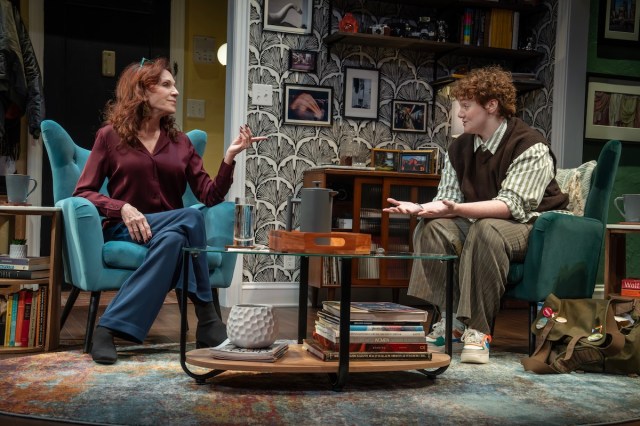
In The Ask, Matthew Freeman’s new two-hander at Theater 555, you can watch the liberal left cannibalize itself in real time—and in the most likely of settings: A finely appointed Upper West Side apartment.
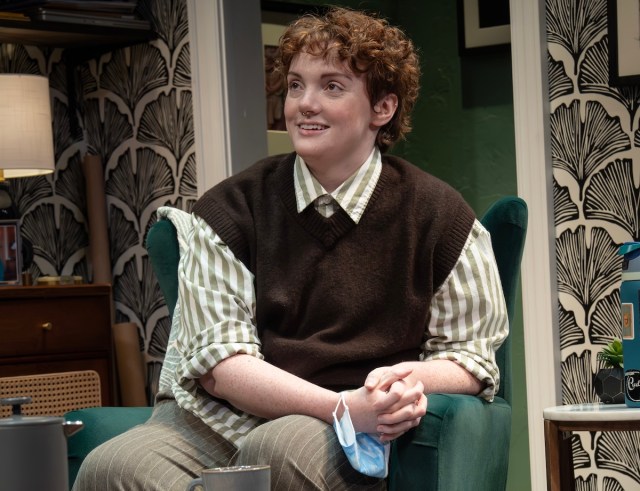
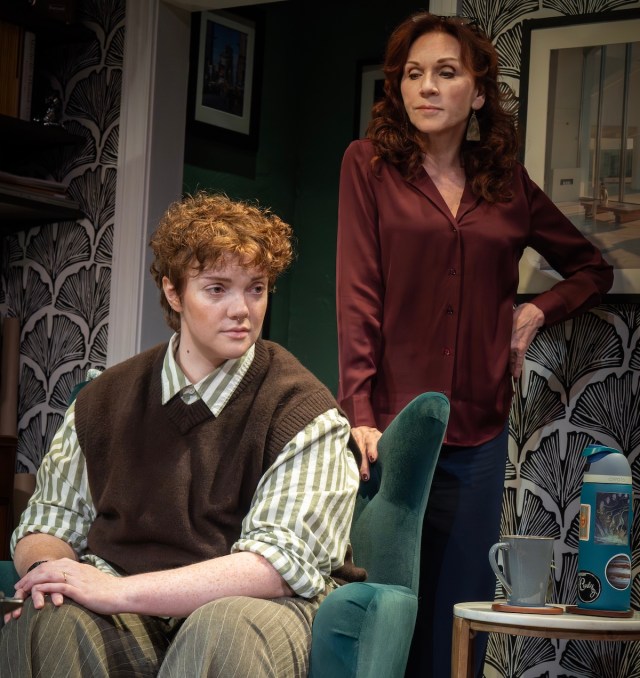
“Not a lot of people come out of this show feeling neutral about it,” says Shannon Purser, the actor best known as Stranger Things’ transient yet enduring season-one character Barb, who now goes head-to-head with Marilu Henner every night off-Broadway. She plays Tanner, a nonbinary ACLU fundraiser whose job is to land a large gift from Greta (Henner), a longtime donor who threatens to cut ties amid what she sees as the ACLU’s mission drift. “I’m very used to having these kinds of intergenerational conversations,” Purser says, explaining her initial attraction to the play. “They can be very tricky to navigate.”
The Ask’s audiences have been mirroring that onstage divide, a mix of Tanner and Greta sympathizers voicing their opinions after, and sometimes during the play (“There was a guy the other day who was talking back at my character the entire show,” she laughs). The temptation to pick a side is strong, but, Purser notes, it’s beside the point. “A big part of the message that we’re trying to get across with this play is that you have to be able to discern who your allies are,” she says. “An imperfect ally is not necessarily your enemy.”
(© Joan Marcus)
This conversation has been condensed and edited for clarity.
The Ask is a real-time conversation between your character, ACLU employee Tanner, and Greta, a disgruntled major donor Tanner is trying to win back. What’s the biggest challenge of doing a play that’s just two people sitting across from one another talking?
That was a huge part of the rehearsal process. Really trusting in the text and that with a good performance and good pacing that we could make something that was literally just a conversation still be compelling for 90 minutes. And I feel like we’ve pulled it off. That’s such a testament to Matt’s writing and the characters that he’s created. It’s also a testament to Marilu. She’s so dynamic and expressive. Matt has always said to me that he enjoys the discomfort of witnessing a painful or awkward moment. There’s something about watching people say things out loud that most of us are too afraid to that makes for compelling theater.
Tanner seems to be biting their tongue for the majority of the play. We see you doing a lot of polite nodding and smiling.
Matt actually works for the ACLU still—he’s worked there for like 15 years—and so a lot of what he’s written is about his personal experience. And I’ve also been in the same situations, listening to people say things that are kind of out of pocket and hurtful and having to be professional. So that was a big part of my approach to Tanner. There’s so much that’s left unsaid because they’re in a work setting, so I really wanted to bring their inner world to life as much as possible. I’ve had to be intentional about choosing what moments their real feelings bleed through.
We only get a few small clues about Tanner’s life outside of their job, but we do find out that they’re married. What relationship do you imagine them going home to every day?
I think that it’s on the rocks. I definitely think that their gender identity has contributed to some marital problems. I’m imagining that they’re married to a man and Tanner coming into their own has not always worked out favorably in their marriage. What’s important to me with Tanner is to show that they have fought hard to be confident and comfortable with who they are, so to have that directly questioned by Greta is extremely personal. The stakes are very high for Tanner in this play.
At face value, what Tanner and Greta are debating is whether the ACLU should be fighting to defend hate speech. Greta thinks that’s the only way to truly protect the First Amendment. Tanner (and today’s ACLU) doesn’t necessarily think that should be the mission anymore. How would you explain Tanner’s point of view?
I think that there’s a point in the play where Tanner says, “Isn’t it easy to be passionate about defending all speech for all people at all times when you’re rarely the target of that speech?” I think that Tanner’s experience with marginalization is different than Greta’s. Not that Greta doesn’t have her own experience. We talk a lot about the feminist movement and what women have historically been through and are still going through. The play takes place right in the aftermath of Roe being overturned, so that’s a big part of the conversation. But I think Tanner is looking at things from a more holistic or community-minded standpoint than Greta is.
Do you think the play favors one side of this debate over the other?
That’s one of the things I really appreciated about the play just reading it for the first time. It didn’t feel super obviously cut and dry. I think there are reasonable points being made by both characters during the show. But I obviously identify so much with Tanner and the frustration of trying to explain that maybe things have changed in some ways. Class is a big part of this too. Tanner is trying to get money for causes they genuinely care about, and it is frustrating to feel beholden to a generation that has more money inherently, just because of the way that the economy works.
(© Joan Marcus)
Before you go, I have to ask about the role that launched your career: Barb in Stranger Things. Does it surprise you that people are still talking about three episodes of television you made 10 years ago?
Uh, yeah. [laughs] I think at this point I’ve accepted it. But every now and then I’m like, “Wow, y’all really rode hard for my character who was there for a total of 10 minutes.” [laughs] But that was just an incredible experience as an actor. It truly changed my life. There’s nothing that I love more than acting, so I will forever be grateful for Stranger Things and where it led me.
You were only 18 when you did that show. How have you changed as a person and an artist since then?
I’ve changed so much. I think I’m so much more self-confident and sure of myself and my ideals and what’s important to me. Entering the entertainment industry at such a young age is hard for sure. To be witnessed in that time of trying to discover your identity and your values—it’s so vulnerable and it was definitely not always easy. But I’m so proud of myself for navigating it and glad that I still love this job. I don’t know that I would have been ready for a part like this 10 years ago, but I think that I am now. I’m just so grateful for the ride and I’m excited for people to see the growth that I’ve gone through.




source on Google
Featured In This Story
Latest Reviews
See all


Latest Videos
Watch: Ellen Greene Reflects on the Enduring Legacy of Little Shop of Horrors
Frank Oz’s cult classic movie-musical has gotten a new 4K restoration in celebration of its 40th anniversary.