
Freud’s Last Session

in Freud’s Last Session
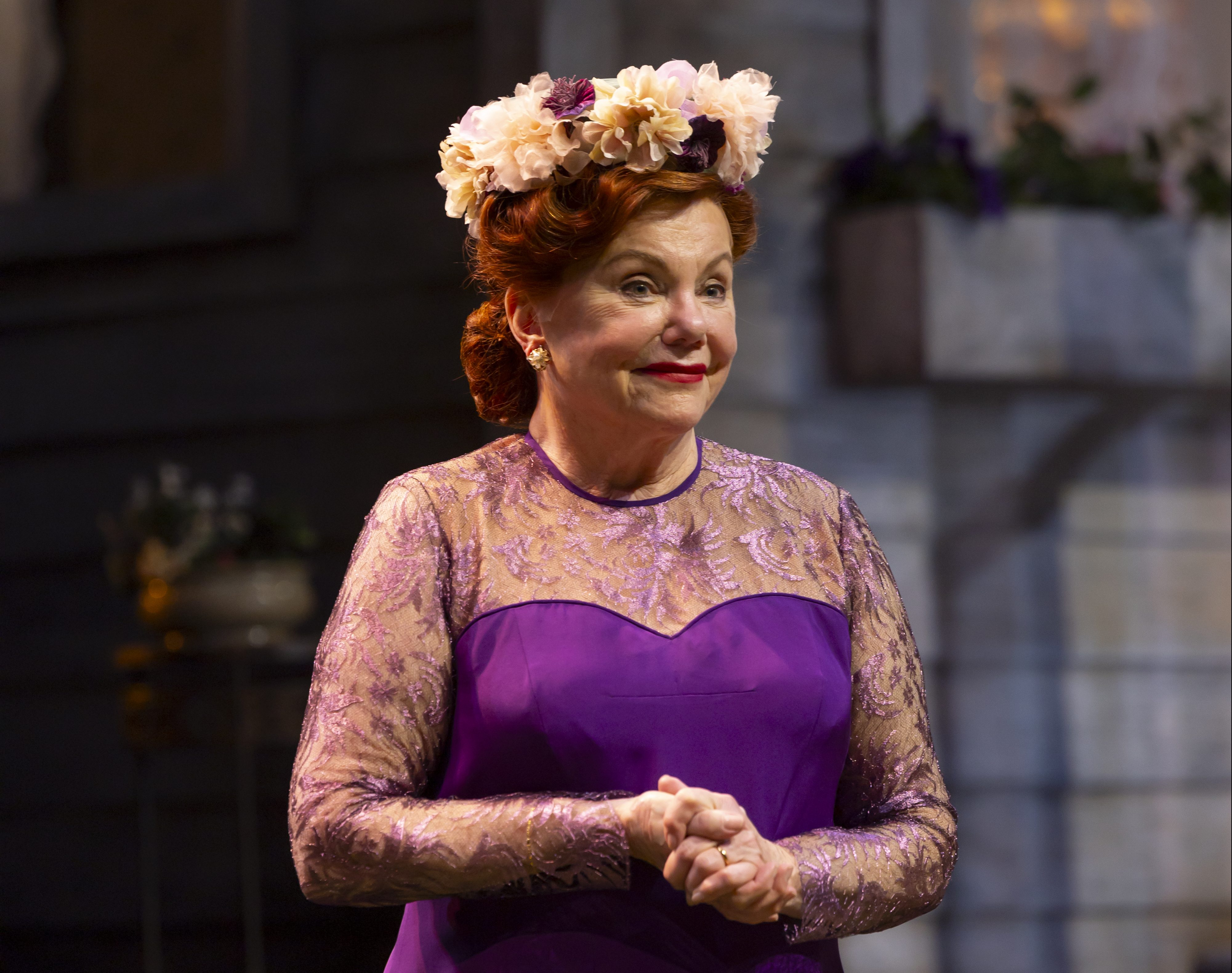
(© Kevin Sprague)
What might have happened if the father of psychiatry, Sigmund Freud, a man who once wrote that individuals who believed in God were suffering from “obsessional neurosis,” had had a chance to sit down with theologian and novelist C.S. Lewis? That question is posited by Mark St. Germain in his thought-provoking yet schematic two-hander, Freud’s Last Session, now making its New York debut at the Marjorie S. Deane Little Theater in director Tyler Marchant’s straightforward production.
As the playwright imagines it, the meeting would have been a lively, joke-filled debate, during which the men, approaching life from polar extremes, find themselves bonding in ways they might not have expected.
As might have been expected, however, the encounter, set in the study of Freud’s home in London (which has been gorgeously imagined as a room straddling the 19th and 20th centuries by scenic designer Brian Prather), begins with an overly cute misunderstanding between the two men. Lewis (Mark H. Dold) believes that Freud (Martin Rayner) has summoned him to reprimand him about Sigismunde, a thinly veiled caricature of Freud found in Lewis’ Pilgrim’s Regress. Freud assures the younger man — who has arrived unfashionably late — that their meeting has nothing to do with the book, but rather Lewis’ conversion from atheism to theism. Soon, the men’s debate — which includes a healthy dose of mutual psychoanalysis on both parts — is off and running.
As if having two great minds arguing the existence of God in one room were not enough, the playwright raises the stakes by setting the play on September 3, 1939, the day on which England entered World War II. While St. Germain uses the backdrop of impending war to terrific effect at one point — when they argue why God might allow a man like Hitler to exist — the moments when the men turn to the radio to listen to urgent news broadcasts or when air raid sirens wail, sending both men scrambling for their gas masks, ultimately seem like dramaturgical devices to ensure that theatergoers’ interest in the piece doesn’t falter.
Both Rayner and Dold deliver solid, yet never entirely remarkable, performances. Rayner, surprisingly spry as the aging and cancer-ridden Freud, handles the crowd-pleasing zingers in St. Germain’s script with aplomb, but his best work comes in the play’s less obvious moments, when Freud turns subtly wry. In such instances, he imbues the character with not only intelligence and insight, but also an impishness that endears.
Dold, who cuts a matinee idol figure in an elegant period ensemble by costume designer Mark Mariani, proves most satisfying when Lewis turns the psychoanalytic tables on his host. For instance, when Lewis latches on to Freud’s descriptions of his father and manages to extrapolate that Freud’s hatred of his father might be the root cause of his atheism and distrust of a patriarchal God, Dold’s performance — and the play — takes on an irresistible intensity.