
Caroline, or Change

in Caroline, or Change
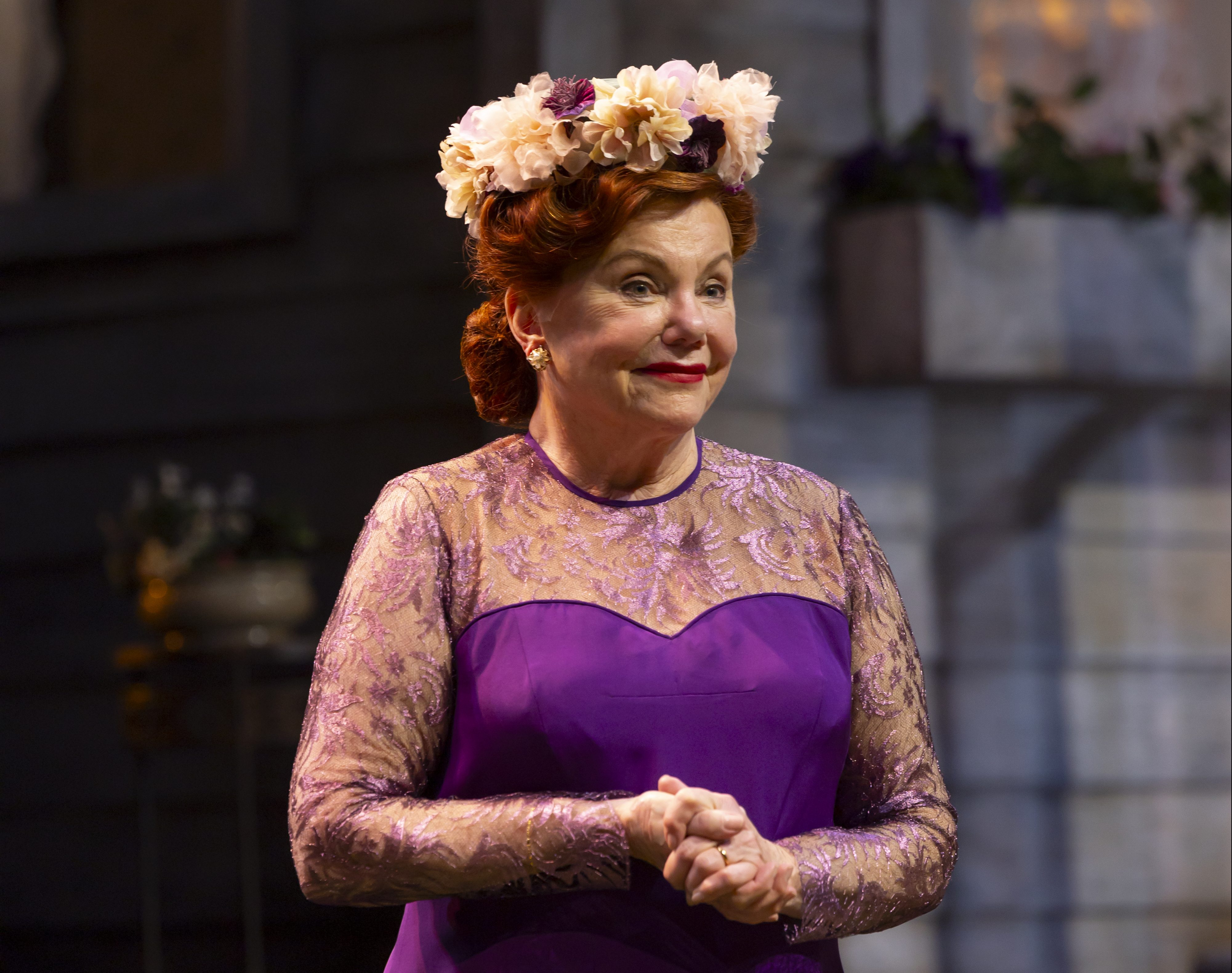
(Photo © Michal Daniel)
A 39-year old divorcee with four kids, Caroline Thibodeaux is a black maid living in Louisiana in 1963 and she’s being confronted with change — two kinds, in particular. There’s a new world on the horizon, visible in the social upheaval of the Civil Rights movement, which Caroline seems determined not to notice. But then there’s a more immediate sort of change that she can’t ignore: nickels and dimes and quarters, resting at the bottom of a cup. The kind of change that could help a mother give her kids a better life.
Caroline spends much of her day in a dank basement, washing, drying, and ironing clothes for the Gellman family while listening to the radio. Young Noah Gellman, who cherishes his after-school hours with the quiet and angry Caroline, is accustomed to retrieving change left in his pants pockets from the bleach cup that the maid keeps on a shelf; but Noah’s chipper stepmother Rose, determined to break the forgetful boy of this habit, decrees that Caroline will henceforth be allowed to keep any money she finds. This well-meaning gesture on Rose’s part ends up creating a crisis for Caroline, who doesn’t want to take money from a child but covets the cash for the benefit of her children. The situation eventually leads to a falling-out between Noah and Caroline, and a larger point about the corrupting influence of money is made abundantly clear.
Playwright Tony Kushner (Angels in America, Homebody/Kabul) and composer Jeanine Tesori (Thoroughly Modern Millie, Violet) have written a full-fledged opera based upon this simple plot, and it’s a remarkable opera at that. Kushner’s libretto for the through-sung show exhibits the kind of social, political, and religious themes that one would expect the author of Angels in America to cover but he also employs the inventive device of having Caroline’s closest “friends” — the washer, the dryer, the radio, and the moon — sing to her. The handsome score is a tapestry of classically influenced Americana, heavy on rhythm and blues, with holiday songs and traditional tunes incorporated.
Creative, exciting, and refreshingly original, Caroline, or Change does have its flaws, mostly in Kushner’s occasionally lackluster rhymes and in a storyline that sometimes seems a bit aimless. Director George C. Wolfe does a good job of holding it all together but there are times when the little dramas between Caroline, her kids, and the various members of the Gellman family become so interesting individually that we begin to wonder, “Whose story this is, anyway?” The “problem,” if it is a problem, may be that Kushner is a little too truthful for his own good: He absolutely refuses to let this musical slip into the clichés of the time (see Hairspray for a happier version of the tumultuous ’60s). As a result, the friendship between Caroline and Noah — Christian and Jew, black and white, adult and child — is revealed to be rather slight and therefore does not seem to be the heart to the show. Nor is Caroline your typical Civil Rights-era heroine; she’s a dour, righteous, hard woman, whose redemption comes in her acceptance that she herself will not really be set free but will be a stepping stone for her children on their way to a better life.

in Caroline, or Change
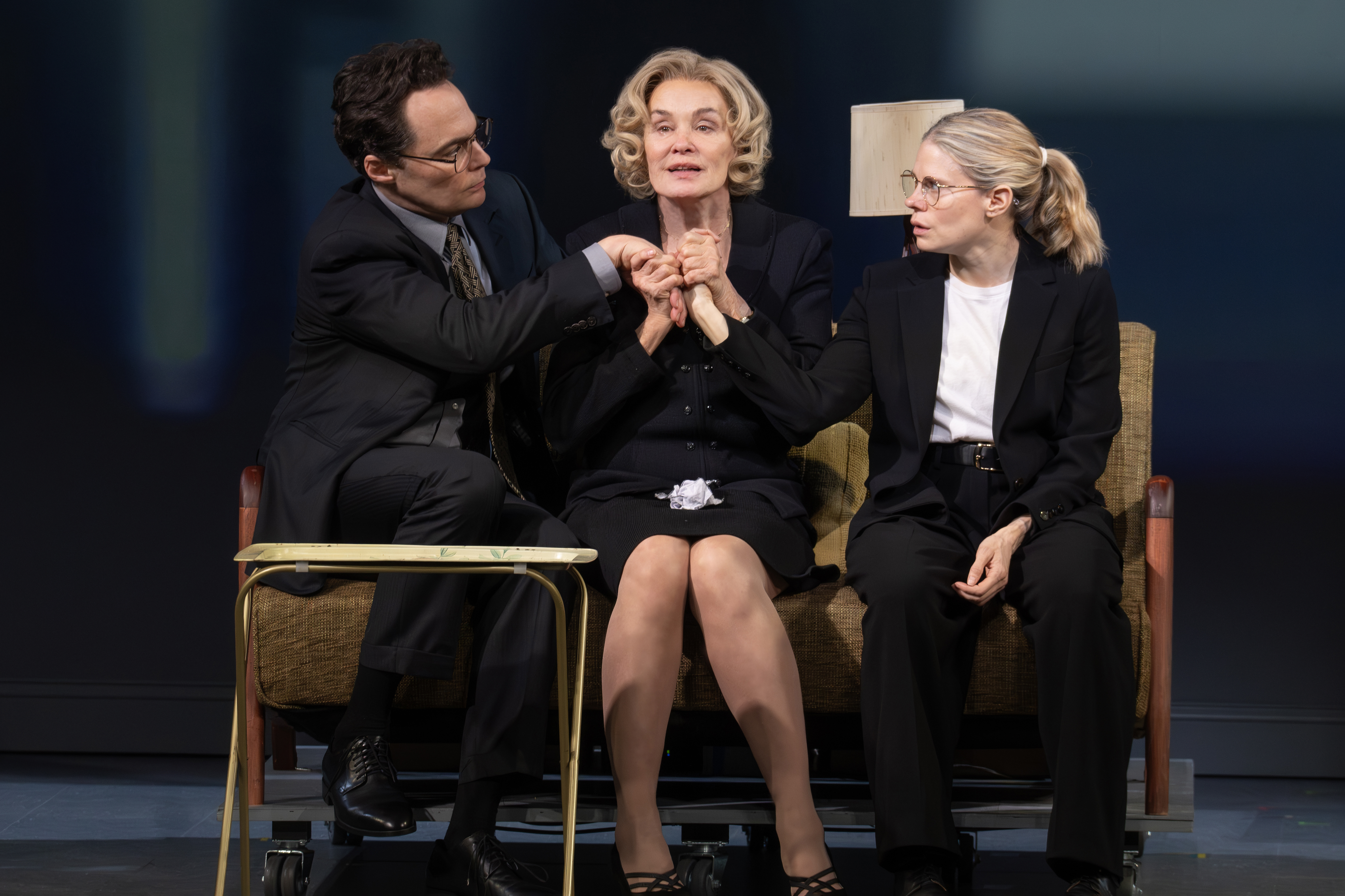
(Photo © Michal Daniel)
Tonya Pinkins is brilliant in this difficult role, singing her soul out and conveying so much emotion even though she always seems to have the same sullen expression on her face. The members of the surprisingly large supporting cast are uniformly excellent. Harrison Chad is wonderful as Noah; Veanne Cox is sympathetic as his struggling stepmom; and David Costabile is gently moving as his widowed father, who seeks solace in playing the clarinet. Capathia Jenkins, Chuck Cooper, and Adriane Lenox make big impressions in their roles as a sassy washer, a devilish dryer (and a mournful bus), and a crooning moon, respectively; Tracy Nicole Chapman, Marva Hicks, and Romana Keller do the girl group thing as The Radio. Anika Noni Rose, Kevin Ricardo Tate, and Marcus Carl Franklin are delightful as three of Caroline’s children (her fourth is off in Vietnam) and they have one of the show’s best numbers at the end of the first act. Rose is exceptionally good as the smart, independent-minded teen Emmie.
The scenic design of Riccardo Hernández and lighting design of Jules Fisher & Peggy Eisenhauer gives a coolly attractive look to the production. Director Wolfe creates stage pictures in which the actors often stand still, apart, and look away from each other; the effect is striking and distancing, and it reflects the emotional distance of Kushner’s uncompromising script.
Despite Kushner and Tesori’s unwillingness to let Caroline’s struggle turn into a predictable story of uplift, the piece does end with some muted rays of hope: Caroline and Noah warily renew their odd friendship, Rose’s icy relationship with her stepson begins to thaw, Stuart shows his first signs of emotion, and Caroline’s children look to a brighter future beyond the basement where their mother toils for pocket change.
Featured In This Story