Women on Fire

(Photo © Carol Rosegg)
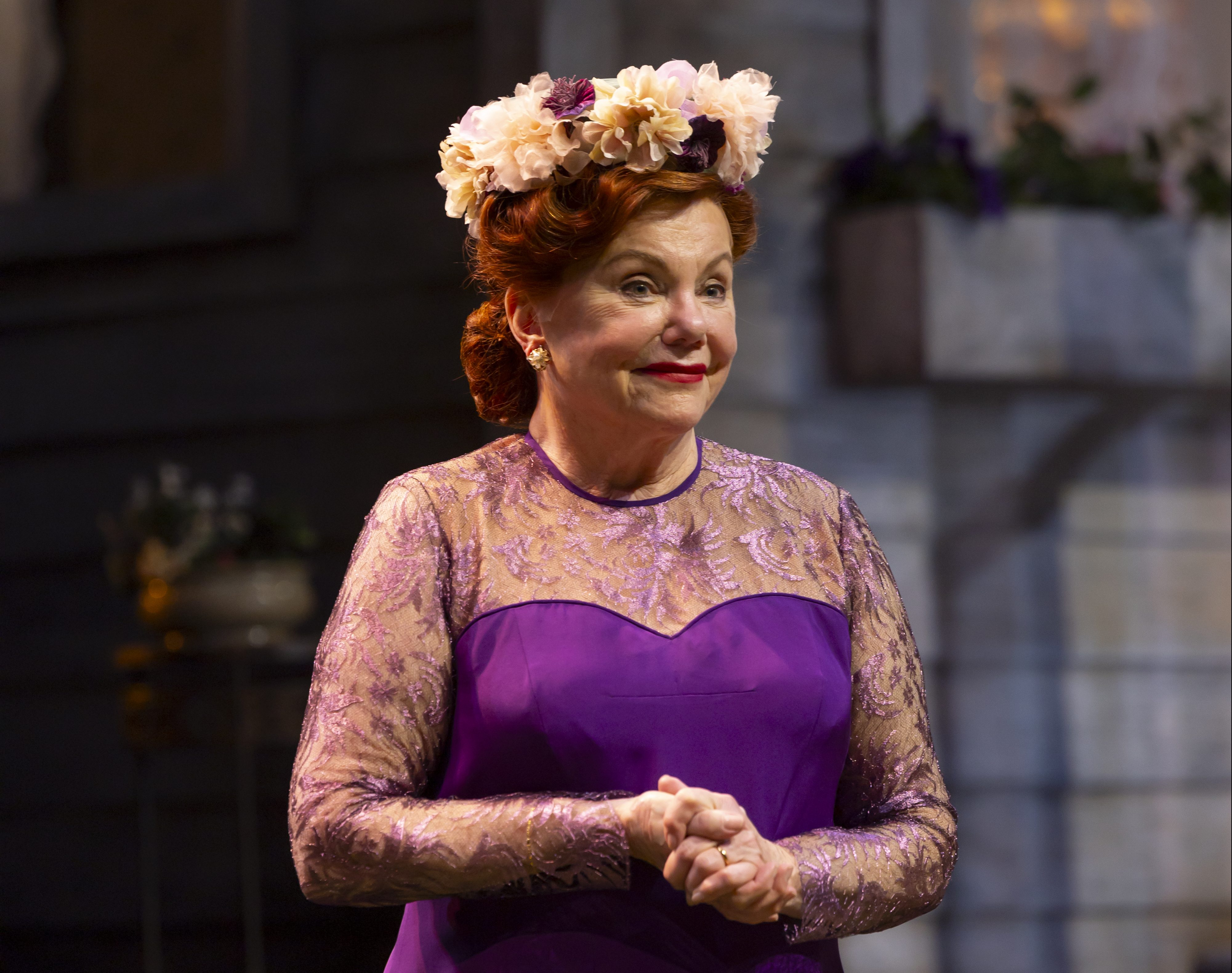
When Judith Ivey was preparing to do Precious Sons on Broadway in 1986, she said during an interview that she’s helped enormously in a role by knowing what kind of shoes the character wears. But if she thinks she needs the external aids, why is it she’s so wonderful playing a dozen parts in Irene O’Garden’s Women on Fire? Over the course of the 90 minutes it takes for these dozen gabby ladies to appear, Ivey never changes the black flats she has on, flats that coordinate neatly with an unprepossessing black V-neck sweater and black trousers. Granted, for the last woman she embodies — a grinningly positive somebody who believes in dancing one’s problems away — Ivey steps out of the plain shoes to twirl bare-footed and then returns for her curtain call in a pair of embroidered slippers.
The enormity of Ivey’s accomplishment as she presents O’Garden’s collection of contemporary women from widely diverse backgrounds is further underlined by her changing almost nothing about her appearance once she strides out. She doesn’t rearrange her long ginger hair, which is pulled back and tied so that it falls below her shoulders and out of the way. Nor does she unhook the string of pearls or pull off the couple of bracelets and ring that she wears. In terms of accessories, the most she does to differentiate one woman from another is to put on glasses, tie a scarf around her neck, or slip into a jacket. Sometimes, she picks up a mug or a cocktail glass or a cigarette that remains unlit; other times, she does nothing more than look her pleasingly round and sexy self.
Michael Krass, billed as costume and set designer, has provided a single wood chair and has hung a sheet of thick paper that hits the floor upstage and stretches forward to the lip of the stage. But for making certain that Ivey is seen and heard, lighting director Pat Dignan and sound designer Bart Fasbender stay out of the way. Faye Armon is busy enough to warrant billing on the title page because she’s in charge of the array of props that Ivey pulls from a catchall or retrieves from shelves and hooks in the wings.
What Ivey does change during the performance, and radically, is her voice. The vocal calisthenics are appropriate because, to some extent, O’Garden’s piece — “play” isn’t the right word — is about the many voices of women coping with the issues of life today. The first of the women is a photographer identified as Trude in the program. (Only two of the ladies mention their names.) She’s introduced talking to a friend on the phone and explaining that, while she was away on a foundation-commissioned project, her studio burned down. She lost many of her prized possessions, including her Margaret Bourke-White prints. (The stretch of neutral-colored paper that set designer Krass has dropped behind Ivey is, of course, a common feature in a photographer’s studio.)
In the course of her stiff-upper-lip remarks, Trude says that she’s been “shooting contemporary women” and goes on to note, “I gotta say there’s interesting stuff developing in the trays. Not sure what to make of it. Not quite portraits — more like events or something.” The remainder of O’Garden’s generally engrossing work, during which designer Dignan occasionally flicks the lights as if they were flashbulbs, is meant to be a fleshing out of Trude’s project.
The monologues of these 11 women were evidently selected from many more that O’Garden wrote for this endeavor. The characters come from a wide spectrum of classes and regions and they reflect moods ranging from mildly depressed to joyful to manic. Fern, while doing crewelwork, talks about failing to establish an easy bond with her daughter. Immediately afterward, Eileen fulminates about her difficult mother in a confessional. The tough and therefore misnamed Clover, stalking around a psychotherapist’s office, acknowledges off-handedly that she’s “hard to love” and eventually loses her especially chilly sangfroid. Lydia, alcoholic and dying, tapes an apology to her daughter. Rita, sitting cross-legged on the floor, describes her decision to have an abortion while unsuccessfully fighting the regret that has plagued her ever since.

(Photo © Carol Rosegg)
And so it goes as Ivey, directed with cunning understanding by Mary B. Robinson, brings each of the women to vivid life. When she’s on her knees addressing the unseen priest, her Irish accent is pungently right; when she’s African-American construction worker Kalisha, she’s got a convincing bass-fiddle delivery going for her. Trude is gruff and New Englander Elizabeth is Katharine-Hepburn clipped. Ivey is also wisely economical about the characters’ body language. As dance fan Jordy — “Did you know you could fill a room with your joy?” — she has her arms and fingers going like sea anemones. As Miriam, a woman who gaily admits that her devotion to shopping is “shallow,” she has down the moves that certain women employ while downing a smart cocktail. Miriam addresses a niece and, from time to time, places orders with a waiter; the way in which Ivey makes the unseen figures seem present is startling. Nothing the two-time Tony winner does is an iota too much or an iota too little.
What of the monologues themselves? Although O’Garden has a way with a phrase or sentence that accurately nails a character, she may be righter than she knows when she has Trude remark about not being sure what’s she’s got with her stack of photos. Of course, the photos are analogous to the mental photographs that O’Garden has taken of (perhaps) real people whom she knows and has now fictionalized. (Earlier this season Jonathan Bell masked himself in the 9/11-inspired Portraits by introducing a painter laboring on a character-study undertaking similar to Trude’s.)
O’Garden’s monologues are pithy, evocative, and lively in their scrutiny of women operating under timeless pressures as well as pressures exclusive to today. But what do they add up to? A glance at the dramatis personae list in the author’s script explains her intention and, consequently, the title Women on Fire. Following each character’s name — the only exception being Trude — is a one-word defining trait. Fern is “hearth,” Eileen “coal stove,” Clover “conflagration,” Zatz “wildfire,” Rita “campfire,” and so on. (The campfire designation is undoubtedly why Rita sits cross-legged.)
O’Garden can’t really expect audience members to figure out her trope — this reviewer certainly didn’t — and without understanding the link, the most an audience member might make of the show is that it’s a look at 12 dames who are “fiery” — an adjective that could be applied to almost any randomly gathered group of women. Maybe that’s O’Garden’s point but, if so, it’s slightly blunted. Without Judith Ivey delivering them, the speeches might merely smolder; with Ivey, they are ablaze.
Featured In This Story