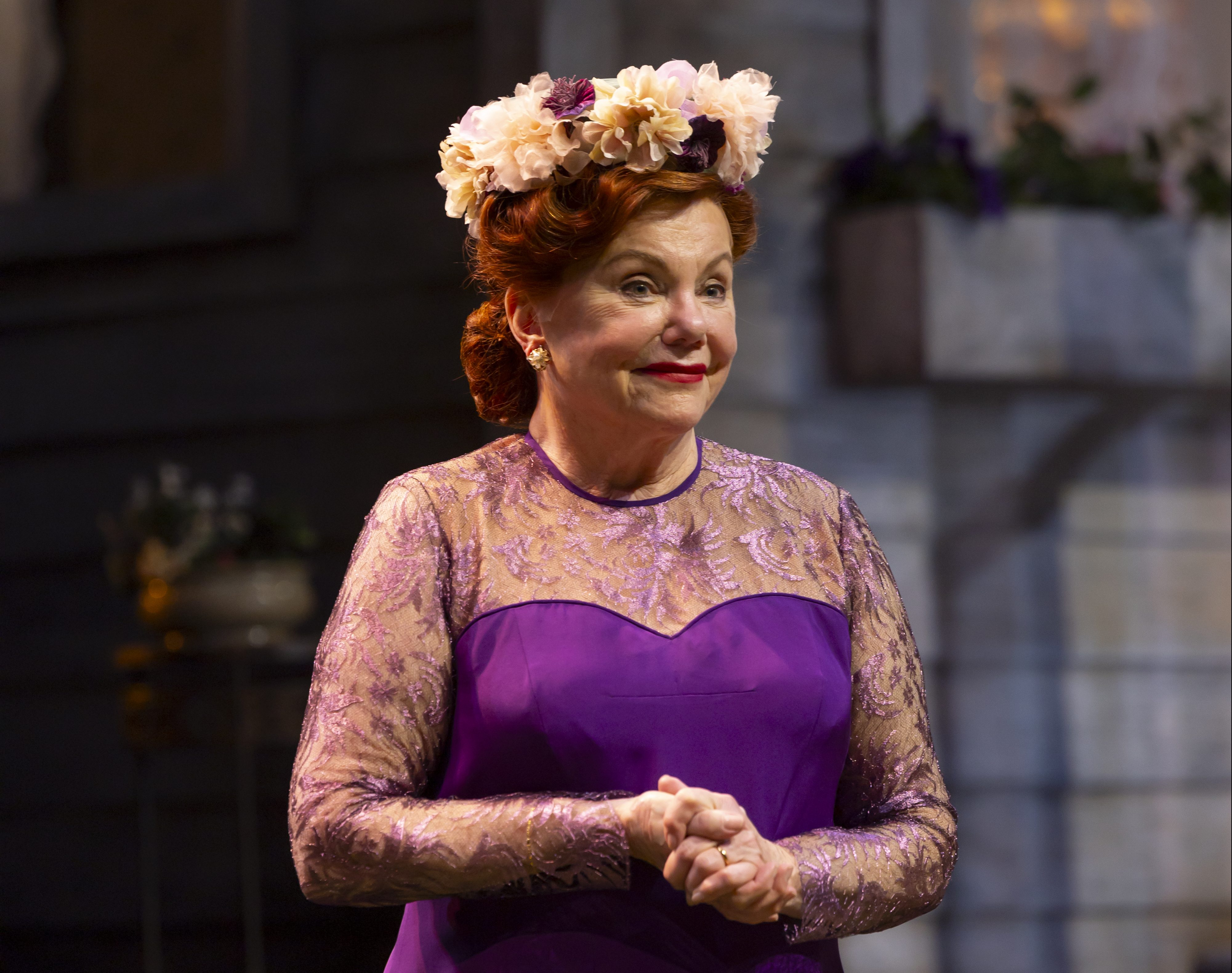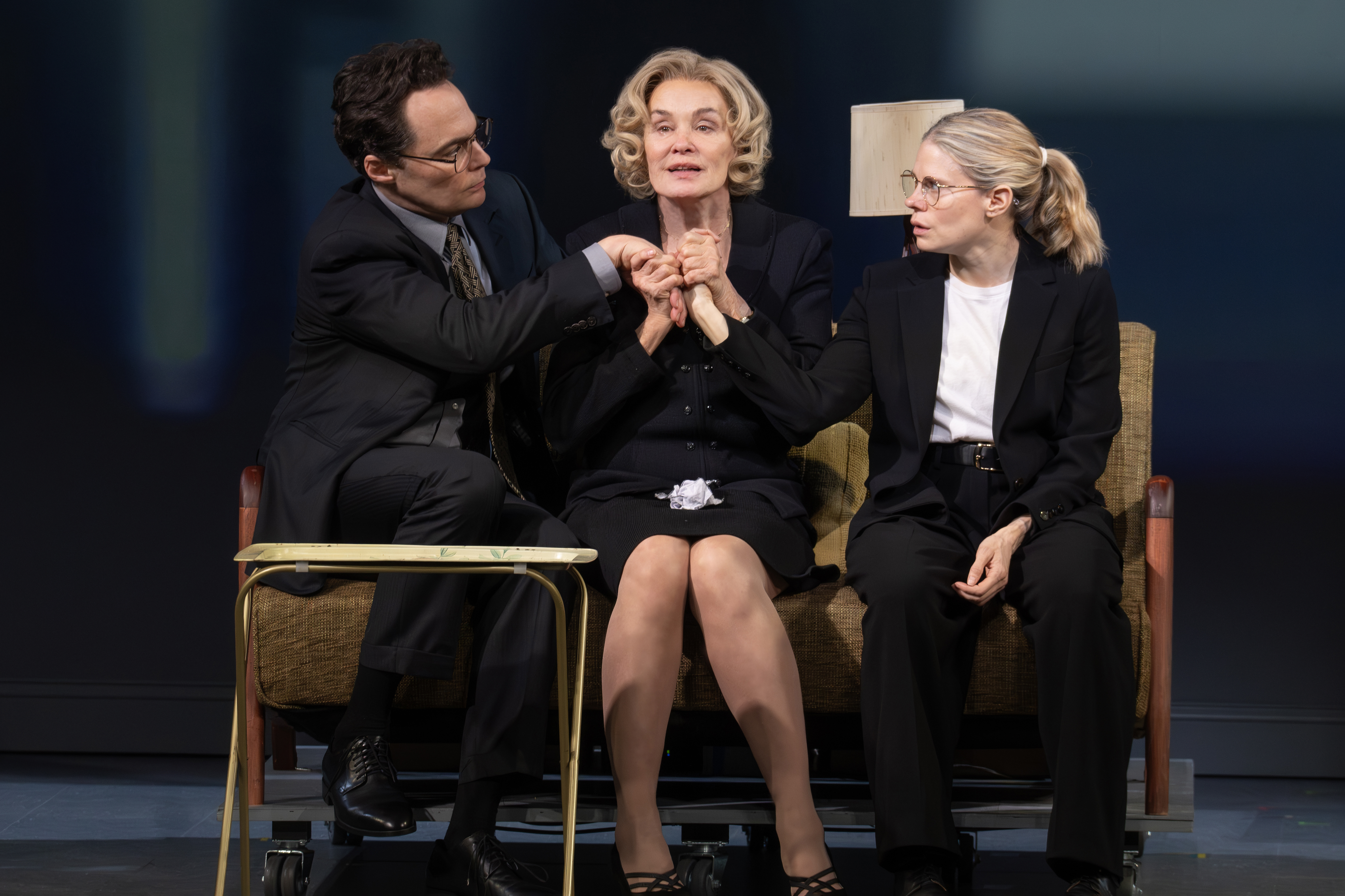


The Alchemists

and Benjamin Eakley in The Alchemists
You’ve got to hand it to the Prospect Theater Company’s Peter Mills and Cara Reichel: They’re out there making new musicals, they’re making them regularly, and they’re demonstrating a creativity and scope that’s rare. Following their production of the new musical The Flood and their wonderful Twelfth Night adaptation, Illyria, the pair now bring us The Alchemists, an original musical about the comic and tragic escapades of the denizens of Foxwood Hall.
Set during the Regency period in England, The Alchemists chiefly concerns four young men; two of them, Stanley and Nicholas Auburn, are the sons of the master of Foxwood, the other two, Nathaniel and Marcus Plum, are sons of the local vicar. These four are schooled together on the estate and all are enchanted with the master’s ward, the headstrong Anne. Stanley, the elder brother, is set to marry Anne, though Nicholas is the one who’s truly in love with her. And she, in turn, is in love with Nathaniel, who requites her affections, though neither seems able to confess his or her feelings. When Stanley clashes with his father and Nicholas lets his desire for Anne get the best of him, this tangle of passions turns to tragedy.
Mills and Reichel (who co-wrote the book together) set most of the story in two time periods, 1807 and 1818. They take us back and forth between the characters’ reminiscences of their childhood and the present goings-on at Foxwood Hall in the days leading up to Stanley and Anne’s engagement party, with the second act tracing the years following the fateful night of the party. Reichel, who also serves as director, finds some nice ways of moving the action between time periods; a notable instance comes during the song “Painting Anne,” when she first shows us that the four little boys whom we see singing a hymn to enlightenment at the top of the play are the younger versions of the same people we meet in the present-day scenes. On the other hand, the frequent flashbacks sometimes make it hard to keep the story straight. It doesn’t help that, aside from the five leads, who are played by a set of children and a set of grown-ups, none of the other characters show any of the effects of aging.
Running nearly three hours, The Alchemists has an interesting if convoluted story and is cleverly written by Reichel and Mills; the pair have a gift for writing period dialogue that is natural and witty. But the show suffers from an excess of material. There’s a lot of emotion bouncing between Anne and the four young men, and composer/lyricist Mills seems to feel the need to give musical voice to every little feeling. The result is one ballad of longing after another: The boys long for knowledge (“Flickering Flame”), the young men long for Anne (“Painting Anne”), Anne and Nathaniel long for each other (“Without a Word”), Nicholas longs for Anne (“Happy News”), and Marcus longs for Stanley (“Golden”). It’s not that these aren’t nice songs but, coming one after another, they have a dulling effect. Some songs make a strong impression, such as Anne’s “I Can Play the Part” and Nathaniel’s stirring “Young Man’s Prayer.” Others are musically unmemorable pieces that accompany engaging action, such as “Elixir” (in which Nicholas experiences wild fever dreams) and “A Mad Adventure” (in which, in flashback, the five kids cause a bit of mischief with some significant consequences).

in The Alchemists
Though the show is filled to bursting with incidents of intrigue and character-revealing songs, it doesn’t quite grab the heart. This is partly due to a casting problem. All of the 17 actors in this production are good in their roles but none are great, and with so many performers competing for our attention, none of them ever manages to completely win it. Who, after all, is the protagonist of the piece? And don’t these kids want anything besides each other? There is, of course, a precedent for this kind of romantic mix-up play — Shakespeare was a master of them — but The Alchemists appears to be aiming for something a little darker. Unfortunately, it fails to settle on a tone that will sufficiently serve its ambitions. The musical’s first big song (“A Fine Affair”) is an up-tune about the characters’ excitement and anxiety over the forthcoming party, leading one to think this will be a romantic comedy. Then the show turns into a kind of memory play as the flashbacks become prevalent, and then it begins to resemble a melodrama as the first act comes to its hard-to-swallow conclusion. There’s more melodrama in the second act, and then the show ends with a wink and a miracle. The whole enterprise suffers from a lack of balance, clarity, and focus.
But The Alchemists does have a great deal of potential. It needs a bigger stage, for starters; the large cast struggles to maneuver around the modest space on which Scott Aronow’s gorgeous set rests. With more room to play around in, Reichel might have been better able to make the time-hopping work smoothly. And Mills’ score, which is fine but not outstanding, would have benefited from the kind of lush orchestrations Illyria had, rather than this two piano rendering (played by Mills himself and music director Daniel Feyer). The Alchemists needs a fuller sound to add some personality to Mills’ songs.
As it is, the show still has a lot to recommend it, including some lovely melodies and an intriguing story about the intellectual and romantic values of a bygone day. With more work on the part of Reichel and Mills, a future production could prove far more satisfying.
Featured In This Story