

Liberty City

(© Joan Marcus)
The race riots of 1980 in Miami may be what the majority of the country first thinks about when they hear the words, “Liberty City.” However, in April Yvette Thompson’s powerful solo piece Liberty City, at New York Theatre Workshop, the performer looks at both the promise the place held for her family, as well as how everything turned so wrong. The work, co-written with director Jessica Blank, uses Thompson’s personal experience growing up in that predominantly African-American area of Miami to create a complex portrait of a place and time that cannot be simply reduced to its worst aspects.
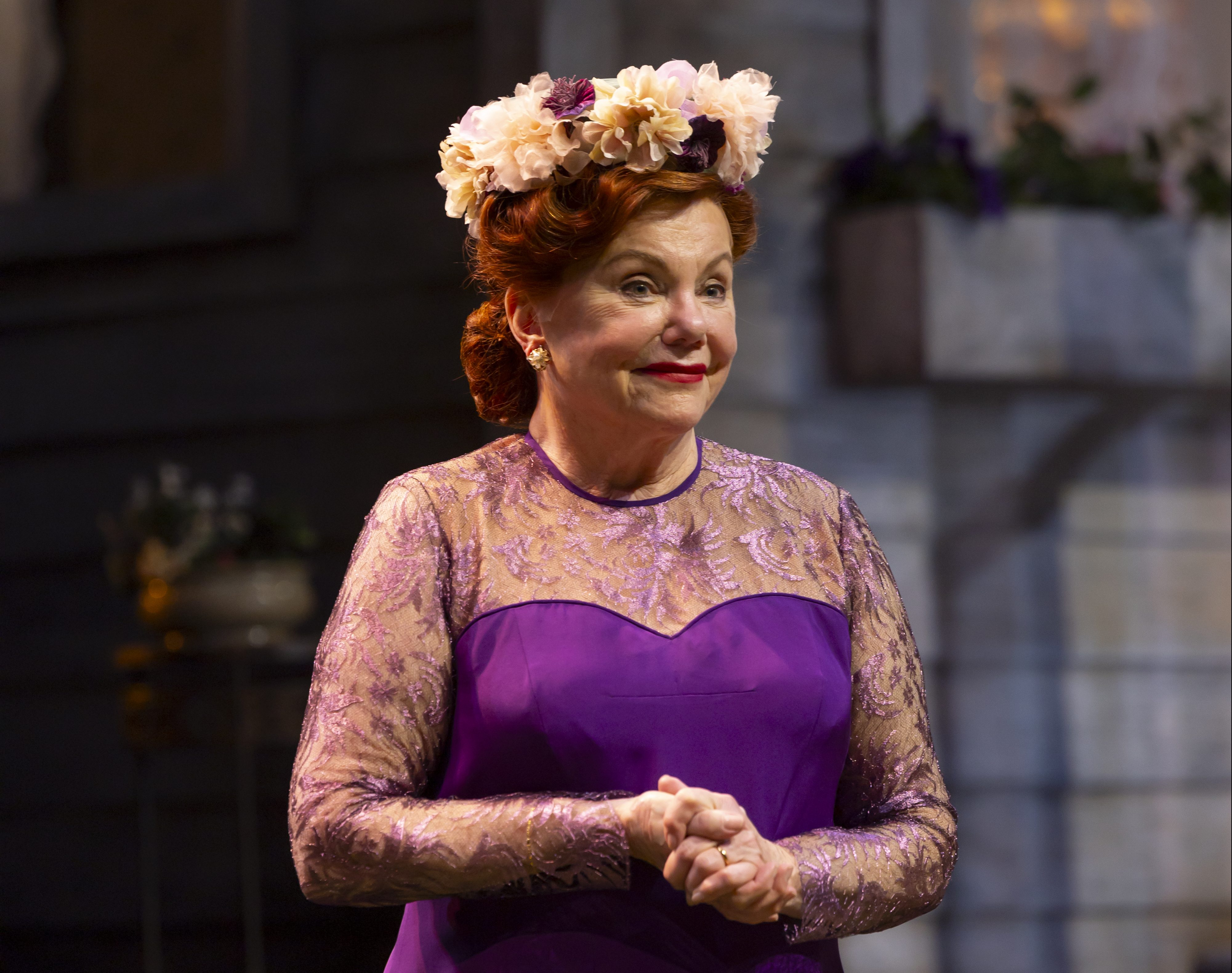
Thompson plays a range of people including her younger self, her father Saul, her mother Lily, her Auntie Carolyn, and more. At first, some of Thompson’s portrayals come across as overly broad, but as she spends more time with her primary characters, they become fully realized human beings, with both strengths and flaws. Indeed, this is not a candy-coated reminiscence. The lightness and humor of the first half of the solo play is necessary to understand how the hopes, dreams, and possibilities that Thompson’s family held in the 1960s and early 1970s slowly gave way to disappointment, frustration, and anger. As racial tensions in Liberty City increase, one family member battles drug addiction, another finds comfort in the church, while still another engages in an extramarital affair.
Antje Ellermann’s scenic design includes a number of separate environments, such as a kitchen and a home office, with Thompson visiting the different areas when speaking the part of the person most associated with that locale. Two large projection screens dominate the upper half of the stage, and video designer Tal Yarden fills them with an assortment of historical footage and on location shots.
The action of the play culminates in the riots, which were sparked when white police officers were acquitted of all charges in the fatal beating of a black suspect. While Thompson delivers the necessary contextual information, what she concentrates on within the play is her fifth grade self’s struggle to get her younger brother and herself safely home. The narrative jumps from her perspective, to her mother’s, to her father’s as they each try to battle the chaos, find safety, and reunite with their loved ones. It’s an incredibly powerful sequence, exquisitely performed by Thompson.
While the riots are an important part of the story that Thompson tells, it’s ultimately only a small portion of her narrative. She and Blank have wisely concentrated on showcasing the humanity of the piece’s central characters over a long stretch of time, rather than making it about a singular crisis. This allows for an important — and incredibly moving — coda at the end of the play that encapsulates the work’s themes of history, struggle, pride, and self-determination.
Featured In This Story