The Voysey Inheritance

Honesty may be the best policy, but it isn’t the most theatrical. Playwright Harley Granville-Barker, George Bernard Shaw’s most brilliant disciple, understood this, but also realized that while dishonesty makes stage fireworks, honesty probed in all its complexity can also send up bright flares. And send up flares he does in his 1905 family melodrama The Voysey Inheritance, currently being given a rare, commendable revival by the Mint Theater Company.
When Mr. Voysey, Sr. tells his son and partner that their solicitors firm engages in misappropriation of clients’ capital, young Edward is repulsed, and immediately decides he and his father must confess. Whereupon the chagrined elder Voysey, using a rationale that rings contemporary, explains, “I did what I had to do.” He then cajoles Edward into continuing the high-toned scam in which unsuspecting Peters are robbed to pay unsuspecting Pauls with the hopes that all will come out right in the end.
Among those kept in the dark about the Voysey & Son chicanery are the other Voyseys,
a motley group used to the pampered life. There are the sisters: Ethel, about to be married, and Honor, a timid spinster devoted to her father’s comfort. There are the brothers: Booth, a bombastic military man, and Trenchard, a pompous barrister not as trenchant as his name implies. There is also Mrs. Voysey, who has withdrawn from family colloquies because she is virtually deaf (yes, her condition is metaphoric), and Mr. George Booth, a family friend who is unwittingly the largest loser in the mismanagement of investments. Also decorating the Voysey rooms are two Shavian (read literate and liberated) women: Beatrice, the wife of a third and absent son, and Alice, a sharp-eyed, smooth-tongued niece who won’t agree to marry Edward (yet).

The uneasy calm is shattered when Mr. Voysey dies and, minutes after the funeral, Edward gathers the family together to clue them in about the business. Any hope of restored serenity is dashed when Booth, less impressed by Edward than by his father, announces his intension to take his holdings elsewhere, forcing Edward to reveal the sad Voysey & Sons financial situation. At this juncture Edward has to consider his options, which he does in a series of charged exchanges–not the least of them with the clever Alice–among the Edwardian furniture and impressionist paintings of the Voyseys’ Chislehurst manor house.
Writing at the dawn of the last century, when cracks in the seemingly impermeable British Empire were barely discernible, Granville-Barker captured the strengths, misguided power, and political accommodation inherent in the English character. He shrewdly presents the gnarly situation in which they deploy their greatest asset (verbal dexterity) to disguise their greatest weakness (emotional constipation). There’s a lot of persuasive talk. Why wouldn’t there be from a playwright who got his start acting in Shaw’s comedies?
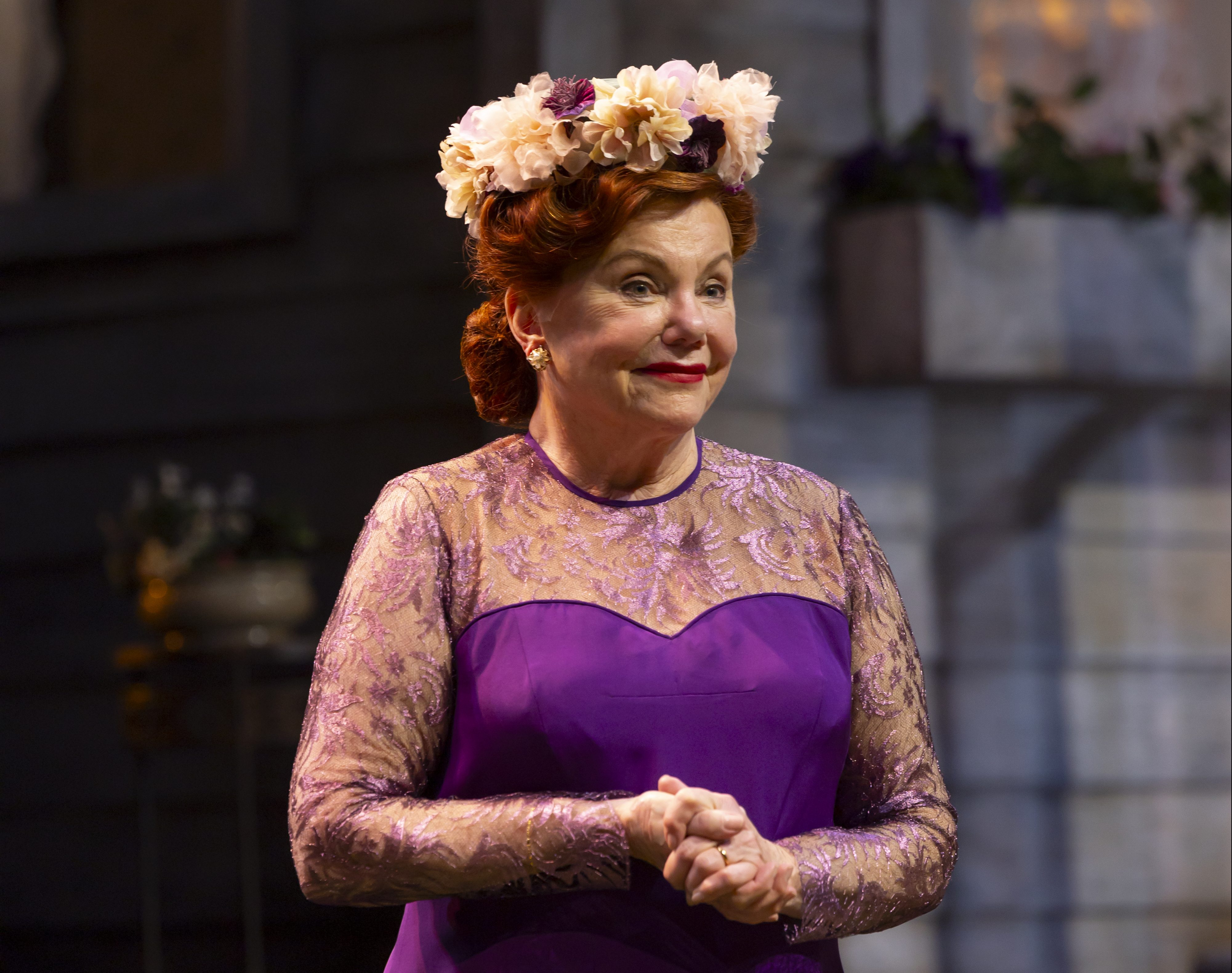
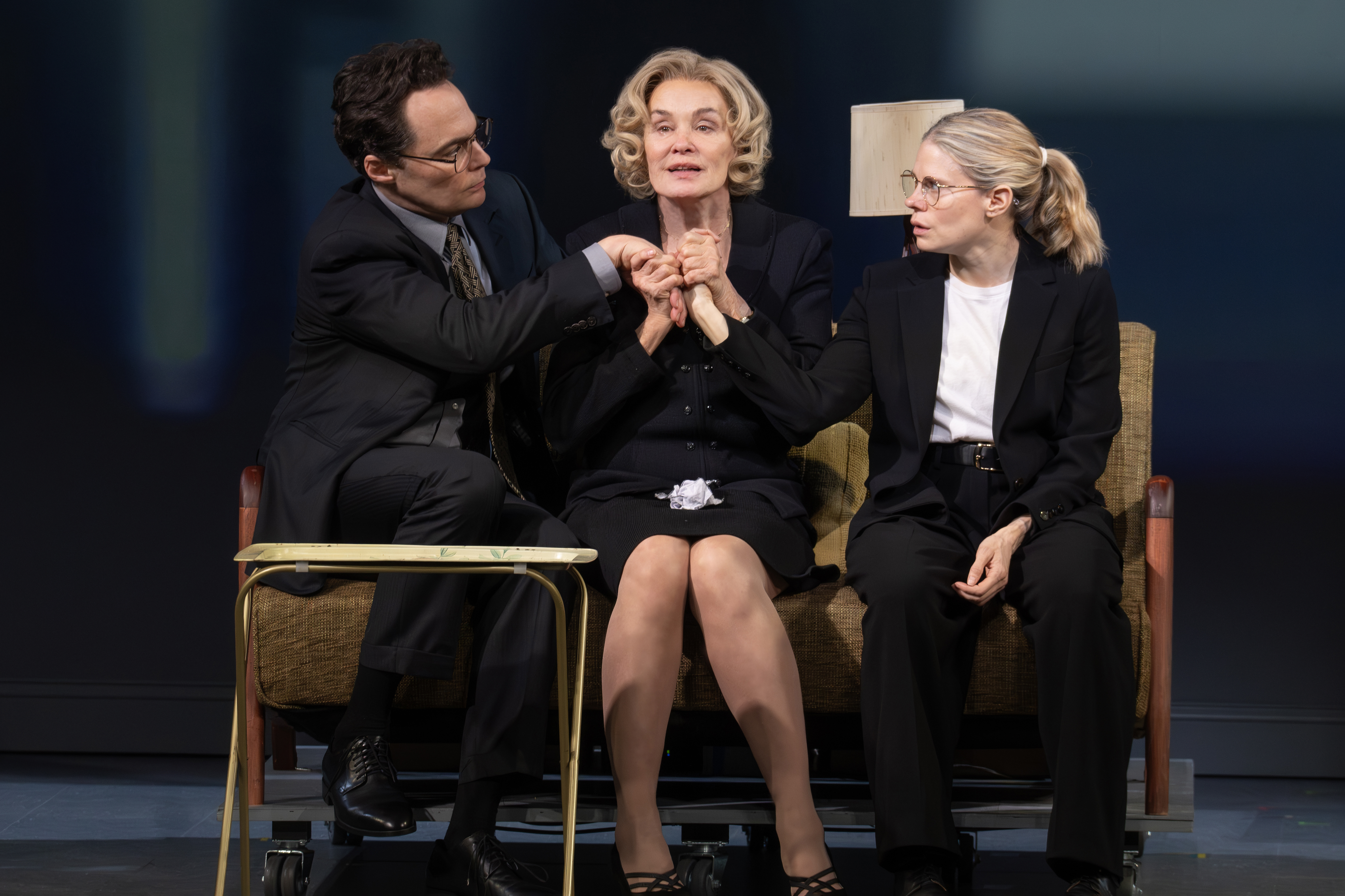
Indeed, a three-hour chat-a-thon may be slightly too much for today’s audiences, but they should be mollified by director Gus Kaikkonen’s smooth-running production, played extremely well by American actors with assured upper-class British accents (hats off to dialect coach Amy Stoller). George Morfogen’s performance as Mr. Voysey seems to be derived from Alec Guinness, but is superb all the same. Sioux Madden is so adroit at playing Alice that she signals depths of meaning by merely uttering a character’s name. Kraig Swartz plays Edward with a line as defined and focused as the profile he keeps showing the audience. A nod to set designer Vicki R. Davis whose rooms suggesting Sheraton-stripe wall coverings eventually register as prison bars. Economically, she helps Granville-Barker make his accusatory and sobering point about the constricting effects of ill-gotten gain.
Featured In This Story