
The Momentum

in The Momentum
(© Max Ruby)
CollaborationTown’s latest play,
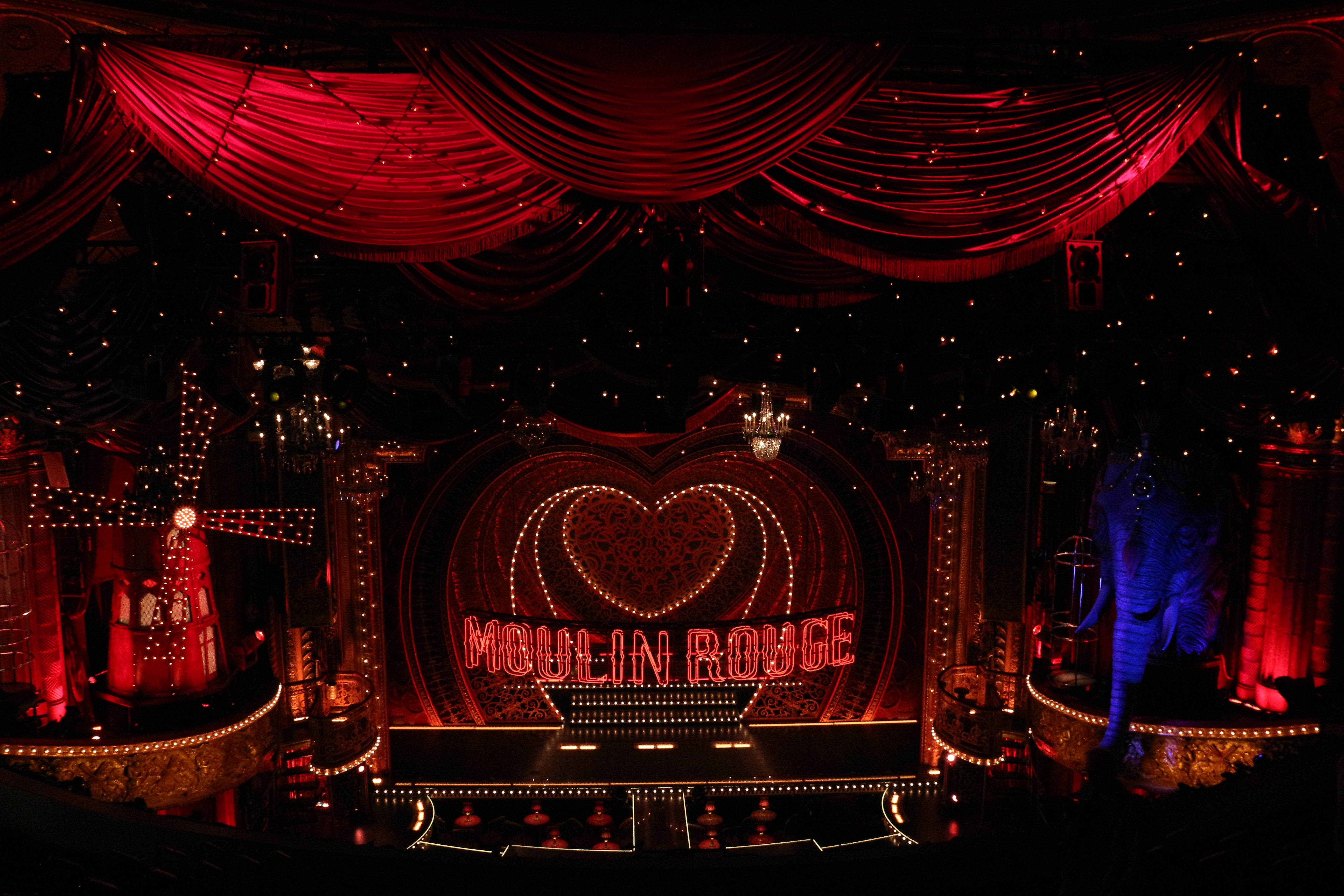
The Momentum, being performed at the West Bank Café’s Laurie Beechman Theatre, is a fast-paced romp through the world of self-help. But perhaps the enterprise is a bit too fast. While the performances are stellar and the concept is hilarious, the execution seems underdeveloped, and the writing barely scratches the surface of its subject matter.
As the play — which takes the form of a self-help seminar — begins, a crazed looking man (Geoffrey Decas O’Donnell) introduces us to the concept the “Spinning hole of Momentum,” a zone-like state that we are encouraged to “ride” on our way to prosperity, happiness, and fulfillment. His proselytizing is accompanied by the relentless clapping of fellow true believers (played by Jordan Seavey and Boo Killebrew).
These three actors go on to perfectly capture the unbearable jargon and gimmicky exercises that characterize any self-help movement, but it’s Killebrew who gives the stand-out performance here. Each of her facial expressions is worth a thousand words. With robotic poise (for the purposes of this play, a good thing), she is able to spout out the most awkward of lines like, “I’m just like you, mid to upper-middle class, in my mid to late twenties and running my own PR firm.” While her words may reek of faith in “The Momentum,” her eyes betray a zany discomfort.
The authors (who include the three performers, along with director Lee Sunday Evans, and TJ Withham) attempt to point out the folly of patented methods for living by giving each of the performers a monologue about painful life experiences written in the form of a how-to manual. These stories are compelling and personal, yet they do not fit with the piece as a whole. Indeed, the sudden assumption of human traits by the formerly-robotic actors comes as a surprise (perhaps by design).
In a world full of cult-like retreats and books filled with “ancient” and “eastern” secrets, it seems almost a waste that the most biting critique of our obsessions with “self-improvement” comes not from the play itself, but in the form of a faux-catalog for Momentum-themed schwag and books printed on the back of the program.