

The Orphans’ Home Cycle: Part One

(© Gregory Costanzo)
Before passing away earlier this year at the age of 92, Pulitzer Prize-winning playwright Horton Foote edited down and combined nine of his plays into a three-part opus, collectively called The Orphans’ Home Cycle, and now being presented by the Signature Theatre Company in a co-production with Hartford Stage. And the overall fine quality of the two hour-and-fifty-minute first installment makes for an excellent start to this epic undertaking.
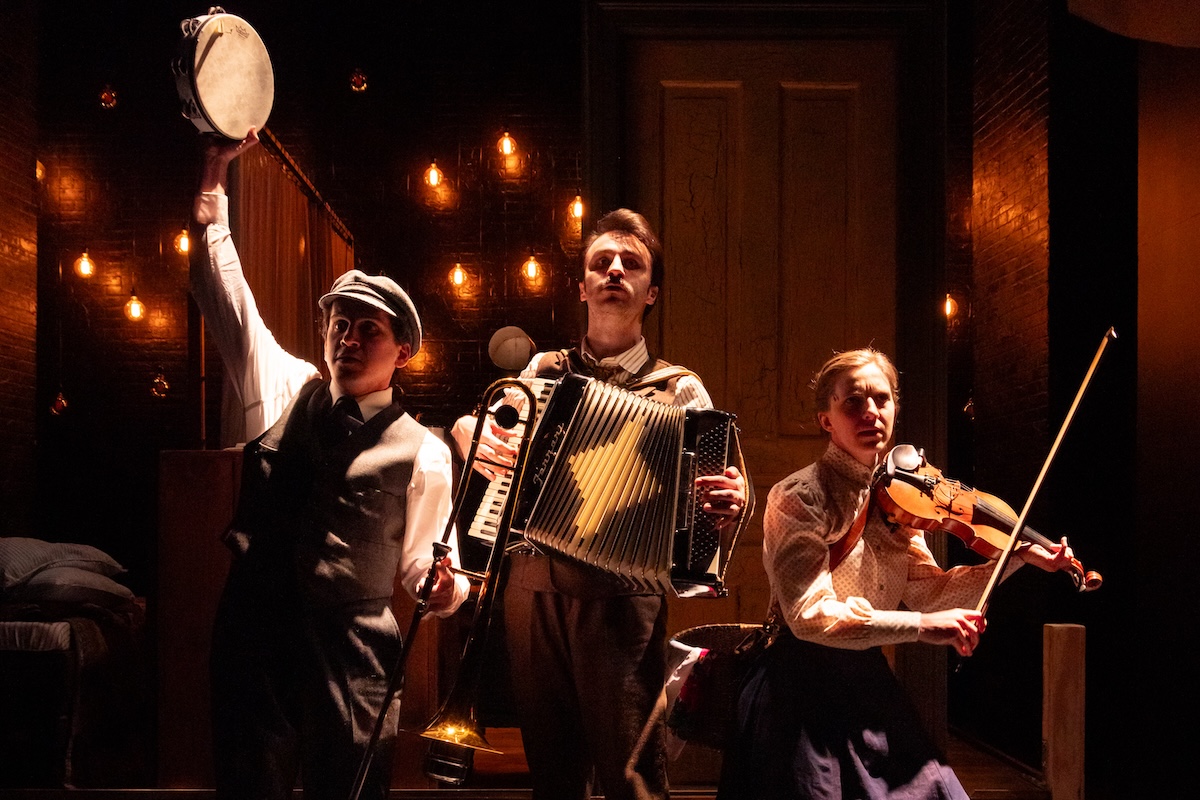
Part One, subtitled The Story of a Childhood, introduces us to the work’s central character, Horace Robedaux, who is modeled after Foote’s own father. The three plays (plus a prologue) presented here feature a trio of actors in the role of Horace: Dylan Riley Snyder plays the character at age 12, Henry Hodges embodies him at age 14, and Bill Heck is a 20-year-old Horace. A clever non-verbal sequence at the top of the show, smoothly directed by Michael Wilson, establishes the three performers as portraying the same person.
The first piece on the bill, Roots in a Parched Ground, is the weakest, primarily because it is overladen with exposition. Set in 1902 and 1903 in Harrison, Texas, the play unfolds in brief, episodic scenes as 12-year-old Horace watches his father (also played by Heck) die, and his mother Corella (Virginia Kull) and younger sister Lily Dale (Georgi James) abandon him for a life in Houston with Corella’s new husband, Pete Davenport (Bryce Pinkham).
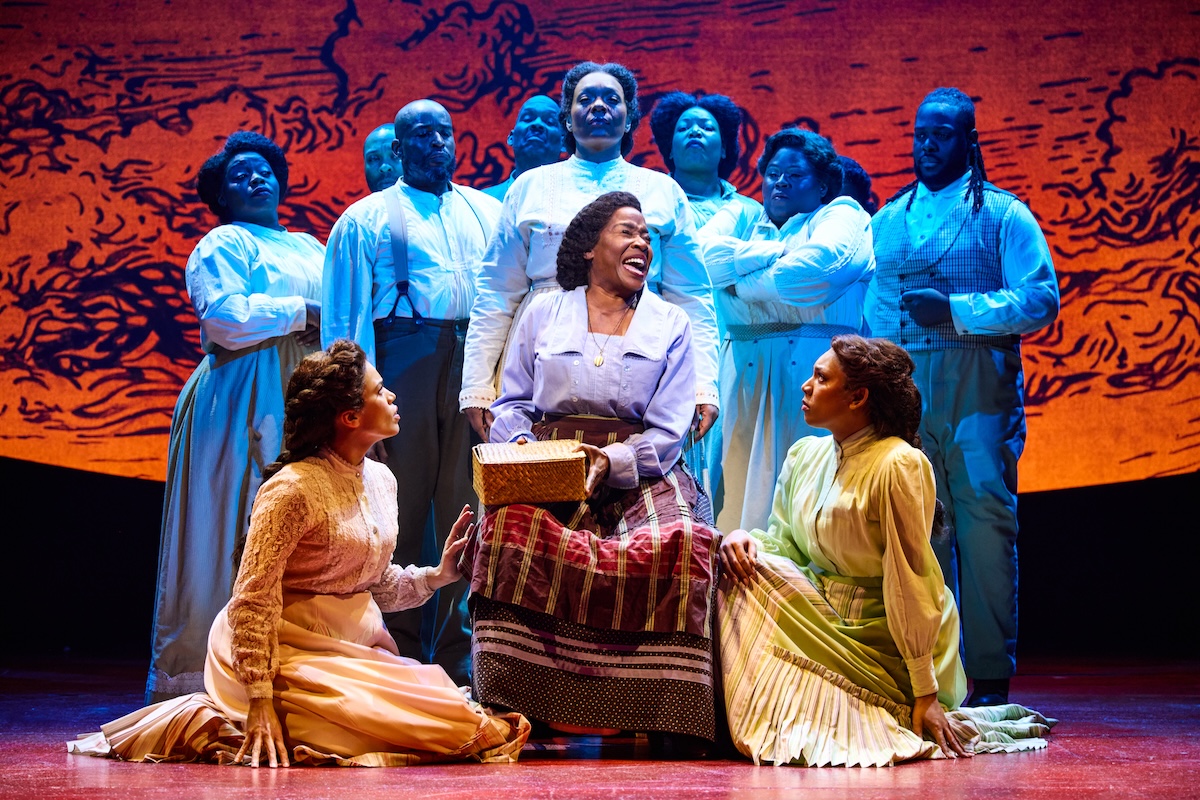
Things pick up considerably in the second play, Convicts, set on Christmas Eve, 1904. The teenage Horace has entered the workforce, clerking at a plantation store and occasionally watching over the African-American prison laborers who work the fields. An early scene features Horace guarding a convict named Leroy (Gilbert Owuor) who is chained to a tree because he killed one of his fellow inmates. It clearly establishes how Horace has had to leave his childhood behind, and Hodges perfectly captures both the vulnerability and inner strength of this man-child as he struggles to make his way in the world. The piece is also full of macabre humor and terrific supporting performances, particularly from James DeMarse as Horace’s addled employer Soll Gautier, Hallie Foote as Soll’s shrewish niece Asa, and Pat Bowie as Soll’s African-American cook Martha.
The third play of the evening, Lily Dale, is set in Houston in 1910, as the adult Horace reunites with his mother (now played by Annalee Jefferies) and 18-year-old sister (Jenny Dare Paulin) under the none-too-welcoming gaze of his stepfather (Devon Abner). Horace wants so desperately to remember details about his father, while Lily Dale wants to just forget the past completely. The entire cast delivers nuanced performances, but the clear stand-out in this section is Jefferies. Her Corella is absolutely heartbreaking as she runs an emotional gamut that encompasses her love for Horace, her guilt over abandoning him, her fear of her husband, and her anxiety over the illness that forces Horace to continue to stay in Houston.
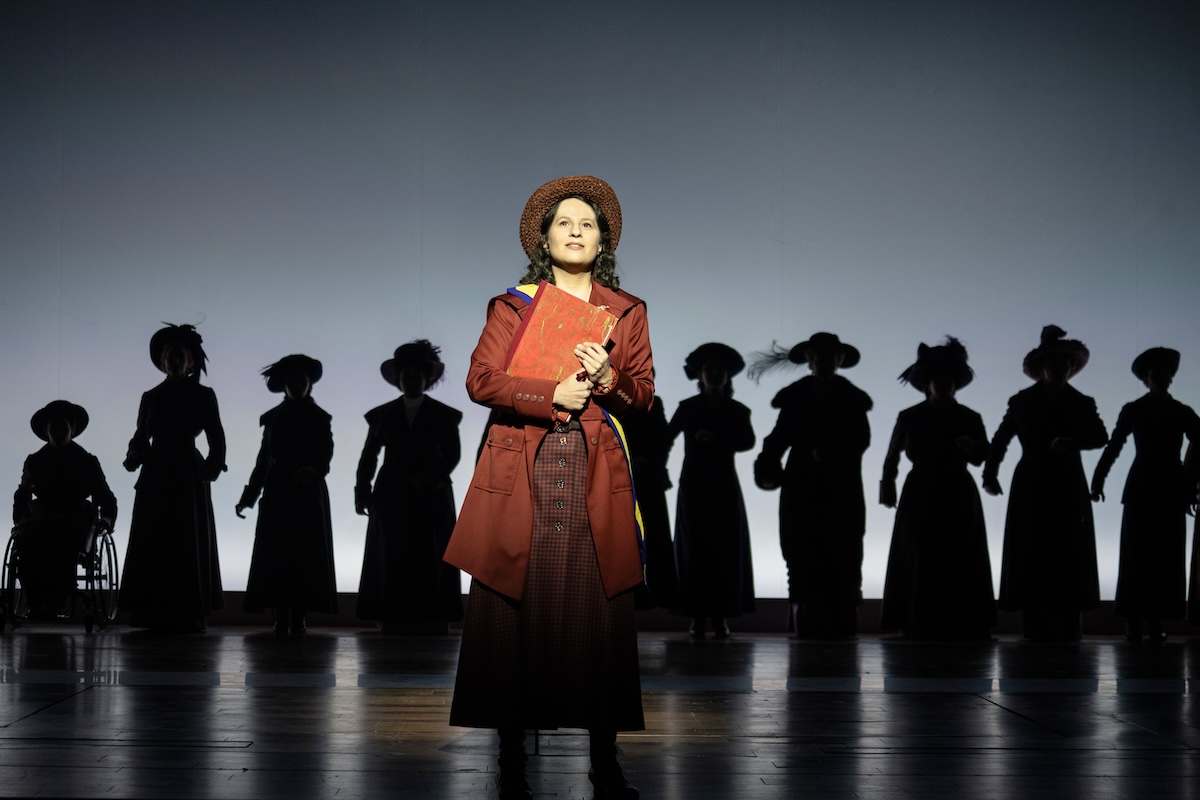
Wilson has directed the evening with a cinematic eye, aided by Jan Hartley’s projections, the lush original music and sound design by John Gromada, and the sliding units from scenic designers Jeff Cowie and David M. Barber. There is also a rich attention to detail in the props and set pieces, as well as in David C. Woolard’s costumes. Rui Rita’s lighting is especially notable in Convicts, casting a gloom over the proceedings that emphasizes Horace’s sense of isolation. And the entire production is dominated by sepia tones, which seems fitting for this portrait of a boy becoming a man in the early days of the twentieth century.
Featured In This Story