
Banished Children of Eve

(© Carol Rosegg)
There’s a Dickensian sweep to Kelly Younger’s Banished Children of Eve, playing at The Irish Repertory Theatre. Based on Peter Quinn’s novel of the same name, the play whisks audiences back to a violence-filled 24 hours in 1863 New York, when racial tensions erupted after the government’s passing of The Conscription Act, which made it necessary for men to serve in the ongoing Civil War It’s an electrifying piece of history that director Ciarán O’Reilly and his fine ensemble bring to the stage with flair, even as Younger’s script proves problematic in its ability to balance history and fictional narrative.
The production’s opening moments sweep audiences back in time cinematically as company members begin shifting the arced walls and stair units that comprise Charlie Corcoran’s scenic design circularly around the stage, and characters ranging from a Fulton Street fishmonger to a busker hawking a minstrel show that boasts scenes from Uncle Tom’s Cabin enter. Their words spill onto one another and the cacophony brings a crowded metropolis of a bygone era thrillingly to life.
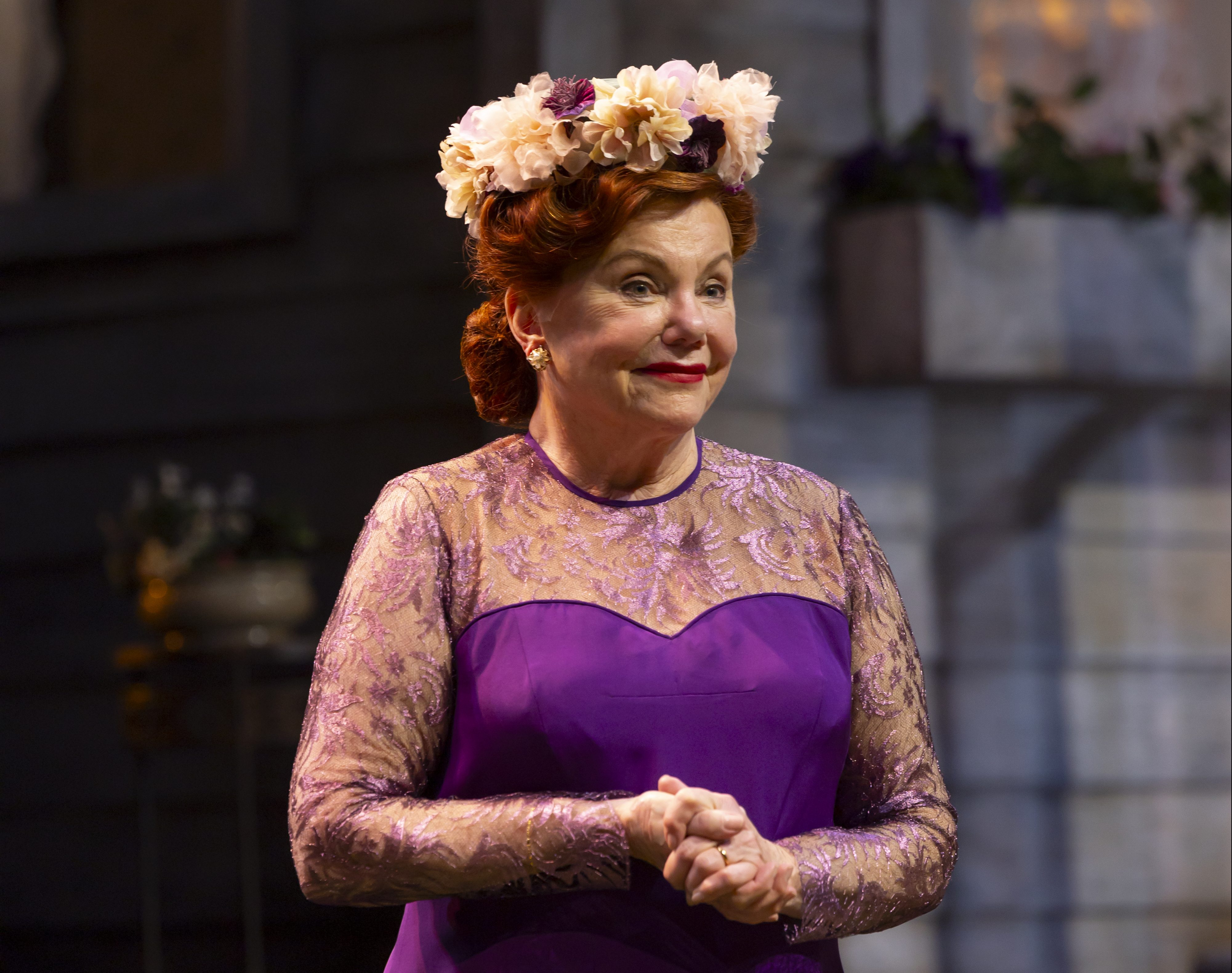
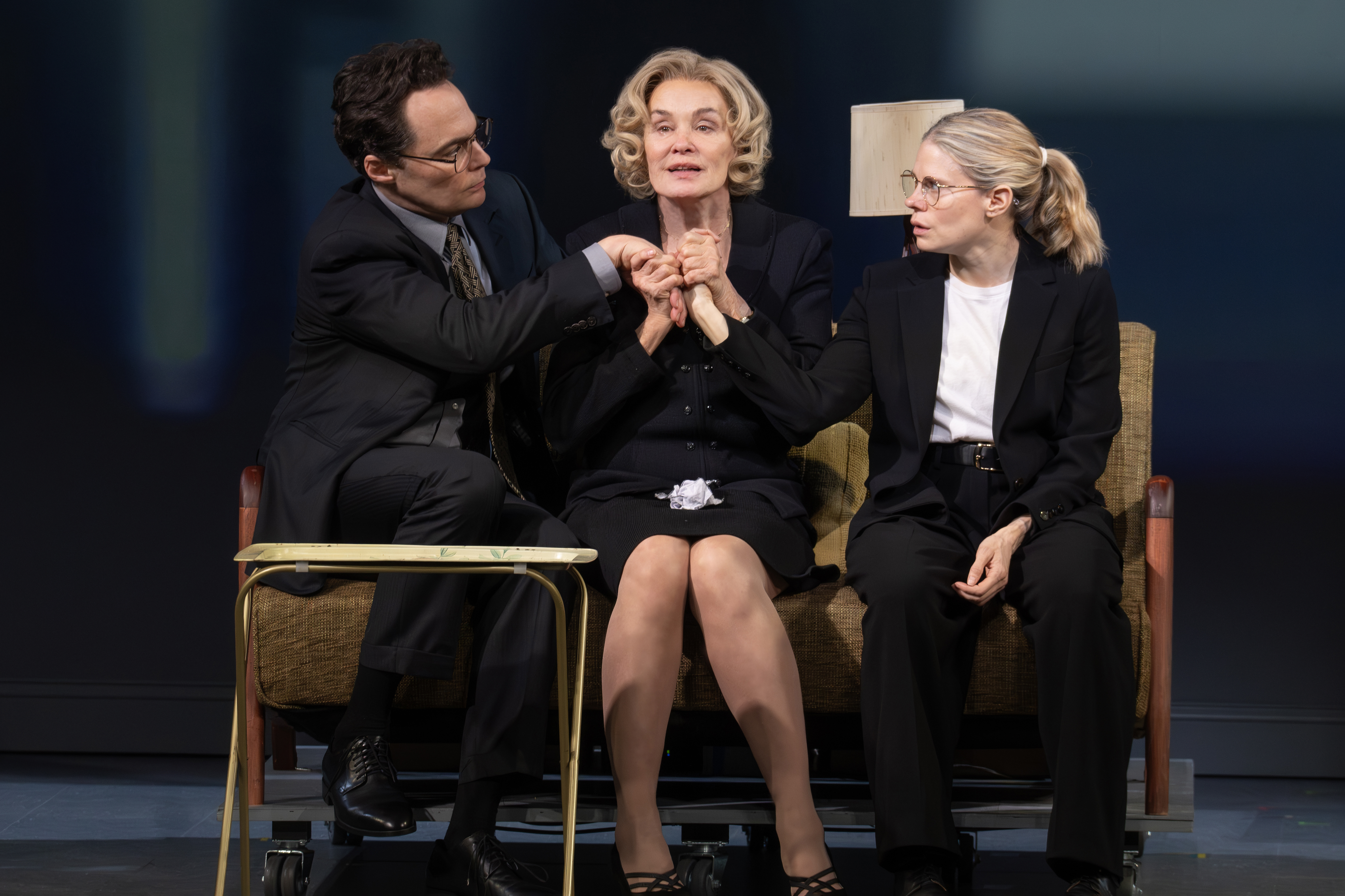
Two of the central characters are members of the company presenting the minstrel show: Irishman Jack Mulcahey (a fiery David Lansbury), who has attained a level of success as a blackface performer despite his heavy drinking, and Eliza (played with passion by Amber Gray), his co-star and lover, who has managed to craft a career for herself by claiming that she is Cuban rather than African-American, much to the chagrin of Euphemia (dynamically played by Patrice Johnson), the woman who raised her. At Jack and Eliza’s side is Squirt (a spunky and endearing Christopher Borger), a young African-American teen whom the couple has unofficially adopted after Jack found him living in the street.
These characters find their lives unexpectedly colliding with those of American-born Jimmy (an appealing Jonny Orsini); in order to secure the money necessary to avoid the draft, Jimmy has agreed to help the oily Waldo Capshaw (imbued with venomous malevolence by Graeme Malcolm) rob a wealthy man’s home. To facilitate the burglary, Jimmy has feigned interest in the man’s fresh from Ireland maid Margaret (played with captivating goodness by Amanda Quaid), escorting her to a performance of Jack and Eliza’s show. It’s just after the performance that rioting breaks out (the unseen melee is palpable thanks to Christian Frederickson and Ryan Rumery’s vibrant soundscape), and these characters all find themselves huddled together in a dive hotel, hoping that they will be able to survive the night.
While the stories are intrinsically compelling, Younger hinders theatergoers’ ability to be caught up in them with continual reiterations of the sorts of bigotry spreading through the city — not only white against black, but also amid the underclasses, between the Irish and the blacks — during the first half of the show.
After intermission though, the show takes flight when Younger becomes less concerned with these social issues, and it’s difficult to not worry along with the women about Squirt’s well-being on the streets and to not hope that perhaps there’s a happy ending in store for Jack and Eliza.
Younger also stumbles in his integration of composer Stephen Foster (Malcolm Gets) into the play. The character appears briefly during the opening scene and then, is one of the characters at the hotel, where he’s living out his final days in an alcoholic stupor. Gets is in fine voice as he delivers such Foster hits as “Beautiful Dreamer,” but Foster’s presence in the show seems to be only an afterthought.