
The Bubbly Black Girl Sheds Her Chameleon Skin

Comedy has long been a favorite way for playwrights to touch on touchy topics–get an audience laughing, and before they know it, they’ve absorbed a little social commentary. Kirsten Childs takes that one step further with her new musical The Bubbly Black Girl Sheds Her Chameleon Skin: get them chuckling and tapping their feet, and suddenly a play about an African-American woman dealing with issues of race and identity becomes a whole lot of fun.
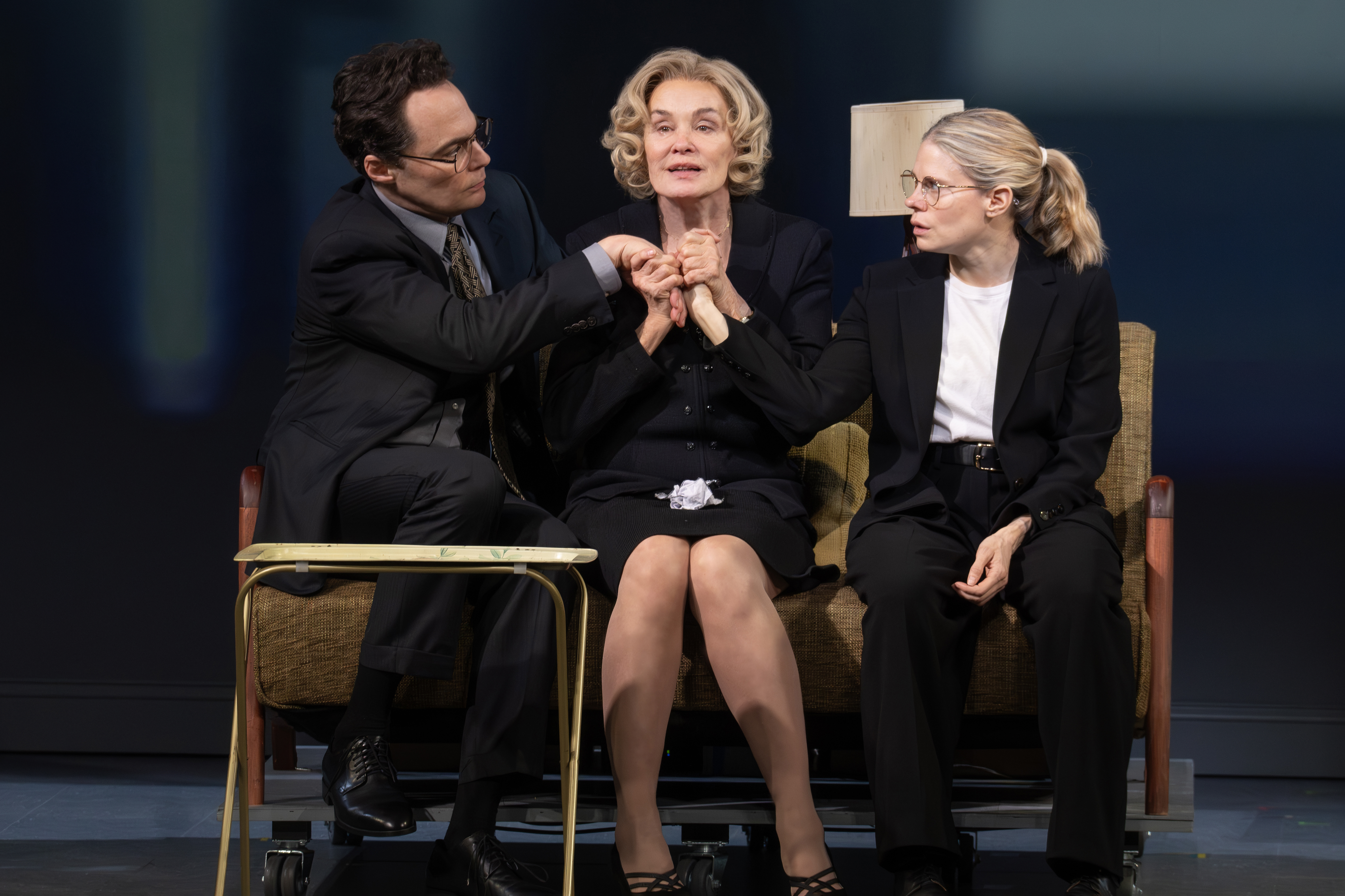
The play begins in the early 1960s in LA–just after three black girls died in a church bombing in the South. Viveca, whom all the neighborhood kids call Bubbly, is a smart, popular girl with “two parents in the home and not a welfare check in sight.” She tells her blond hair, blue eye doll Chitty Chatty her dream of having her hair go straight after being kissed by a prince, but when Daddy comes in, pretends to be teaching her dark skinned dolly about Harriet Tubman. In junior high Viveca is labeled an Oreo (black on the outside, white on the inside) by her fellow African-American students. In high school Viveca first dates a white hippie (much to Mommy’s consternation), and then tries to hang with the afro-sporting swingers.
Not really fitting in anywhere, Viveca decides to go “where f**ked-up people go to make their dreams come true”: New York.

The second half of the intermission-free play–punctuated by a jazzy solo in which LaChanze, the actress playing Viveca, really gets to strut her stuff–takes place in New York. Viveca starts out as a secretary, in a sassy musical number in which floor panels fold back to create desks within the stage (an inspired design solution from David Gallo) and the secretaries sing about needing “a Stoli, a screw, and a two-week vacation.” After endless dance classes, an unwitting musical theater audition, and a stint as the “other woman”, ever-bubbly Viveca eventually sheds her chameleon skin.
Spending the first half of the play in Viveca’s childhood world, and centering the entire story around an irrepressibly bubbly character, runs the danger of oversimplifying racial issues and of being annoyingly cheery. But every time things seemed like they were going saccharine, Childs gets quirky, ironic–even satiric. Like when Viveca begins pouring out her heart Chitty Chatty, only to have the doll instruct Viveca to pull on her blond curls, which pop off to reveal an afro underneath. Chitty Chatty had been passing (“Oh no, Chitty Chatty!”). And then the doll begins to dish it out, telling Viveca that her smiling all the time is just plain “f**ked up”. Later the image of a bent-over grandmother shelling peas, sharing words of wisdom with her grandson, is turned on its head when Granny transforms into a Tina Turner-type, complete with silver pumps, and advises him to always keep a woman on the side.
[[pg]]

The musical, however, does have a serious strain running through it. The lightest-skinned girl in Viveca’s childhood ballet class automatically gets picked to be Sleeping Beauty. When Viveca is walking home from a party one night with her friend Gregory, he’s stopped by police, handcuffed, and verbally abused, until they received word “he’s the wrong one.” Conflict is most interesting, however, when the antagonist is not a faceless cop with a helmet and visor but Mommy–objecting to Viveca letting her hair go natural–or Daddy–constantly telling Viveca that she should just keep smiling, smiling, smiling.
Issues included, this is a feel-good show–a show about feeling good about being who you are. The music (by Childs, along with the lyrics and book) is upbeat and catchy, a mix of pop, jazz, and Motown. The lyrics are smart and sassy. LaChanze does a good job playing kid-Viveca, gives her a welcomed maturity when she moves to New York, and a welcomed grounded-ness when she sheds her skin. The rest of the ensemble is energetic, and excellent at making quick transitions between an array of characters. It was a treat to see a cast reflect not only a whole range of skin colors, but also of body types.
Director Wilfredo Medina has been with Bubbly Black Girl… since its earliest inception at Dixon Place. And it shows, in his caring direction and in his sensitivity to the show’s subtle shifts in tone. A.C. Ciulla, fresh off of Footloose, does a commendable job choreographing–both musical numbers and transitions–in the limited space of Playwrights Horizons’ stage (which requires the musicians to be behind the backdrop rather than fore-grounded in a pit). Gallo’s set elements are, as always, artfully spare and consistently on-spot.
Closing out a season that began with the hit musical James Joyce’s The Dead, Playwrights Horizons has produced (in association with Wind Dancer Theatre) another new musical which, with any luck, may also have a life beyond its initial run. Childs has written a sincere, smart, celebratory show. She’s also succeeded in sharing a story that is not always heard in the musical theater world, and in leaving audiences, hopefully, more open-minded and, certainly, smiling.
Featured In This Story