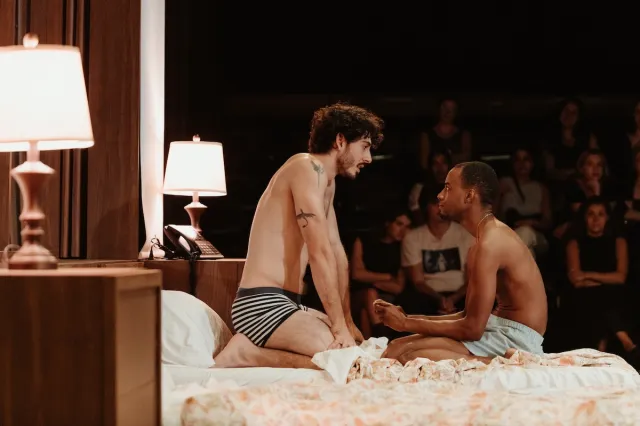
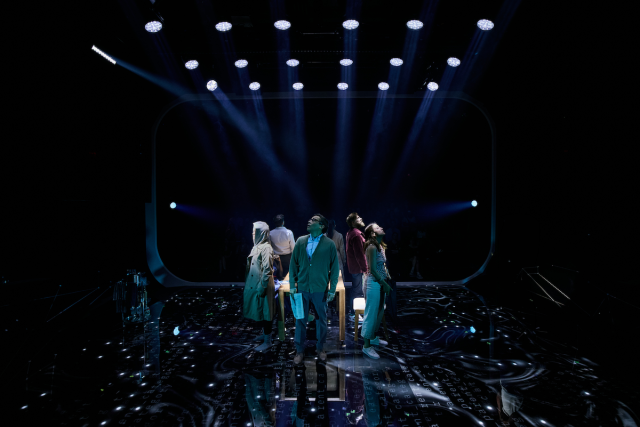
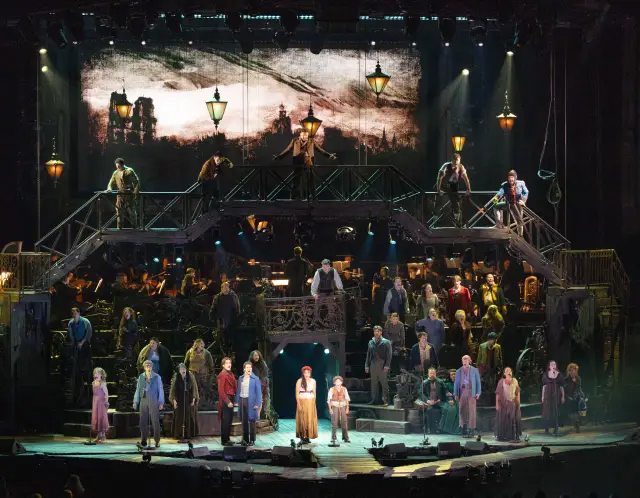
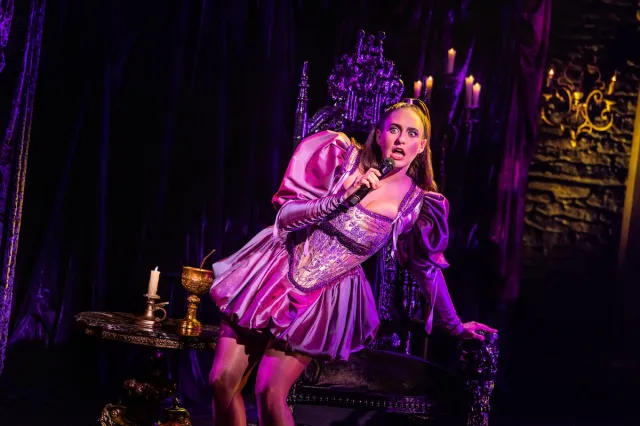
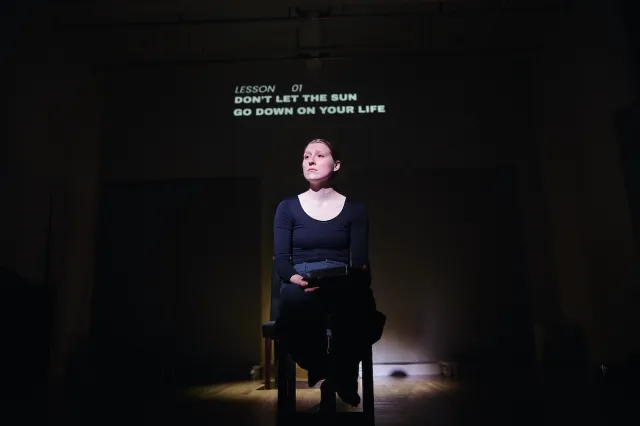
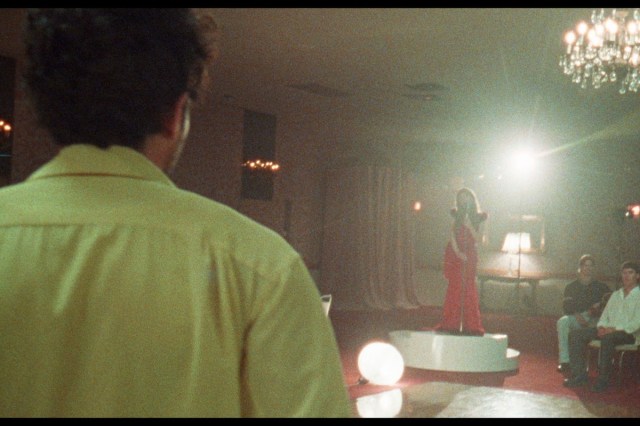
After watching friends literally get ill working in Off-Off Broadway venues for ten years, director Jim Simpson decided to open his own, cleaner theater. His fix, a “downtown irritant” called The Flea, is now two-and-a-half years old–and losing money. But with its inventive coming-attractions projector in the lobby, wood bar, micro-brewery beers on ice, and well-lit Tribeca space, it makes beautiful theater, and has actually lost less than Simpson expected it to by now.
The Flea’s short name–like that of its resident theater company, The Bat–was chosen not to represent parasitism, but in reference to an organism that was small in stature and effective in its goals; in this case, to “provide diverse aesthetics in a clean, beautiful, intimate space, and to raise the downtown standard,” according to creative producer Lizzie Simon.
These aren’t easy goals. After all, downtown theaters don’t make money. They just try to go broke as slowly as possible–and Simpson created his theater with a large personal investment that he expected to lose at no less than $150,000 a year. He “only wanted to block the hemorrhage” for enough time, he says, to prove his Tribeca shows were worthy of uptown ticket prices.
Financial trouble is endemic in the downtown scene, at least partly because of the rules imposed by the Actors’ Equity union, Simpson and Simon argue. Although the union is necessary for protecting actors from exploitation, it creates an irreversible quandary for small theater owners: “You want to work with union actors, who are highly talented,” Simon says, but consistently doing so necessarily means bankruptcy.
Because Equity restricts Off-Off Broadway productions to 16-show runs, $12 ticket sales, and a 99-seat theater capacity, any Equity production amasses losses Simpson estimates to be “at least $7,000 to $15,000 from the very beginning,” meaning from rent and salaries before other production costs are even considered. Simpson does still choose to stage Equity shows at the Flea, but only when the envisioned end merits his own financial loss.

So, along with about sixty percent of downtown theaters, the Flea searches for alternative types of entertainment. The company is most interested in artists who want to cross genre lines–writers, musicians, and dancers who have envisioned staging their own work. Simpson held his own Kabuki theater project in his imagination for ten years before finally staging Benten Kozo last year, with volunteer actors Simpson named “The Furballs.” The traditional Japanese theater was arguably the Flea’s most successful production to date, running for six months to sold-out houses with $35 tickets, winning an Obie and securing the Flea’s most lucrative year, in which Simpson lost a mere $40,000 as opposed to the $150,000 he was prepared to loose.
The theater’s most recent find is Blake Nelson, whose novel, Girl, was made into a major motion picture film. When, about a year ago, Nelson appeared on Simon’s radio show, Art Attack (WKCR, 89.9 FM), he had nothing to read but a stack of bitter love poems he’d never recited before. Simon and her other guest, director Simon Hammerstein (grandson of Oscar), sensed Nelson’s dramatic potential–and the three envisioned turning Nelson’s heartbreak into theater.
The resulting show, Ache, went through a number of incarnations before finding its present form (Hammerstein has since left the project due to artistic differences). The show evolved from a sort of voyeuristic theater into Nelson’s

own candid recitation of his laments. The 139 poems, which Nelson claims to have composed in one night, are addressed to a woman who dumped him in 1995. They are sometimes embarrassingly bare and self-obsessed, even in their lack of pretentiousness: “I broke up with you, so I won.” Nelson defends heartache with often too-obvious libidinal pride: “My dick is the best!” and “I could make out with you in a dream,/Or in real life,/But in real life,/You’re out f—ing my friends.”
But if the show makes the audience cringe, that’s the sort of risk Simon and Simpson want to take. Simon was actually bothered when, before opening night, Nelson tried to promote his show as a precedented type of performance. He was calling it “the male response to The Vagina Monologues,” but Simon urged me to forget the comparison: “The Vagina Monologues make you a more centered being. Ache doesn’t empower anybody. This show is not going to make men proud to be men. It allows people an entree into the devastating impact that someone deserting you leaves. But it’s also far more honest than anything out there.”
The show Ache isn’t theater for mere pleasure’s sake; it’s more like staged pain. But it also helps make the Flea–for slightly more than the cost of a movie–an interesting place to be for the evening.