
The Man Who Would Be King

in King Hedley II
(Photo: Eric Y. Exit)
It’s very probable that August Wilson one day will win the Nobel Prize for Literature for his great cycle of 10 plays inspired by the African-American experience in the 20th century, one play for each decade. Like the plays of 1936 Nobel Laureate Eugene O’Neill, not every Wilson work is a wonderful drama in the formal sense. Wilson is a weak and clumsy plotter, as was O’Neill; and Wilson’s plays certainly ramble and wander, with the storytelling always more important than the story itself. Nonetheless, every Wilson opus is marvelous literature boasting deep and detailed characters with distinctive voices and pungent language.
King Hedley II, the eighth and latest entry in Wilson’s cycle, is entirely characteristic and yet is still a work in progress. After an initial staging in Pittsburgh, a revised version is now on view as the opening production of Chicago’s new Goodman Theatre, with Broadway as the next stop.
The play is set in 1985 in the crumbling Hill District slums of Pittsburgh, where Wilson grew up and has placed many of his plays. Unique among the eight cycle dramas so far, King Hedley II utilizes several characters from another cycle play, Seven Guitars, taking up the stories of Ruby and Canewell (now nicknamed “Stool Pigeon”) nearly 30 years later.
The main tension develops between Ruby’s son, 35 year old Hedley (“King” is his first name, and his father also was King Hedley; hence, the title) and the sixty-ish Elmore. The elder Hedley died of tuberculosis when King was born, and Elmore became something of a father figure to the boy, wooing King’s mother when he wasn’t on the road. King and Elmore are vastly different men. Tall, lanky King is an open book–a non-verbal, jeans-and-tee-shirt guy who longs for a secure home life with his wife and unborn child. Compact Elmore is a clotheshorse, a gambler, a wanderer, a storyteller, and a cagey manipulator. But both men have done time for murdering those who dissed them, and both have strict interpretations of what manhood means within their community. Things go bad when they cross each other.
However, they don’t cross each other until the very end of the play, which leaves much of the long evening without compelling dramatic tension. There’s nothing at stake when intermission arrives. A jewelry store robbery that’s part of a subplot has no significant consequences, so what’s the point? The two female characters, Ruby and King’s wife,

in King Hedley II
(Photo: Eric Y. Exit)
Tonya, are underwritten; especially Tonya. Wilson gives her two great speeches–his typical, eagerly-anticipated spoken arias–but she has no active role in the action. Also, there’s nothing in the play that’s specific to the 1980s save one reference to the minimum wage, talk about a video store, and a Ronald Reagan sound bite. As is the case with many of (but not all) of the cycle plays, King Hedley II is hermetically sealed in the ghetto, lacking even indirect references to the larger urban, national, or white cultures and their impact on the ghetto in general or these characters in particular. To this observer, Wilson has missed an opportunity here.
What Wilson is attempting to do is both large and noble: to construct a work of dramatic weight and size with Greek-like reference to the honor and fate of several generations of the same family (again echoing O’Neill). To that end, Canewell has become a Bible-quoting seer and Greek-chorus commentator. Wilson also confronts several permutations of black-on-black violence; while he avoids direct editorializing, he does sometimes seem to be shouting “My people, my people!” In tone, “King Hedley II” is a solemn work, with little of the robust humor that leavens other plays in the cycle. But Wilson hasn’t achieved his goal, at least not with clarity and impact.
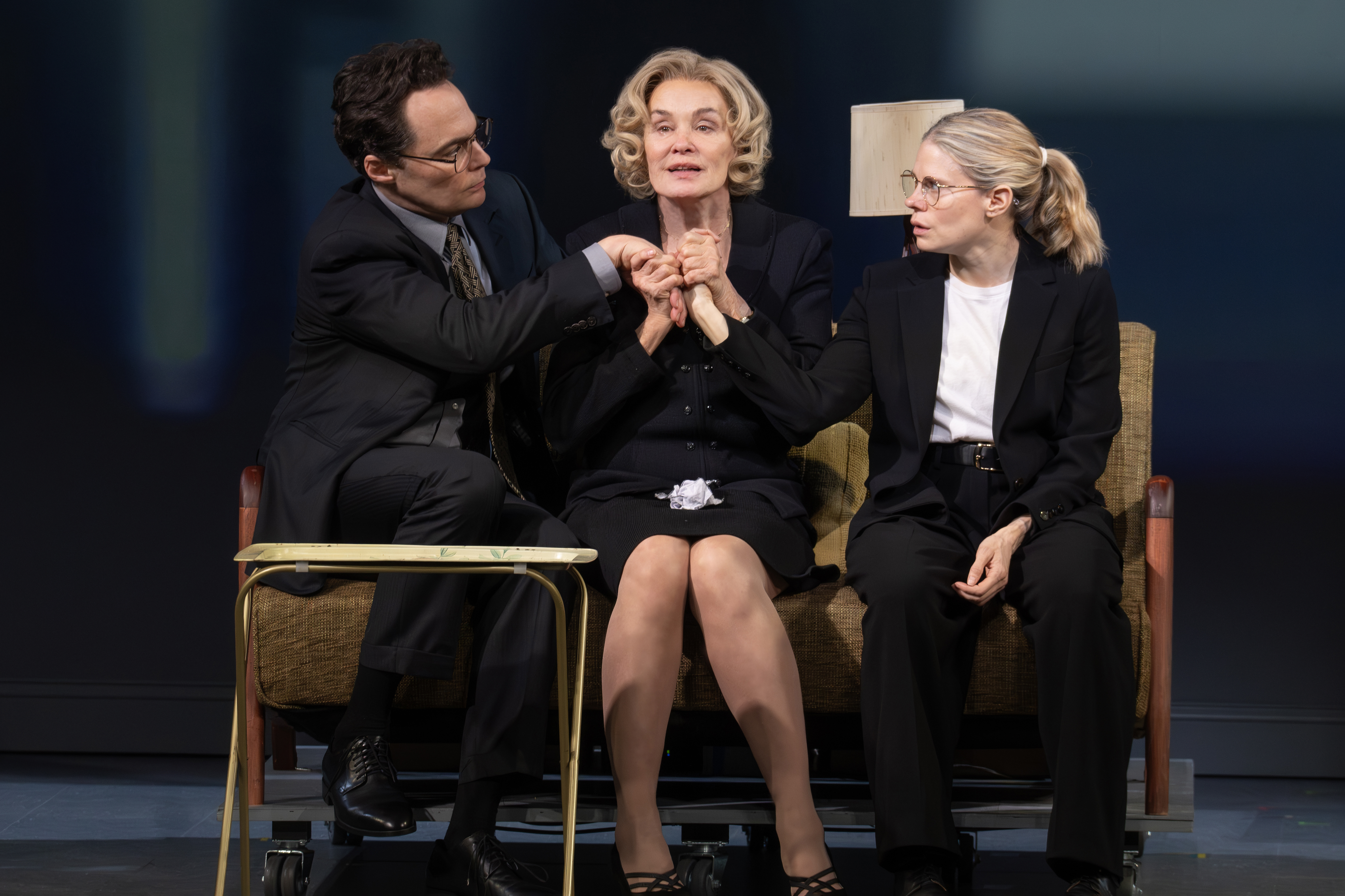
The production itself is exemplary. Director Marion Isaac McClinton guides a fine cast of six to loving, nuanced performances that suck Wilson’s rich language like marrow from a bone. Under McClinton, the players have developed detailed (but never fussy) physical characters. The mellifluous Elmore of Charles Brown and the lanky Hedley of Richard Brooks are manly and sympathetic, and carry the weight of the play. Donald Holder’s lighting is surprisingly soft and warm, given the nearly overpowering, bombed-out look of David Gallo’s set of crumbling 19th-century row houses. Cognoscenti will note that Gallo has dotted the set with visual references to other Wilson plays: a broken guitar, a short piece of picket fence, the hammer board of an old piano, etc.
Much to the benefit of Chicago audiences, August Wilson has had a fruitful, 15-year collaboration with the Goodman Theatre, which has produced all the plays in the cycle–including the world premieres of The Piano Lesson and Seven Guitars. The Goodman took some heat about opening its new venue with a Broadway tryout rather than a world premiere or, at least, a play staged by artistic director Robert Falls or one of his distinguished staff associates (e.g., Frank Galati, Mary Zimmerman, David Petrarca, Regina Taylor). But much of this will be coming later in the season. As it turned out, King Hedley II inaugurated the $46 million, two-theater complex on December 11 in the middle of a blizzard that dumped 14 inches of snow on Chicago. But, inside the 850 seat Albert Ivar Goodman Theatre (there also is a 400 seat “black box” space here), all was cozy and convincingly Wilsonian.
Featured In This Story