Hurlyburly

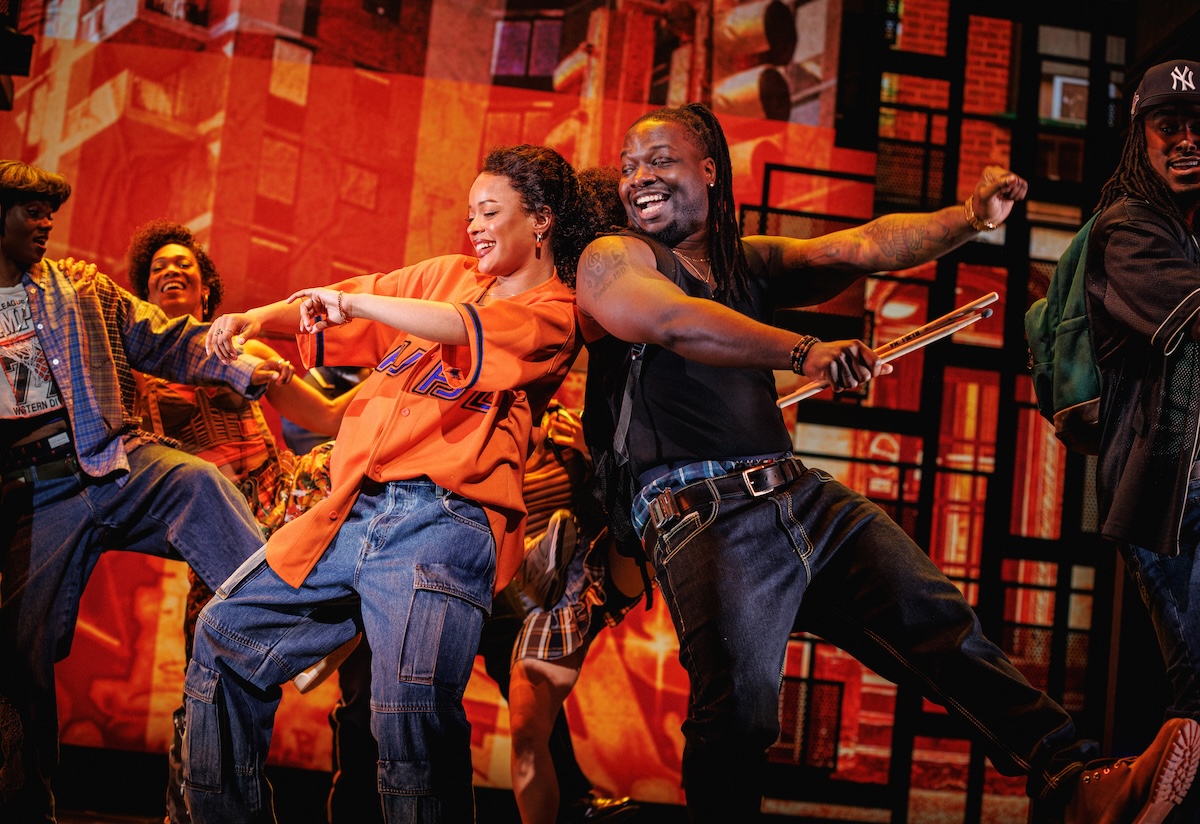
(Photo © Carol Rosegg)
If you read David Rabe’s Hurlyburly before you see it, something jumps out at you that might not immediately get your attention during a staging of the frenetic, indisputably effective play: How often the gregarious, not to say querulous, characters throw the phrase “I mean” into sentences. The frequency of this tic-like expression is interesting in that what Rabe’s characters say and what they mean — if they mean anything at all — is almost always up for grabs.
The hunt for meaning where there too frequently is none in the lives of these Hollywood types is so compulsive that, at one moment, the cocaine-snorting agent-protagonist Eddie (Ethan Hawke) clutches his Webster’s and blurts, “I’m gonna look up the words…I’m gonna see if the dictionary might help.” Only moments later, Eddie — who may be the world’s best candidate for reconstructive nose surgery — bleats, “I don’t know what I mean, but I know what I’m saying. Is that what you mean?” These and similar remarks — e.g., Eddie’s sometime squeeze Darlene (Parker Posey) moaning, “I can’t stand this goddamn semantic insanity anymore” — point to the thesis that Rabe propounds in his scathing drama. Here, language is no longer a key to anything but chaos. Eddie and his pals Phil (Bobby Cannavale) and Artie (Wallace Shawn) talk of high-minded subjects such as destiny, but only because they’re high.
Rabe’s point, which he reiterates, is that the breakdown of language is a crucial sign of civilization’s incipient collapse. He’s not subtle about this point in his character-study piece, but he’s deft enough to keep the confrontations between and among his crowd of drifters dramatic rather than polemical. He might even hoot at what one journalist has referred to as the “acerbic and hilarious insights” that the characters express, because it’s a lack of insight that he’s signaling in his corrosive satire of these circa-1980 figures, all of whom are as recognizable today as they were when the play premiered in 1984. (Hmm, wasn’t that the year by which George Orwell had predicted that language would be turned on its head?)
The most Rabe allows the Hurlyburly folks is cynicism and bewilderment. The chief cynic is Eddie’s roommate and agency partner Mickey (Josh Hamilton). If the latter has any insights about Eddie beyond knowing that there’s a lot of hot air issuing from him along with the marijuana exhalations, he keeps them to himself. The three women in the piece are the enigmatic Darlene, a local Anybodys called Bonnie (Catherine Kellner), and Donna (Halley Wegryn Gross), a waif who’s willing to swap sexual favors for a bed and a bath. They’re all at the men’s mercy. Eddie tosses the word “bitch” about freely while maintaining that it’s women who hate men and not the other way around. Phil, whose volatile streak brings him to a bad end, pushes Bonnie from a car. Artie brings Donna into set designer Derek McLane’s ugly L. A. bungalow as a plaything for his chums. (Later, sound designer Ken Travis plays “That’s What Friends Are For.”)
At times, it seems that the hurlyburly of Rabe’s once three-act play — which the playwright has now re-formatted into two long acts — will never end. (I myself went to the dictionary — the O.E.D. — to look up “hurlyburly,” which originates with 16th-century words for causing a commotion. That condition certainly applies to these hell-raisers) There’s a whole lotta extraneous stuff going on here; it shouldn’t take almost three hours to depict a segment of society going nowhere. But never fear. Director Scott Elliott gets around the problem by prodding his players to extraordinary performances.

(Photo © Carol Rosegg)
Hawke, who always creates indelible stage creatures and who was last seen as Hotspur in Jack O’Brien’s Henry IV, continues babbling in hot spurts throughout the current exercise. The only time he’s inert is before the show begins, when he’s spotted on a couch with buttock cleavage showing; from then on, he’s alive as a nest of vipers. At the opening, costume designer Jeff Mahshie garbs Hawke in a Harvard T-shirt, an inspired way to suggest that Eddie is a grad who had the Widener Library’s stack of dictionaries at his disposal but has now come to this. Mahshie puts Posey in slinky black outfits that make her look sexy as a Victoria’s Secret catalogue and help give her scenes with Hawke an erotic rush. There’s a second act sequence in which they discuss whether to have French or Chinese for dinner that’s a masterpiece of crosstalk in the writing and in the adroit, anxious playing.
A wellspring for top-notch ensemble playing, Hurlyburly brings out the best in Hamilton. It also brings out something different in him. Heretofore, this beanpole-skinny actor has played innocent youths with the kind of natural appeal that makes it seem as though he’s just shambled in off the street; as Mickey, however, he’s the essence of modern cool. Cannavale’s Phil is properly menacing and properly lost. Shawn, in a rib-tickling gray wig, gives his usual performance — and it’s exactly right here. Kellner and Gross hit reverberant loose-girl chords. They all contribute to a portrait of disturbing contemporary hurlyburly that may never, to paraphrase Macbeth‘s weird sisters, be done.
Featured In This Story