Get the best deals and latest updates on theater and shows by signing up for TheaterMania's newsletter today!

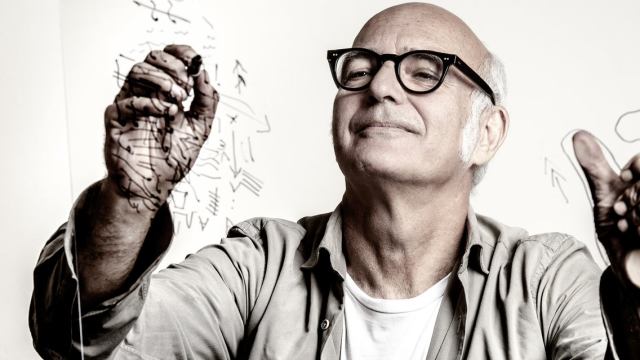
Ludovico Einaudi
About the Show
Pianist and composer Ludovico Einaudi was born in Turin on November 23rd, 1955. Perhaps it was his mother, an amateur pianist, who first introduced him to music, planting the seeds for what would become an illustrious career. He began to study music at the Conservatory of Turin and graduated under Azio Corghi at the Conservatory of Milan, and then studied with Luciano Berio, becoming his assistant, and with Karlheinz Stockhausen. In 1982 his talents won him a scholarship to the Tanglewood Music Festival, where he first came into contact with American minimalism. He spent the next several years composing for the ballet, the cinema and the theater, including “Sul filo d’Orfeo” (1984), “Time out” (1988), “The Wild Man” (1991), and “Salgari” (1995), as well as numerous pieces for orchestra and ensemble, which were performed at La Scala of Milan, the Paris Ircam and Lincoln Center, in New York. With the album “Stanze” (1992), a collection of sixteen compositions for harpist Cecilia Chailly, he set off on “a journey towards essentiality, trying to achieve the maximum expressive intensity using the minimum indispensable”. But it was with “Le Onde” [The Waves] (1996), his first solo album, inspired by Virginia Woolf’s novel, that he truly caught the piano world’s attention, and built on that with his next release, “Eden Roc” (1999), in which he played with a string quintet and duduk master Djavan Gasparyan, and “I giorni” (2001), a cycle of ballads for piano inspired by a trip to Mali. He returned to Africa two years later at the invitation of the Festival au Desert. A new album, “Diario Mali”, with kora master Ballaké Sissoko, blossomed from this experience. The score he wrote in 2002 for the remake of “Doctor Zhivago” triumphed at the New York Film Festival, confirming the increasing prestige of his soundtracks: “Not of This World” (2000), “Light of My Eyes” (2001), “Strange Crime” (2004), “This is England”, film (2004) and TV series (2010), “The Untouchables” (2011), “Samba” (2014), “The water diviner” (2015) and “The third murder” (2017). He began performing in increasingly important venues. The live concerts at La Scala of Milan, also recorded on disc, as well as the special concerts at the Hangar Bicocca and the Royal Albert Hall, marked the coronation of full artistic expression. In his next studio album, “Una mattina”, released in 2004, Einaudi’s music becomes more concentrated and introspective, while in the following “Divenire” it expands, driven by the sonorities of the Royal Liverpool Philharmonic Orchestra. Both records, which were already topping the classical charts, also crossed over into the pop charts, a first. He was the only classical musician to play at the first iTunes festival. During the extended world tour that followed, he never stopped writing new music. In 2009 he released “Cloudland”, with Robert and Ronald Lippok, and “Nightbook”, a nocturnal, introspective work that “projects the piano in every direction, like a shadow”. The peak performance of his European and American tour was once again at the Royal Albert Hall, recorded live and released as a double CD and DVD. For two consecutive summers he conducted the Orchestra della Notte della Taranta, exercising a visionary musical direction that left a mark in the traditional music of the “black land of the tarantola”. In 2013 he released “In a time lapse”, a reflection on time, recorded in a monastery and “conceived as a suite or as the chapters of a single novel”, in which his piano was accompanied by strings, percussion and electronic tracks. The world tour that followed featured many remarkable performances, such as the concerts at the Sidney Opera House and at the Arena of Verona in particular, but also the acclaimed “Piano Africain” performance, for six pianos and six balafons and marimbas, which opened the Piano City Milano festival in 2014. The album “Elements”, released in 2015, sprang “from the desire to start anew, following different paths”. Recorded over a span of three months in his home studio in the Langhe countryside, “while spring was exploding”, the album became “a map of thoughts and feelings, points, lines, shapes and fragments of an ongoing interior flow through myth, Euclid, the periodic table and Kandinsky’s writings.” During the next three years, the “Elements” tour sold out both the world’s premier pop arenas and the most renowned classical concert halls. In 2016 he performed his “Elegy for the Arctic”, commissioned by Greenpeace, on a floating platform amidst the ice in the Arctic Ocean. The same year marked the debut of “Dieci Notti” at Teatro Dal Verme, in Milan, which would become an annual concert series with special events, “to give back something to a city that has given me so much”
Latest Videos
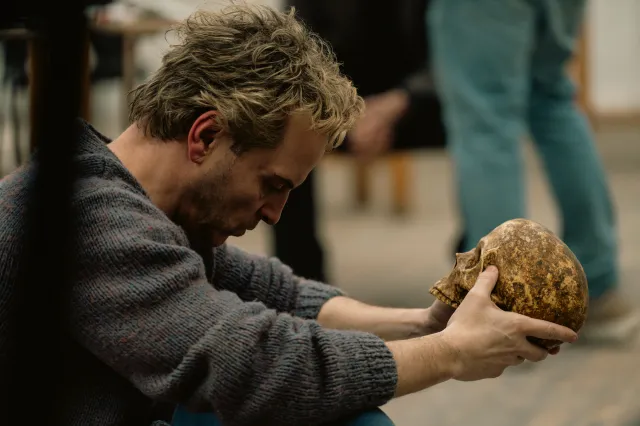
Watch the Trailer for Elsinore Starring Andrew Scott
The film is based on the true story of Ian Charleson, who played Hamlet at London’s National Theatre after being diagnosed with AIDS.