
All My Sons

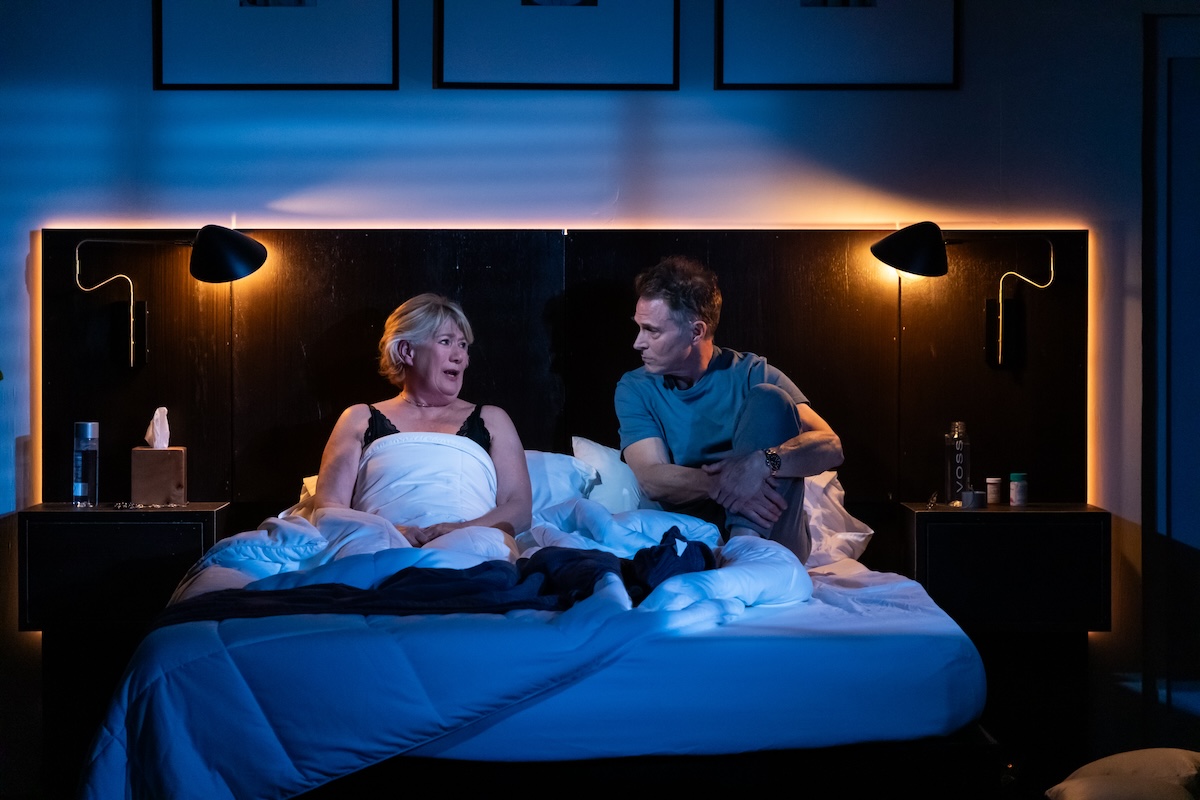
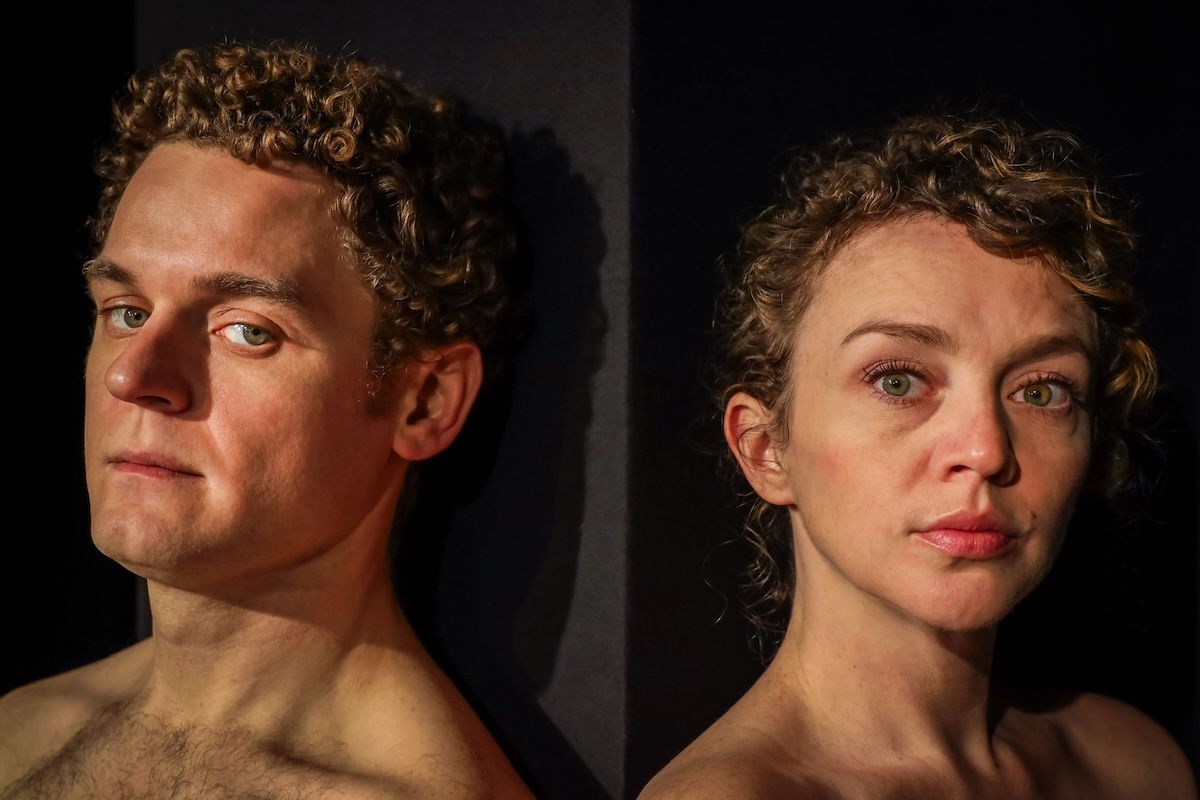
and Melinda Page Hamilton (in doorway) in All My Sons
(Photo: Craig Schwartz)
All My Sons, now playing at the Old Globe Theatre, is a compelling tale of responsibility and human failure that seems as fresh today as when it launched Arthur Miller’s career in 1947. The play’s action is set that same year, in the backyard of the Keller household, somewhere in America. During World War II, Joe Keller’s manufacturing company made parts for the military. A production error caused 21 planes to malfunction, sending the aircrafts’ pilots to their fiery deaths. Joe was exonerated in court, throwing the entire blame onto his business partner, Steve Deever, whom Joe claimed covered up the mistake while Joe himself was sick at home.
The character of Joe Keller is rich and complex. He’s likeable, yet devious; devoted to his family, but more than willing to use them as an excuse for his personal failings. Unfortunately, Daniel J. Travanti (best known as Capt. Frank Furillo on Hill Street Blues) lacks the dynamism required for the role. The actor plays the part far too broadly, incorporating vaudeville-like schtick and failing to hit the emotional highs and lows of the character.
This is all the more frustrating given the excellence of some of his fellow actors. Brian Hutchison brings a relaxed, natural quality to his portrayal of Joe’s son, Chris, that is both compelling and nuanced. Robin Pearson Rose, as Joe’s wife Kate, displays a quiet dignity and subtle peevishness — even if an early monologue, in which Kate recounts a dream of her other son who was lost during the war, does not seem emotionally grounded. Melinda Page Hamilton and Javen Tanner as siblings Ann and George Deever (the children of Joe’s business partner, who is serving out a jail sentence) also bring their characters fully to life; Tanner is especially convincing in a crucial Act II scene where Joe skillfully defuses a volatile George by pointing out his father’s past failings.
David Ledsinger’s lush scenic design is the perfect backdrop for the play. He conjures up the Kellers’ home and backyard in a photo-realistic manner, ably assisted by Trevor Norton’s lighting. The design elements subtly reinforce the action of the script. For example, as Joe and Kate discuss the offstage presence of Ann, who is in an upstairs bedroom, the audience sees a light in the bedroom window in question. Soon afterwards, the light goes out, and the audience knows that Ann is on her way down. The interval between the light’s dimming and the entrance of Ann is thus filled with a palpable tension that goes beyond the words in the script.
Director Richard Seer’s production is more than just a period piece; the ethical implications of the play remain timeless. The program notes for the show even cite a 2002 conviction of the director of a Florida manufacturing company that passed off improperly treated airplane parts to the U.S. military, endangering the lives of the servicemen and women who fly the planes.

in All My Sons
(Photo: Craig Schwartz)
Moreover, the play resonates with contemporary challenges regarding how we react to and change (or fail to change) in the wake of disaster. In Act I, Chris relates to Ann his return to the States after serving in the war. After all the horrors he’d experienced, he thought that people could not help but be altered for the better, but he looked around him and "nobody was changed at all." It’s a sobering realization in our own post-9/11 world, where the promise of change and increased goodwill immediately following the terrorist attacks soon gave way to business as usual.
Change is necessary, as is owning up to our failures and responsibilities. In a final confrontation with his father, Chris declares "I know you’re no worse than most men but I thought you were better." All My Sons is a critique not only of Joe Keller, but of American society. It carries with it a lesson in social responsibility that we would all do well to learn.
Featured In This Story