
The Day Emily Married

(Photo © Jonathan Barkey)
Horton Foote is on familiar ground. In The Day Emily Married, now receiving its New York premiere courtesy of Primary Stages, the playwright returns to the town of Harrison, Texas, where many of his previous works were set. His daughter, Hallie Foote, is once again featured in the acting ensemble, this time as the titular Emily. The play deals with aging and a changing society, recurring tropes in Foote’s oeuvre. Yet, something is amiss. While there’s much about Emily that resonates, the play is not as tightly written or emotionally engaging as some other Foote pieces.
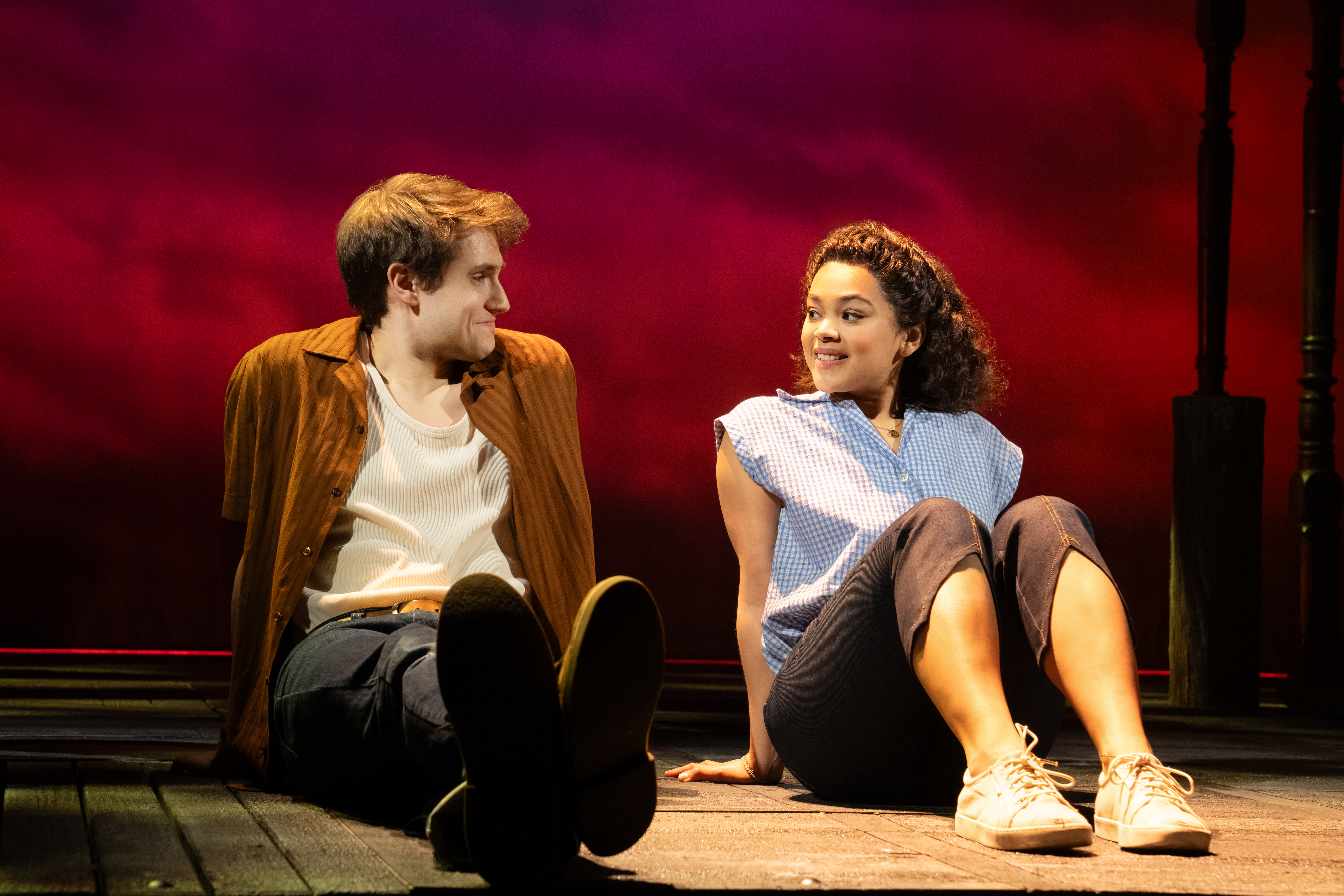
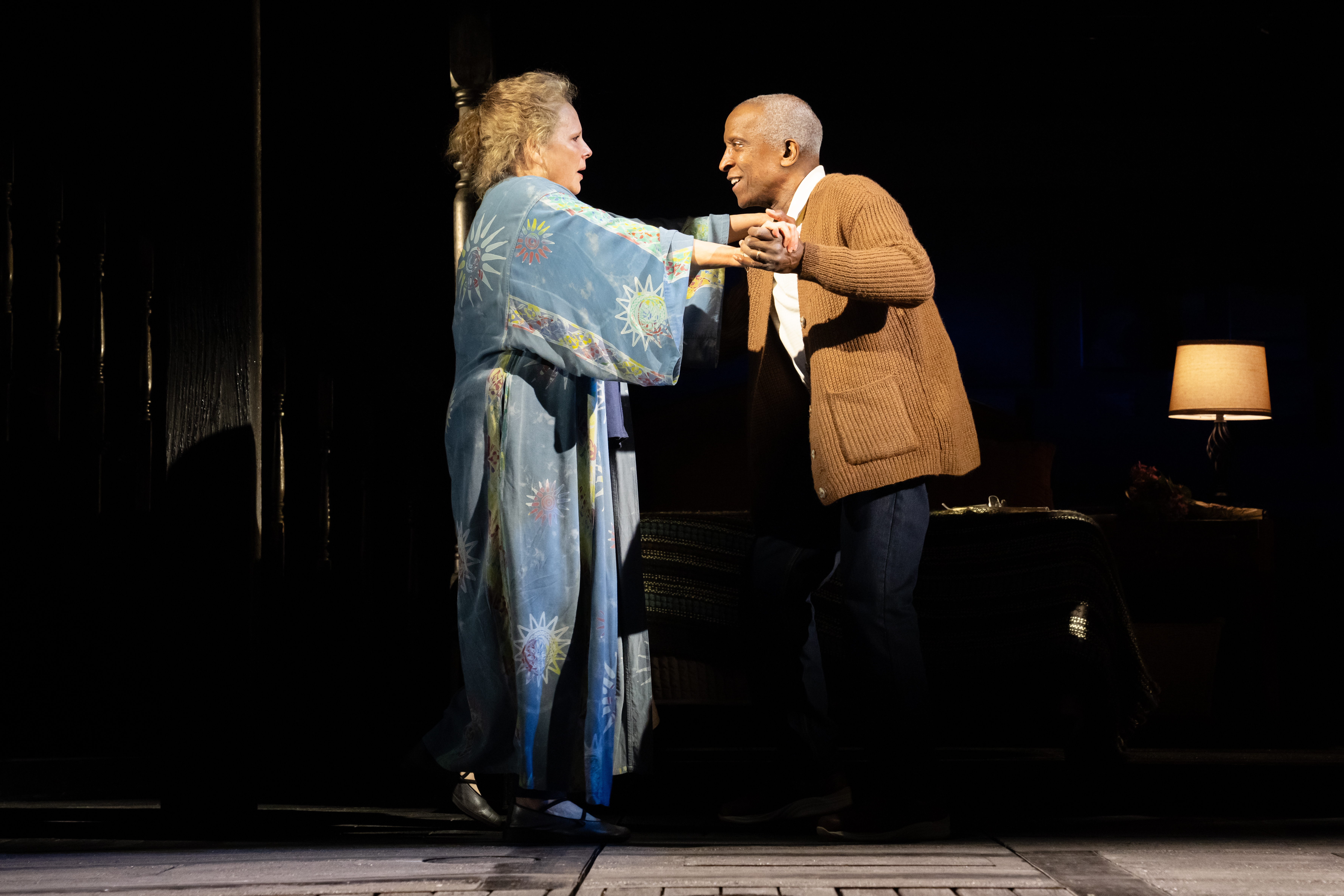
It gets off to a rather slow start with an opening scene that primarily consists of exposition. Set in the summer of 1955, all of the action unfolds in the Davis household. Lee Davis (William Biff McGuire) is a successful farmer and landowner who has worked hard all his life and now wishes to retire. His wife, Lyd (Estelle Parsons), spends most of her days indoors and may be losing her mental stability. Their daughter Emily, a divorcee, is about to be married to Richard (James Colby). Lee plans to sell all of his farms and use the money to set Richard up in a small business. Played with charm and confidence by Colby, Richard seems like a decent, hardworking fellow but his motives for marrying Emily are a bit suspicious.
Despite the play’s title, the actual day of Emily’s wedding to Richard is not depicted; the second scene jumps forward a month and, by this point, the newlyweds are living at home with Emily’s parents. Lyd displays a rather fanatical attachment to her collection of family portraits, which adorn a wall of Jeff Cowie’s handsome set. In many ways, Lyd lives in the past, clinging to these reminders of the way things used to be while constantly comparing Richard to Emily’s first husband, Ben. To a lesser extent, Lee does the same thing. “We loved another world,” he states late in the play, “a world that was gone and we didn’t know was gone.”
Parsons creates a vivid physical portrait of Lyd, complete with nervous gestures and other idiosyncratic mannerisms. While her voice sounds a bit shrill, that’s in keeping with Lyd’s emotional state. Hallie Foote puts up a confident, even brusque façade that appears to go against the grain of her character — but when she does allow Emily’s vulnerability to show through, the effect is quite moving. McGuire often seems a bit too stiff as Lee, and a scene in which he repeatedly grasps his son-in-law by the shoulders plays awkwardly as a result.

in The Day Emily Married
(Photo © Jonathan Barkey)
Delores Mitchell as the Davises black maid is not given much to work with, and the role comes off as rather stereotypical. Teri Keane, as Lyd’s cousin and neighbor Alma, also remains somewhat of a cipher; it’s unclear what the character’s presence adds to the dramatic action. Pamela Payton-Wright, on the other hand, makes two brief but memorable appearances as Maud Cleveland, whose husband owes a large sum of money to Lee that Richard intends to collect. The actress presents a harrowing portrait of desperation, her frail-looking body belying a fierce and passionate determination.
Directed by Michael Wilson, the two-and-a-half-hour drama is slackly paced, and the action seems to wander. This is partly the fault of Foote’s script, which could use some editing — particularly in that first scene. The play also suffers from having one too many endings. While its final moments bring a rather grim narrative closure, this feels unnecessary; the characters have already come to an understanding with one another and do not need further misfortunes to befall them in order to get the playwright’s message across.
Featured In This Story