
Prisoner of the Crown

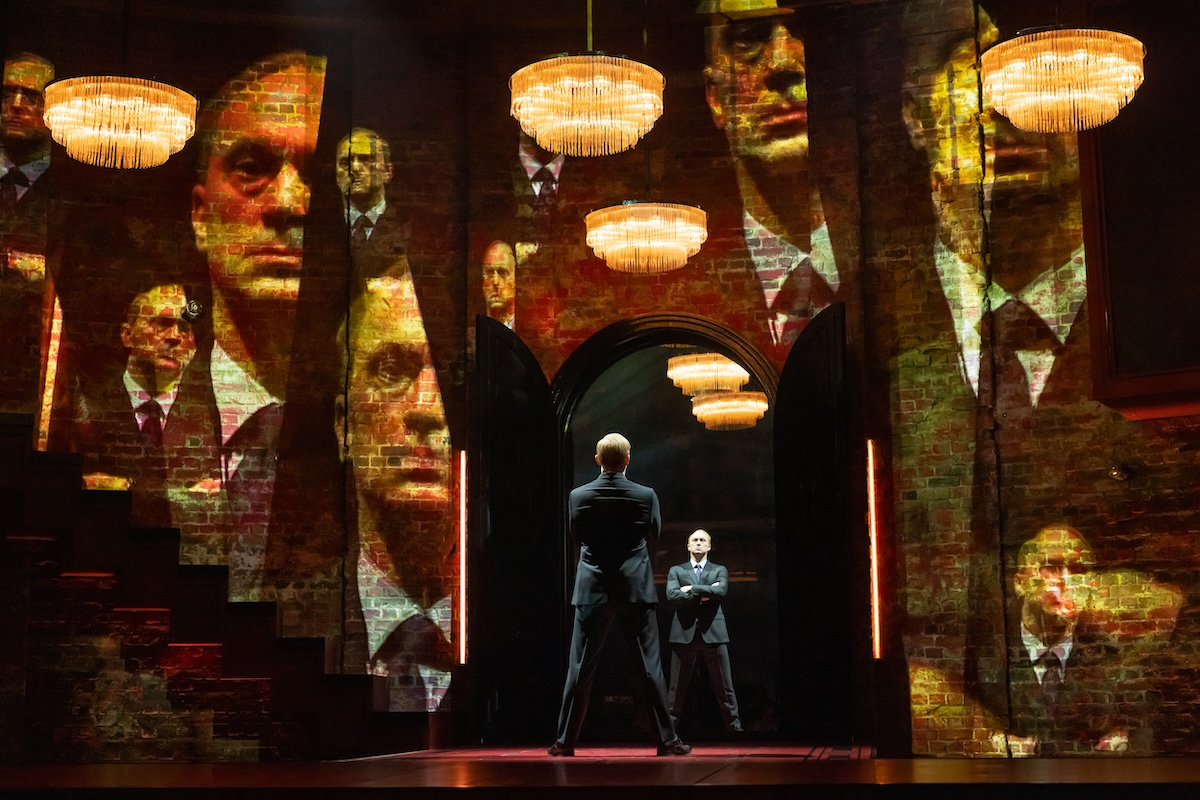
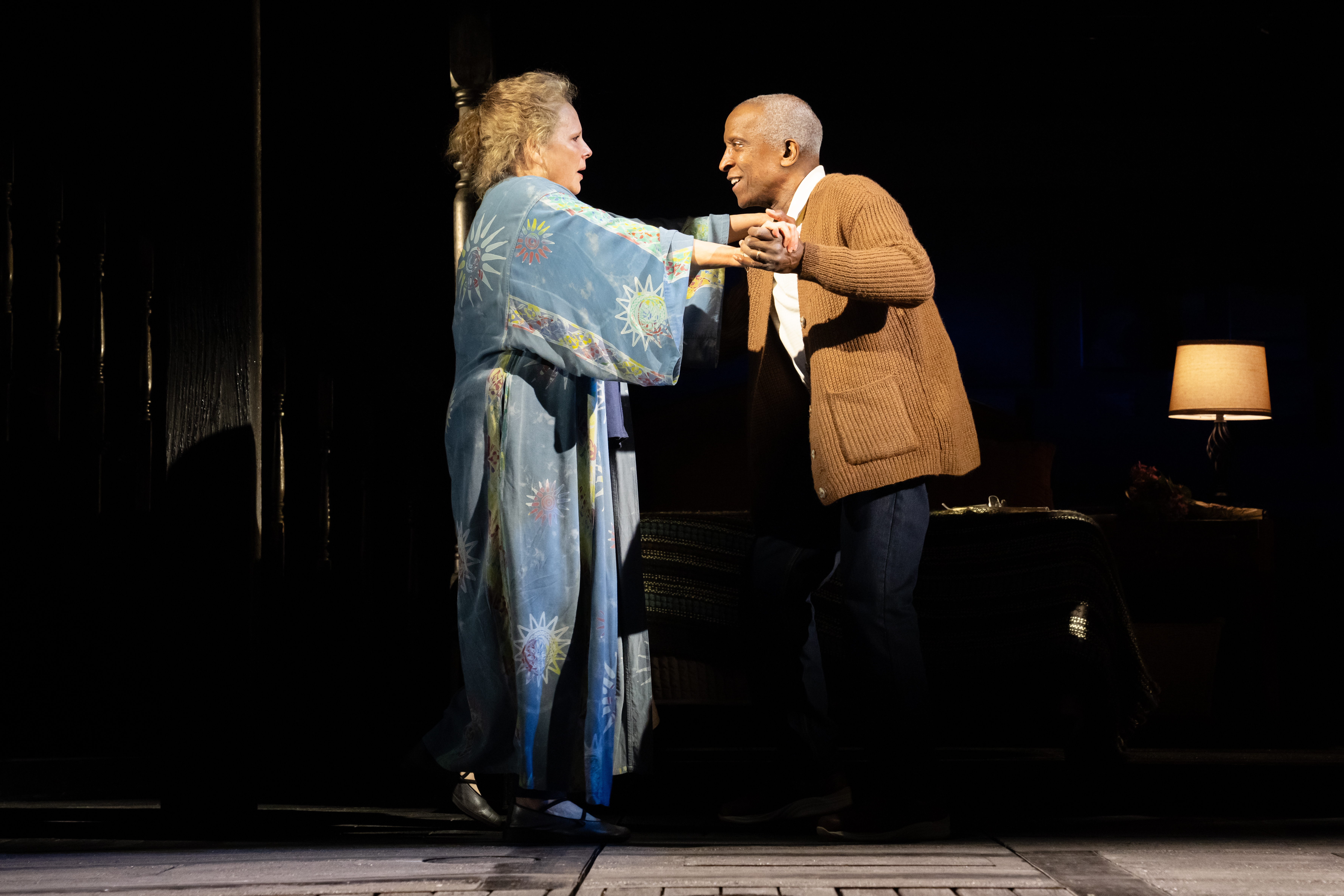
in Prisoner of the Crown
(© Carol Rosegg)
If you took the jury room drama of Twelve Angry Men, crossed it with the discovery and trial process of Law and Order and then presented this hybrid with Brechtian flourishes, you’d end up with something that resembles
Prisoner of the Crown, now at the Irish Repertory Theatre.
Written by Richard F. Stockton, with additional material from Richard T. Herd (who also conceived of the piece), the play reveals a fascinating slice of early 20th-century British history. Unfortunately, the play’s mixture of acting styles and labored politics, coupled with director Ciarán O’Reilly’s uneven staging, ultimately results in a trying theatrical experience.
The case at hand centers on Sir Roger Casement (Philip Goodwin), an Irishman knighted by King George V for his humanitarian work in the Congo. However, during the First World War, Casement went to Germany to recruit Irishmen held as POWs to participate in the Easter Rising of 1916. His activities were discovered by British authorities, who arrested him and tried him for treason, resorting to smear tactics during the trial by releasing portions of Casement’s diaries that detailed his homosexuality.
The duplicity of the men involved with prosecuting Casement, including Sir Frederick Smith (John Windsor-Cunningham), the British Solicitor General and an Irishman who once engaged in activities similar to Casement’s, and Captain Reginald Hall (John C. Vennema), the Chief of Naval Intelligence, is particularly repugnant. It’s implied that they may have conspired to have the diary entries detailing Casement’s homosexual activities forged.
Elsewhere in the play — which unfolds on an ingenious unit set from Charles Corcoran lit with showy eeriness by Brian Nason — we see how Casement’s imprisonment in the Tower of London is part of a plot to break his spirit, as two guards refuse to let him sleep. Perhaps most obscure is the trial itself, where opposing counsels debate a law from 1351, written in Norman French, on which the government’s case rests. In the play’s jury room scenes, homophobia becomes the ultimate determination of guilt, as some of the men deliberating the case badger two of their fellow jurors who are unwilling to convict Casement by implying that their support of the accused stems from the fact that they too are gay.
It’s all the stuff of compelling drama, but we’re kept at a distance from the action by a ghostly narrator (Patrick Fitzgerald), who comments ironically on the action. O’Reilly also creates additional and unnecessary flourishes, such as when Smith and Hall perform a sort of cakewalk as they head toward the Tower to visit Casement. Furthermore, segues between flashbacks and the jury room are heralded by curiously stylized codas that allow the cast to shift from characters involved in Casement’s prosecution to the jurors themselves. Most of all, however, the show needs a more unified acting style from the eight-member ensemble that plays nearly 50 roles to be effective.
The work ends with the narrator cautioning that governmental abuses of power are not confined to the period presented in the play. It’s a heavy-handed ending that’s ultimately all too fitting of the production’s weaknesses.
Featured In This Story