
The Marc of Greatness

(© Joseph Marzullo/WENN)
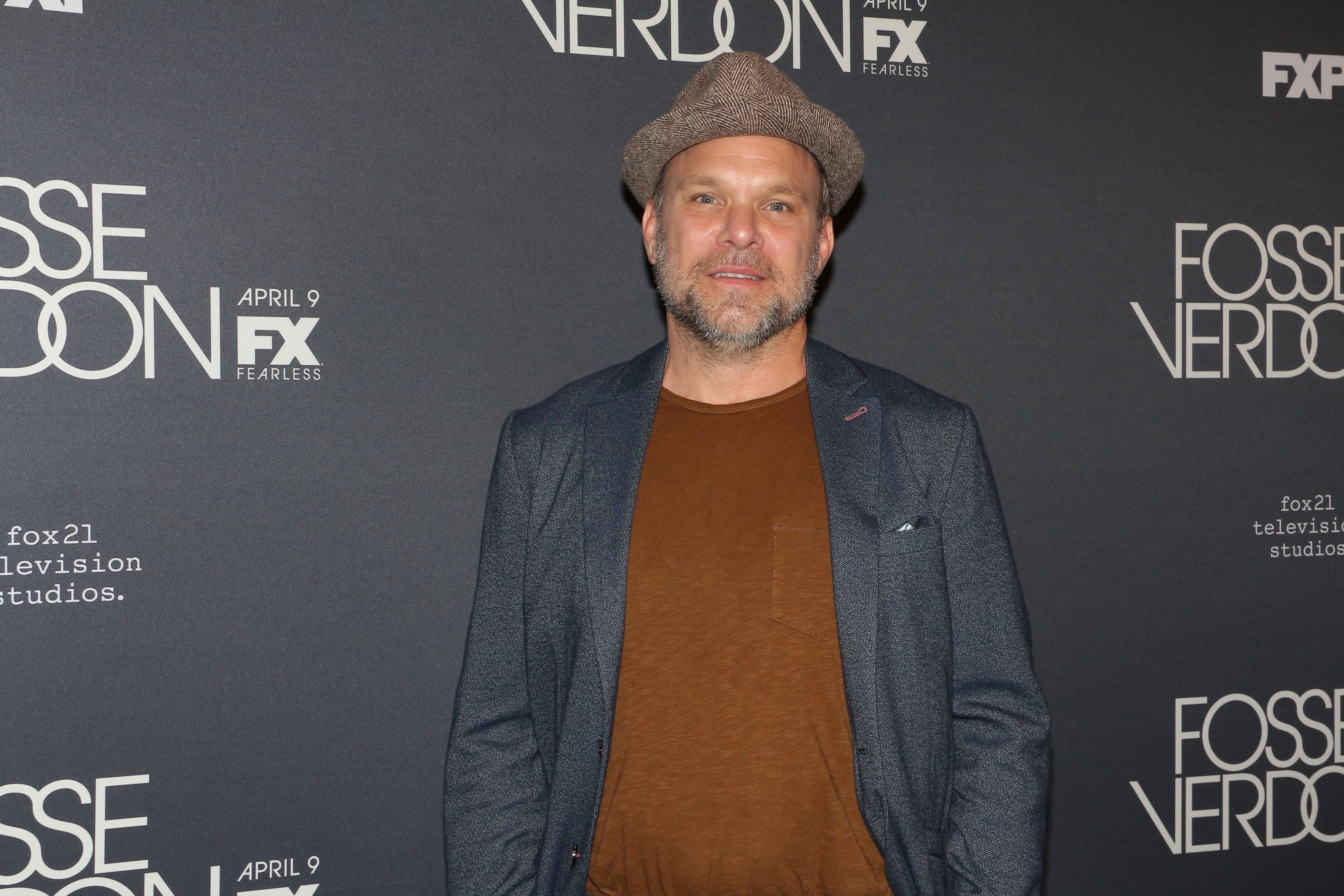
In 9 t o 5, the new musical now in previews at Broadway’s Marquis Theatre, Marc Kudisch plays Franklin Hart Jr., the chauvinistic boss every working woman despises, and a character described by the show’s composer-lyricist (and co-star of the original 1980 film) Dolly Parton as a “sexist, egotistical, lying, hypocritical bigot.” So what? Kudisch relishes playing him, even if his co-stars, Allison Janney, Megan Hilty, and Stephanie J. Block, are having a little too much fun at his expense. “What working woman doesn’t want to get back at a boss like that?” he quips. “But sometimes they take what they do a bit too seriously. I’ve been battered and bruised!”
Of course, those minor injuries — plus a more serious one when Kudisch fell from the set — happened during the show’s L.A. run at the Ahmanson Theater last fall. Since then, a lot of changes have been made to the musical by the show’s creative team — including Parton, librettist Patricia Resnick (who wrote the film’s screenplay), director Joe Mantello, and set designer Scott Pask. “The story’s always been good, the score’s great, and we have great performers, but there’s been some rewriting recently. That’s the name of the game,” he notes. “We gave up a week of previews here in order to tweak the show. Even in LA, we knew we had to finesse, tighten, and polish, but Joe had to leave right after we opened to start work on Pal Joey. So when we got back into rehearsal, we knew there was work to finish.”
Some of the work has been done by Parton, who has come up with a completely new score for the show (minus the famous title tune), while Resnick has had to make changes from screen to stage. “The show’s more character-driven than the film, and we’ve been able to dive into that a lot more,” he says. “That’s what musical theater does. There are moments when you hear some of the lines and the movie comes flying back at you, but Pat has written some new and hilarious material, which is very true to the period of the late 1970s, in which the show is set.”
One aspect of the show that has been simplified in the intervening months is the set, a move Kudisch approves off. “The set is amazing — it’s that architecture from the 70s, which makes it even more fascinating — but in L.A., maybe it was too amazing. We’ve gotten too carried away with and too dependent on technology. I think we all need to sit back and rethink what really draws audiences, and it’s not a $25 million set. Good material works with an empty stage, simple lighting, good musicians, and the right performers.”

(© Craig Swartz)
Indeed, Kudisch has nothing but high praise for his onstage colleagues. “The company is talented and smart as all get out — and we all get along. You can read that onstage. Audiences know when things are sinking or grooving. Allison, Megan, and Stephanie are these unique personalities that come together so beautifully. Their energies balance each other so well they become a three-headed monster. When they come to life, they’re on fire and they mean business! And then you have Kathy Fitzgerald, who plays my secretary Roz. She’s an amazing artist. Next to myself, she’s the most shameless creature on the face of the planet.”
And giving credit where credit is due, he quickly mentions Mantello. “Joe has great taste and instincts. He relies on his actors to come with creative ideas. He’s a brilliant editor and allows a collaborative explanatory environment,” he says. “What we do is organic, which means that everyone contributes. You can tell that when you see a show. There’s a difference between watching a company expressing an idea in a unified way as opposed to watching something where it’s obvious they were told what to do. For a show to work, it has to be everyone working together on the same page and telling the same story — with no ego. That’s what creates great theater. If we do our jobs right, every individual in the audience will have a different opinion of what they’re watching, and everyone will have his or her own personal attachment. There will be no room for a general ‘ahhh.'”
And while Kudisch is technically the show’s leading man, the actual amount of stage time has never been an issue for the actor, who has often been seen in so-called character and supporting roles. “The size of a role is meaningless. Quality can’t be judged by size,” he notes. “Any actor who decides the only role he can play is the lead just limits himself.”